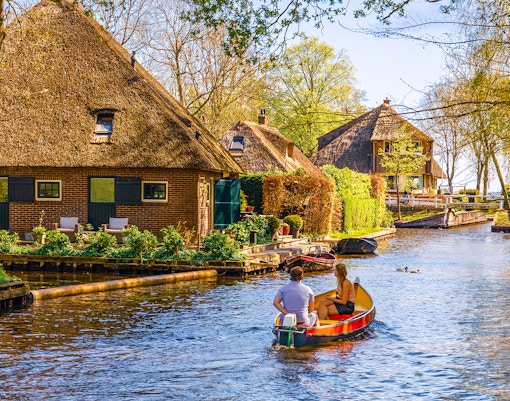
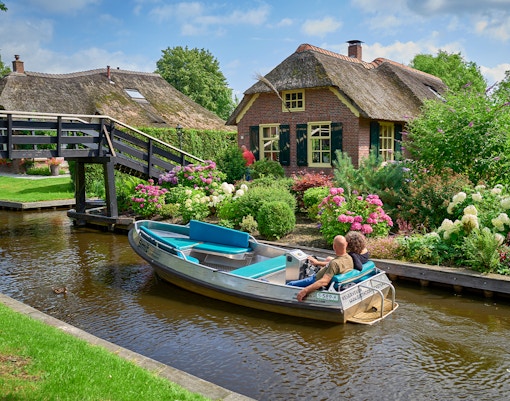
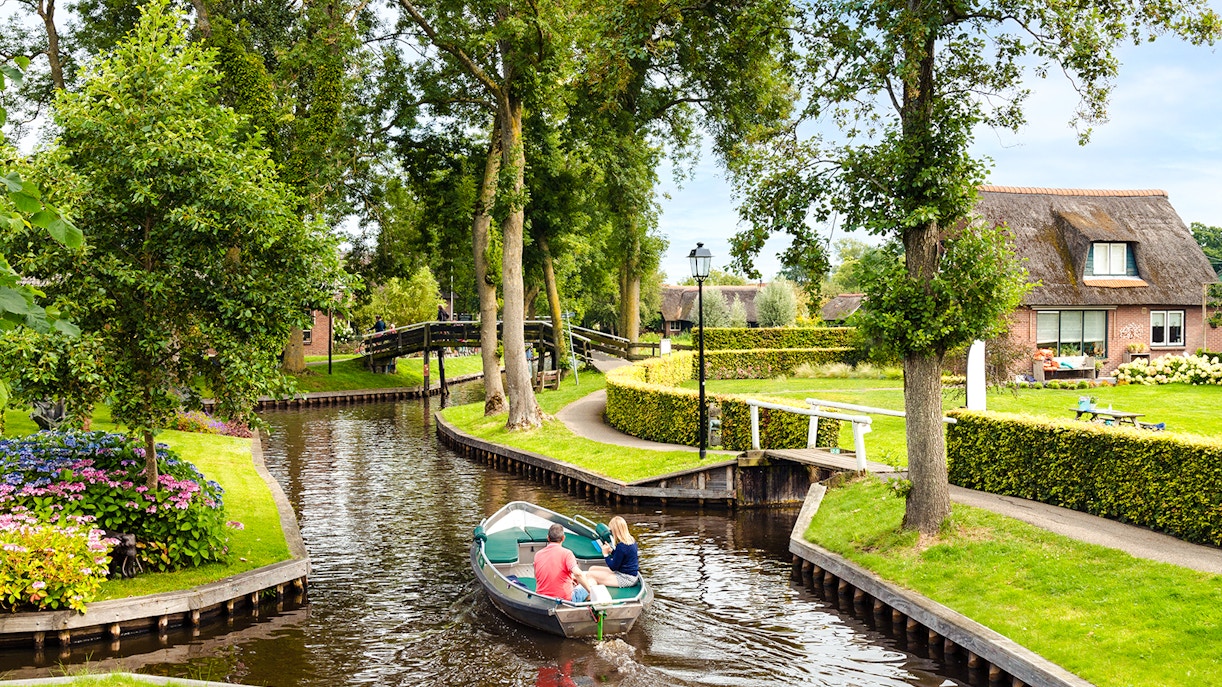
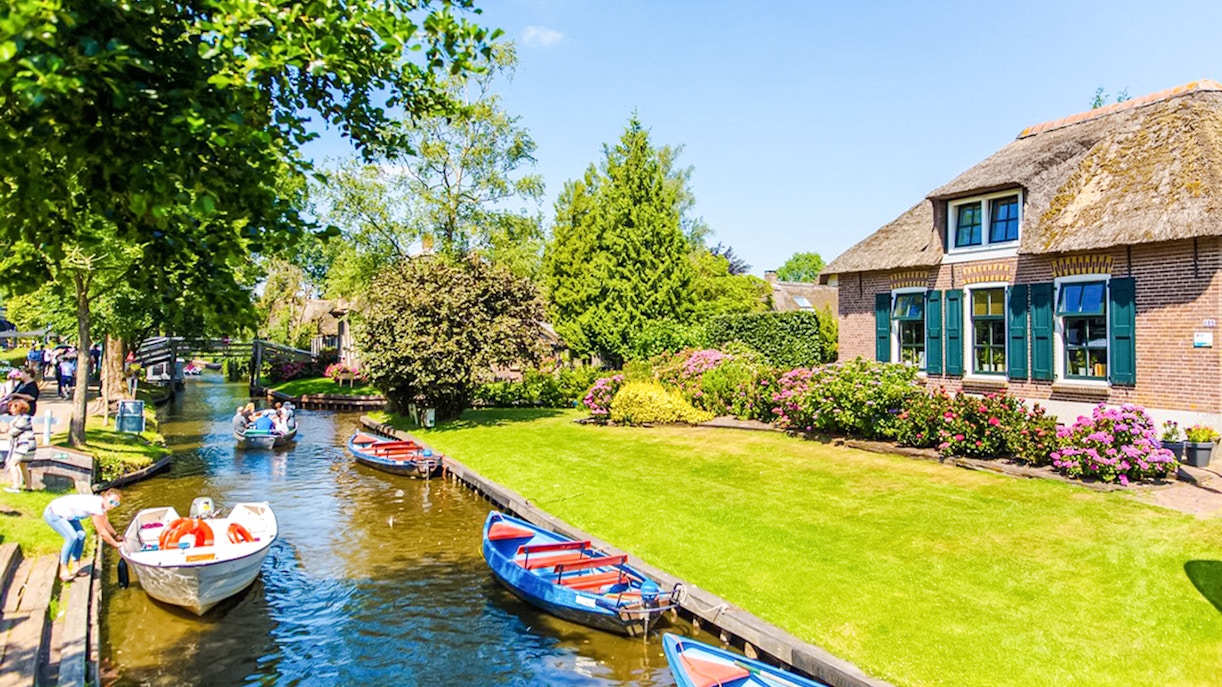
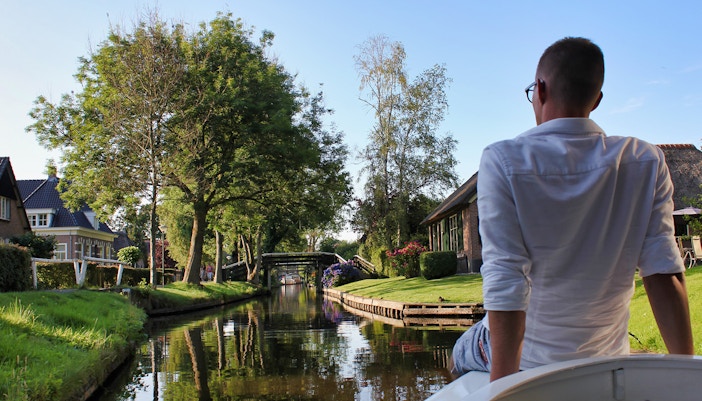
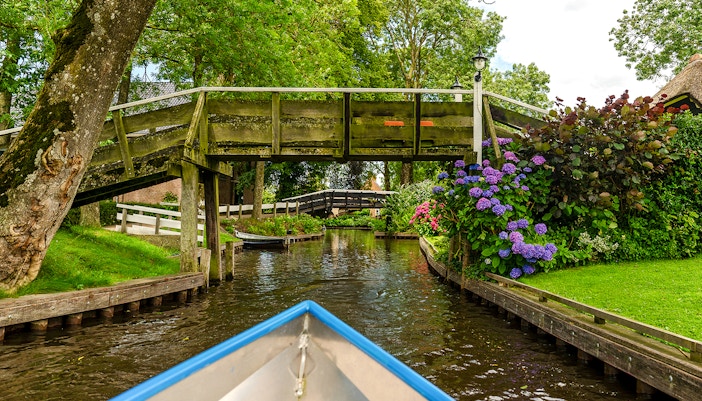
Giethoorn is an open, year-round village, not a gated attraction. However, boat rentals, canal cruises, museums, and transport services operate on fixed schedules that vary by season, daylight hours, and weather. This guide brings together the most reliable Giethoorn timings, opening hours, and planning insights to help you decide the best time to visit Giethoorn, Netherlands.
Giethoorn seasonal & operational timings
Season/Month
First boat departure
Last boat departure
Frequency
Notes
Dec–Feb (Winter)
~10am
~3:30pm–4pm
Limited
Some boat rentals close during frost; walking paths remain accessible
Mar–Apr (Early spring)
~9:30am–10am
~5pm
Every 30–60 mins
Variable weather; fewer crowds than in summer
May–Jun (Late spring)
~9am
~6pm
Every 20–30 mins
Longer daylight, good visibility
Jul–Aug (Summer peak)
~8:30am–9am
~7pm–8pm
Every 15–20 mins
Busiest period; advance booking recommended
Sep–Oct (Autumn)
~9am–9:30am
~5:30pm–6pm
Every 30 mins
Calmer canals, autumn colours
Nov (Late autumn)
~10am
~4:30pm
Limited
Reduced services; check daily availability
Timing notes & visitor warnings
Canal cruises and self-drive boats may pause during strong winds, fog, or frost.
Last boat departures are strict; late arrivals are usually not accommodated.
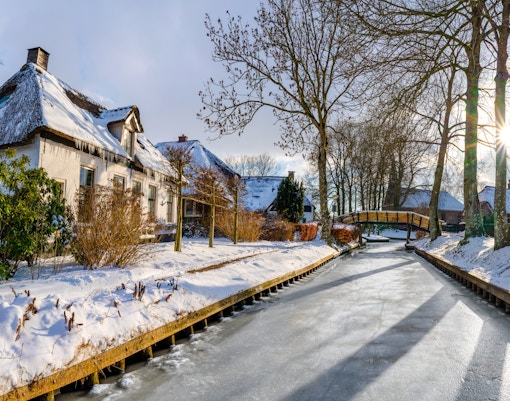
Winter visits may involve walking-only access if canals partially freeze.
Monday: Moderately busy, especially during peak season, as many weekend travellers extend their trips, but mornings are usually calm.
Tuesday to Thursday: Crowds are significantly lower, making it easier to enjoy quiet canals, shorter boat queues, and uninterrupted photo opportunities.
Friday: Fridays see increasing crowds from late morning onwards, particularly in summer, as day-trippers begin arriving from Amsterdam and nearby cities.
Saturday: Busiest day in Giethoorn, with heavy boat traffic and long waits for rentals, especially between 11am and 3pm.
Sunday: Remains crowded but slightly calmer than Saturdays, and visiting early in the morning or late afternoon can still offer a pleasant experience.
Early morning (9am–10:30am): Best time to visit Giethoorn if you want peaceful canals, soft natural light, and minimal boat congestion.
Late morning to early afternoon (11am–3pm): Busiest period, when tour groups arrive, and boat traffic is at its peak, especially during spring and summer.
Late afternoon (after 4:30pm): Ideal in warmer months, as crowds thin out, lighting improves for photography, and the village feels calmer. Evenings are best experienced in summer, when extended daylight allows for relaxed walks along the canals, though most boat rentals stop earlier.
For photographers, early morning is the best time to visit Giethoorn for reflections and minimal crowds.
Weather in Giethoorn
Giethoorn has a temperate maritime climate, with mild summers, cool winters, and rainfall spread throughout the year.
January
Avg. temperature: 1–4°C What to expect: Cold, quiet, occasional frost; boat services may be limited
February
Avg. temperature: 1–5°C What to expect: Similar to January, with low crowds and short daylight hours
March
Avg. temperature: 4–9°C What to expect: Early spring weather; some boat rentals reopen
April
Avg. temperature: 7–13°C What to expect: Pleasant temperatures, blooming landscapes, fewer crowds
May
Avg. temperature: 10–17°C What to expect: Mild weather, longer days, excellent boating conditions
June
Avg. temperature: 13–20°C What to expect: Warm, green scenery, rising visitor numbers
July
Avg. temperature: 15–22°C What to expect: Warmest month; peak crowds and full operations
August
Avg. temperature: 15–22°C What to expect: Busy and lively, ideal for evening walks and cruises
September
Avg. temperature: 12–19°C What to expect: Comfortable temperatures, fewer tourists
October
Avg. temperature: 9–14°C What to expect: Cooler, scenic autumn colours, quieter canals
November
Avg. temperature: 5–9°C What to expect: Chilly, reduced services, very low crowds
December
Avg. temperature: 2–6°C What to expect: Cold and calm; festive atmosphere, but limited boat activity
Weather plays a major role in Giethoorn timings, particularly for self-drive boats and canal cruises.
How long to spend in Giethoorn
2 hours: Take a short guided canal cruise or quick self-drive boat ride and enjoy a brief walk along the village’s main canals and bridges.
4 hours: Rent a whisper boat, explore quieter waterways, visit Museum Giethoorn ’t Olde Maat Uus, and stop for lunch at a canalside café.
6 hours or more: You can fully experience Giethoorn by boating at a relaxed pace, cycling through the surrounding Weerribben-Wieden National Park, visiting local museums, and enjoying multiple scenic walking routes.
Full day: Combine boating, cycling, slow dining, and photography while avoiding peak crowds by spacing activities across the day.
If arriving from Amsterdam, plan at least 4–6 hours on site for a comfortable visit.
Frequently asked questions about the best time to visit Giethoorn
Yes, Giethoorn is an open village and can be visited throughout the year, although boat rentals, cruises, and museums follow seasonal schedules.
There are no fixed Giethoorn opening hours, as access is unrestricted, but most visitor activities operate roughly between 9am and 6pm, depending on the season.
Late April to June and September are widely considered the best times to visit Giethoorn, Netherlands, due to mild weather and fewer crowds.
Most canal cruises begin between 9am and 10am, with earlier starts during peak summer months.
Last departures typically range from around 4pm in winter to 7pm or 8pm in summer, depending on daylight and demand.
Yes, Giethoorn is busiest in July and August, especially between late morning and mid-afternoon.
Morning visits are generally better, as canals are calmer and boat availability is higher.
Yes, public holidays often follow weekend patterns, with higher crowds and faster sell-outs for boat rentals.
Booking in advance is strongly recommended during the best time to visit Giethoorn, particularly from May to September.
Yes, winter visits are possible and very quiet, but boat access may be limited due to weather and freezing canals.