
- Early 1990s: Emerging from Bristol’s underground scene, Banksy begins as a freehand graffiti artist before adopting fast stencil techniques to avoid police detection. His early influences include punk culture, hip hop, and anti establishment activism.
- Late 1990s–2000s: His sharp, satirical street works appear across the UK, turning everyday walls into political commentary. The anonymity fuels intrigue, helping Banksy Amsterdam searches grow as his reputation spreads globally.
- 2005–2010: Major interventions, including large scale public installations and the Crude Oils series, cement his role in contemporary art. Museums and collectors take notice, shaping what is now seen at the Amsterdam Banksy Museum.
- 2010s: Record breaking auction moments and the self shredding artwork redefine the market. Today, the Banksy exhibition Amsterdam visitors experience at Moco Museum Amsterdam Banksy galleries reflects his legacy as street art’s most influential disruptor.
Banksy Amsterdam at Moco Museum Amsterdam
Experience Banksy Amsterdam up close | Wonders of street art and iconic graffiti
If you’re searching for Banksy art, head straight to Moco. The Moco Museum Amsterdam Banksy collection forms a major highlight of the permanent Laugh Now gallery. This leading Banksy experience features iconic works that shaped modern street art. Wondering about Banksy Museum Amsterdam tickets? Access is included with your standard museum ticket.
Banksy artwork at the Moco Museum
1/7
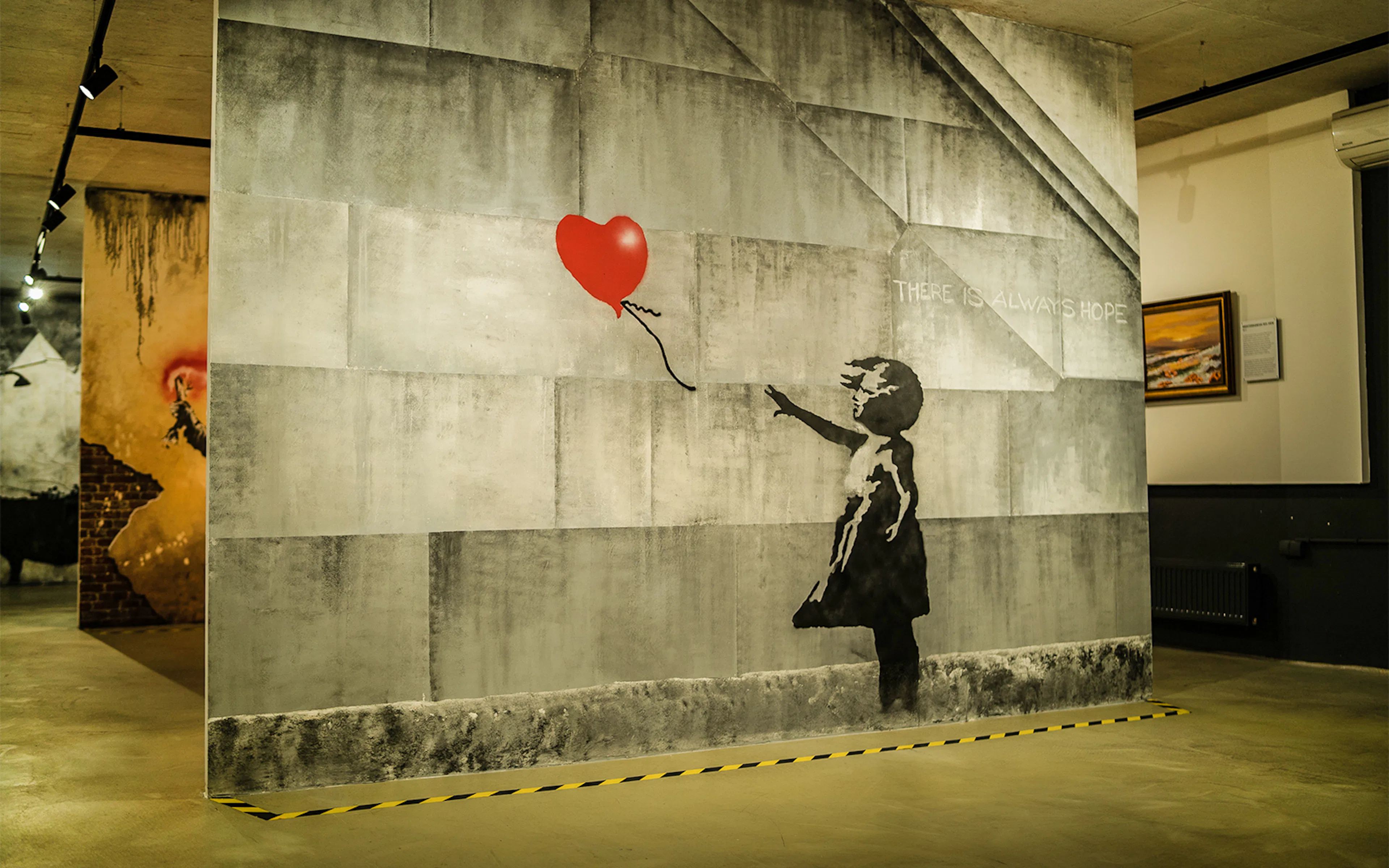
Girl with Balloon
- What it means: One of the most recognisable works of Banksy Amsterdam, this stencil of a girl reaching for a red heart shaped balloon captures hope, innocence, and quiet loss. The simplicity is deliberate. It turns a fleeting moment into a universal emotion.
- Why is it a must-see: As a centrepiece of the Banksy exhibition Amsterdam visitors seek out, it defines the emotional power of Banksy art Amsterdam. Seeing it in person at Moco Museum Amsterdam Banksy galleries reveals details and texture often missed online.
Flower Thrower
- What it means: Also known as Love is in the Air, this iconic image shows a masked protester throwing flowers instead of a weapon. It transforms aggression into peace, challenging conflict through visual contradiction.
- Why is it a must-see: A highlight of the Amsterdam Banksy Museum experience, it showcases Banksy’s ability to merge protest and poetry. It stands as one of the strongest statements within the Banksy Museum Amsterdam collection.
Laugh Now
- What it means: Featuring monkeys beneath the phrase “Laugh now, but one day we’ll be in charge,” this piece satirises authority and human arrogance. It reflects Banksy’s early street roots and rise into global art spaces.
- Why is it a must-see: Displayed prominently at Moco Amsterdam Banksy galleries, it captures the rebellious humour that defines the Banksy Amsterdam phenomenon and justifies its place in a leading Amsterdam Banksy Museum.
Smiling Copper
- What it means: A British police officer stands with a bright yellow smiley face replacing his own. The image blends friendliness with unease, questioning surveillance, authority, and institutional trust.
- Why is it a must-see: This sharp satire strengthens the Banksy Museum Amsterdam tickets demand, as visitors witness how subtle humour can carry powerful social critique inside the Banksy exhibition Amsterdam.
Beanfield
- What it means: This large scale canvas references the 1985 Battle of the Beanfield, critiquing police brutality and state control. It is raw, political, and unapologetically confrontational.
- Why is it a must-see: Rarely displayed publicly, it elevates the Banksy art Amsterdam collection beyond stencils into monumental activism, reinforcing why Moco Museum Amsterdam Banksy works hold international prestige.
Crude Oils Series
- What it means: In this provocative series, Banksy remixes classical masterpieces with modern disruptions, corrupting peaceful landscapes with symbols of pollution, capitalism, and decay.
- Why is it a must-see: These works demonstrate why the Amsterdam Banksy experience goes beyond street art. They position the Banksy Museum Amsterdam as a space where tradition and rebellion collide brilliantly.
Heart Boy
- What it means: A young boy paints a pink heart onto a wall, preserving innocence within an urban setting. Originally saved from demolition, the piece carries both emotional and physical weight.
- Why is it a must-see: Displayed outdoors, it expands the Banksy Amsterdam journey beyond interior galleries, making the Amsterdam Banksy Museum experience immersive and uniquely memorable.
Tips for viewing Banksy at Moco Museum Amsterdam
⌛ Time your visit wisely The Laugh Now galleries fill quickly. Visit early morning or late afternoon for quieter moments with Banksy Amsterdam highlights and uninterrupted viewing time.
👀 Step closer, then step back Banksy art Amsterdam reveals detail up close, but its full impact lands from a few steps back. Notice stencil layers, paint drips, and deliberate rough edges.
🎈 Look beyond the obvious in Girl with Balloon Focus on the empty space around the figure. That negative space intensifies emotion, a subtle detail that defines the Banksy exhibition Amsterdam experience.
🐒 Do not rush past Laugh Now Check the expressions on each monkey. The repetition is intentional. It sharpens the satire and shows why Moco Museum Amsterdam Banksy works belong in a prestigious setting.
🌿 Visit Heart Boy in the garden Step outside to the Moco Garden for this hidden gem. The outdoor setting adds context, making this Amsterdam Banksy Museum piece feel closer to its street art roots.
Brief history of Banksy Amsterdam

Did you know?
- Banksy began as a freehand graffiti artist in Bristol before switching to stencils to work faster and avoid police detection.
- The name Banksy Amsterdam trends regularly, yet his true identity remains unconfirmed despite numerous investigations and media speculation worldwide.
- In 2018, a framed artwork self shredded at auction, instantly reshaping art market history and boosting interest in Banksy Museum Amsterdam tickets.
- The Crude Oils series remixes classical paintings, proving Banksy art Amsterdam blends traditional technique with sharp, modern political satire.
- Look closely at Girl with Balloon at Moco Museum Amsterdam Banksy galleries and notice the textured spray layers beneath the red heart.
- Flower Thrower first appeared on a Jerusalem wall, making the Amsterdam Banksy Museum version part of a powerful global street narrative.
- Banksy once opened Dismaland, a dark parody theme park, reinforcing the rebellious spirit visitors sense inside the Banksy exhibition Amsterdam.
- His works have appeared overnight on public buildings, museums, and even the West Bank barrier, blurring activism and art.
- Despite anti establishment themes, Banksy pieces now sell for millions, creating irony that defines the Amsterdam Banksy phenomenon.
- Some collectors discovered hidden works behind their walls years later, a reminder that Banksy’s art often hides in plain sight.
Banksy’s artistic style
Banksy’s style is rooted in street art, a form of public art created outside traditional galleries, often carrying social or political messages. He primarily uses stencilling, a spray paint technique that allows sharp outlines, quick execution, and bold contrast. His works favour black and white imagery with striking pops of colour, like the red heart in Girl with Balloon. Recurring themes include anti consumerism, war, authority, and capitalism, often delivered through satire. By mixing humour with protest, Banksy turns simple visual statements into powerful cultural commentary that resonates far beyond the wall.
Where else to see Banksy
The British Museum, London
Peckham Rock
Banksy secretly installed this parody cave painting inside the museum in 2005. It mocks how history is curated and who gets remembered.
Sotheby’s, London
Love is in the Bin
The only artwork created live during an auction, partially shredding itself after sale. It transformed art market history overnight.

Walled Off Hotel, Bethlehem
Scar of Bethlehem
A nativity scene set against a separation wall, blending political reality with religious symbolism in deeply provocative fashion.

MOCO Museum Barcelona
Laugh Now Series
Part of the wider Moco collection, these satirical monkeys highlight power and hypocrisy, reinforcing Banksy’s global relevance.
Frequently asked questions about Banksy Amsterdam
Yes, Moco Museum proudly displays a curated selection of Banksy's original pieces, representing the heart of his iconic career and reflecting his unique style and powerful message.
Moco Museum Amsterdam displays original Banksy works including Girl with Balloon, Flower Thrower, Laugh Now, Smiling Copper, and selected pieces from the Crude Oils series.
No! Your museum entry ticket covers all permanent exhibitions, including the Banksy "Laugh Now" exhibition. Enjoy it all with one ticket!
You can't modify the artworks themselves, but you're welcome to snap selfies and share your thoughts on social media!
For a more peaceful experience, try visiting in the early morning or late afternoon when it's typically quieter!
No worries! Just remember, it's best to keep your hands off to protect the art. Admire it from a safe distance to keep everything in tip-top shape!
Absolutely! Hop on an audio-guided tour for some quirky, insider details about Banksy's work and creative genius!
Most visitors spend around 30 to 45 minutes exploring the Banksy exhibition, depending on crowd levels and how closely they engage.
Yes, photography is generally allowed for personal use, making it easy to capture your favourite Banksy artworks during your visit.
Banksy is famous for his anonymous identity, sharp political satire, and powerful street art that challenges authority, consumerism, and social injustice worldwide.
Banksy’s work is accessible to most visitors, though some themes address politics and social issues that may require context for younger audiences.

