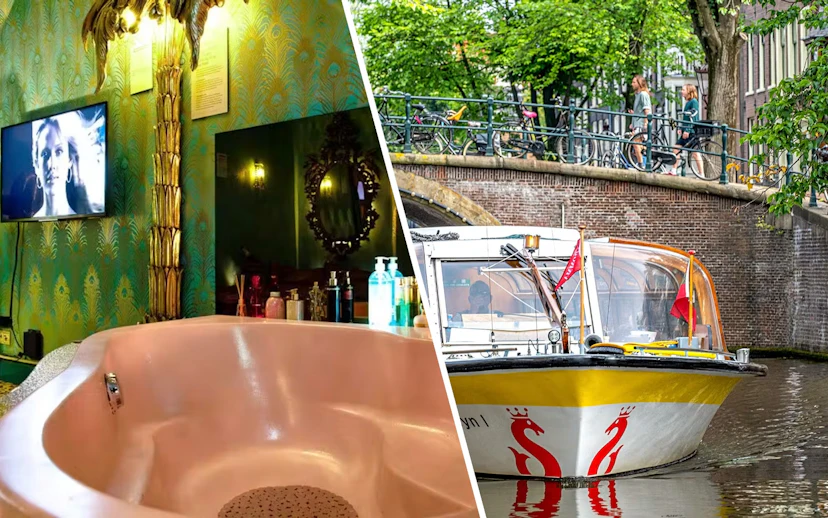
How to visit the Red Light Secrets Museum
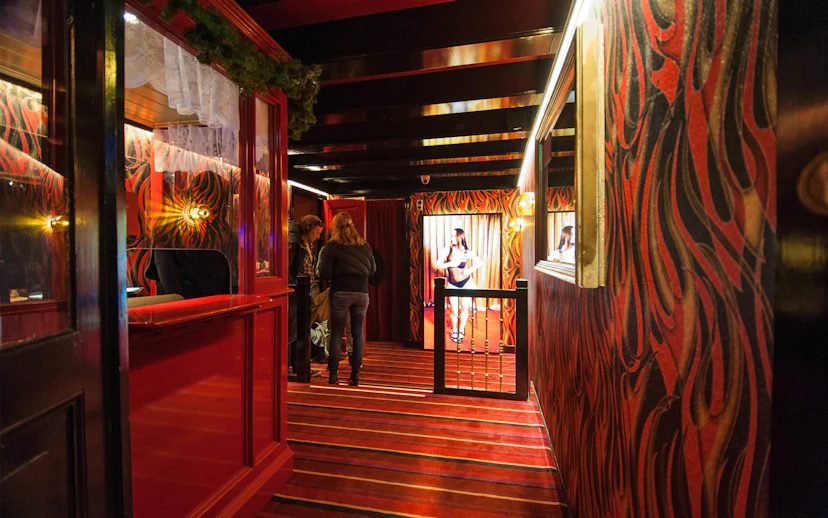
Red Light Secrets Museum is a small, adults-only museum best known for placing you inside a real former brothel in Amsterdam’s Red Light District. The visit is more intimate than expansive: narrow rooms, dim lighting, audio stops, and a route that can feel crowded fast once a few groups bunch up. The biggest difference between a good visit and a rushed one is timing — go when the building is quiet enough to actually listen. This guide covers arrival, pacing, tickets, and what not to miss.
Quick overview: Red Light Secrets Museum at a glance
- When to visit: Open daily. Late morning on a weekday is noticeably calmer than weekend afternoons and after-dark hours, because the museum’s narrow brothel rooms and photo station bottleneck quickly once De Wallen fills up.
- Getting in: From €14.50 for standard entry. The museum’s core visit is self-guided with an included audio guide rather than an official guided or skip-the-line tier, and booking ahead matters most on weekends, holidays, and summer evenings.
- How long to allow: 45–60 minutes for most visitors. Listening to every audio stop, taking the red-window photo, and reading the history panels pushes you toward the longer end.
- What most people miss: The early timeline panels and the upstairs contrast between the luxury suite and fetish room add far more context than the photo spot alone.
- Is a guide worth it? The included audio guide is usually enough here, but a live guide is more useful if you want broader Red Light District history beyond the museum walls.
Jump to what you need
🕒 Where and when to go
🎟️ Which ticket is right for you?
🗺️ Getting around
🖼️ What to see
♿ Facilities and accessibility
Where and when to go
How do you get to Red Light Secrets Museum?
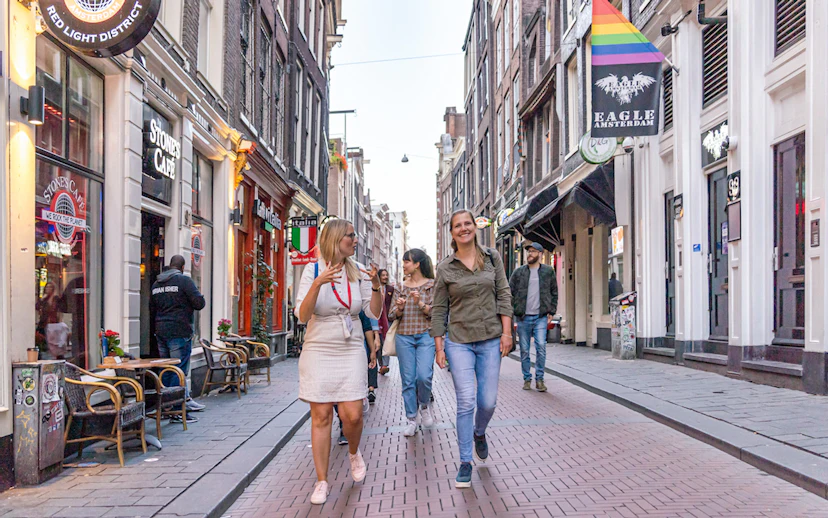
The museum is in De Wallen, Amsterdam’s historic Red Light District, about a 10-minute walk from Amsterdam Centraal and a short walk from Dam Square.
Oudezijds Achterburgwal 60H, 1012 DP Amsterdam, Netherlands → Open in Google Maps
- From Amsterdam Centraal: Walk via Warmoesstraat → about 10 min → easiest option if you’re already arriving by train.
- From Dam Square: Walk via Oudebrug and Oudezijds Achterburgwal → about 5–8 min → simple if you’re combining it with central Amsterdam sights.
- By tram: Get off at Dam on lines 4 or 9 → about 6 min walk → useful if you’re coming from farther south in the centre.
- By taxi or rideshare: Ask for drop-off near Oudezijds Achterburgwal or Oude Kerk → short final walk → cars won’t get you right to the canal-front doorway in busy periods.
Which entrance should you use?
There’s one canal-side entrance, and the easiest thing to miss is how discreet it looks compared with the loud street life around it.
- Located at Oudezijds Achterburgwal 60H: Expect little to no wait on quieter weekday mornings, but short entry holds are more likely on weekend afternoons and early evenings when the interior is already full.
When is Red Light Secrets Museum open?
- Daily: Hours can vary by day and season, so check the live schedule before you go.
- Last entry: Entry closes before the museum shuts for the night, especially on later evening openings.
When is it busiest? Weekend afternoons, holiday periods, and after-dark visits are the tightest fit here, because the museum is small and crowding builds around the audio stops and red-window photo booth.
When should you actually go? Aim for the first part of a weekday visit, when you’ll get more space in the historic rooms and can actually hear the audio stories without people stacking up behind you.
Which Red Light Secrets Museum ticket is best for you
| Ticket type | What's included | Best for | Price range |
|---|---|---|---|
Standard admission | Museum entry + audioguide + red-window photo opportunity | A short, self-paced visit where you want the museum’s full core experience without extra logistics | From €14.50 |
Museum + canal cruise combo | Museum entry + 1-hour canal cruise | A day when you want one unusual indoor stop and one classic Amsterdam experience without booking them separately | From €25 |
Museum + Red Light District audio walking tour | Museum entry + self-guided district audio tour | A visit where the museum alone feels too short and you want more street-level context before or after | From €20.42 |
How do you get around Red Light Secrets Museum?
Layout and suggested route
The museum is compact and mostly linear, spread across a narrow historic canal house rather than a large gallery floor. That makes it easy to follow, but it also means one slow cluster can hold up the rooms behind it.
- Entrance and context panels → ticket desk, orientation, and early history displays → budget 10 minutes.
- Ground-floor brothel rooms → authentic booths, bed, bathtub room, and the museum’s strongest sense of place → budget 15–20 minutes.
- Audio-led story stops → Inga’s personal accounts woven through the route → budget 15 minutes if you listen properly.
- Upper-floor rooms → luxury suite, fetish objects, and confessional wall → budget 15–20 minutes.
Suggested route: Start with the history panels instead of rushing to the photo window, then move through the brothel rooms before finishing upstairs. Most visitors remember the red-window photo, but the Chinese Annie room and the shift from ordinary work spaces to the luxury suite are what make the visit feel layered rather than gimmicky.
Maps and navigation tools
- Map: A printed guide booklet comes with admission → it helps frame the rooms and stories → collect it when you enter.
- Signage: Wayfinding is simple because the route is short, but the museum is dark enough that you’ll want to move slowly rather than rely on quick glances.
- Audio guide/app: The included portable audioguide is available in multiple languages → it adds far more value than wandering through silently → take it even if you think you’ll skip most museums’ audio.
💡 Pro tip: Don’t do the red-window photo first if there’s already a line — loop through the historic rooms while the crowd stacks there, then come back near the end when people have moved on.
Where are the masterpieces inside Red Light Secrets Museum?

Chinese Annie room
Exhibit type: Historical crime-linked room
This is one of the museum’s most arresting spaces: a preserved booth tied to the 1956 murder of Anna ‘Chinese Annie’ Zentveld. What makes it memorable is not just the crime-story hook, but how small and ordinary the room feels once you’re standing inside it. Most visitors focus on the shock factor and miss how the cramped layout itself explains the vulnerability of the work.
Where to find it: Along the main historic brothel-room route, near the museum’s core recreated work spaces.
Inga’s audio stories
Exhibit type: First-person audioguide narrative
The included audioguide is the real backbone of the visit, with Inga’s stories turning the rooms from set pieces into lived spaces. She talks about routine, money, stigma, and emotional reality in a way that keeps the museum grounded. Most visitors underestimate how much weaker the experience feels if they skip clips or only half-listen while moving.
Where to find it: Throughout the museum at the marked audio stops in the brothel rooms and upper-floor exhibits.
The red-window photo booth
Exhibit type: Interactive reconstruction
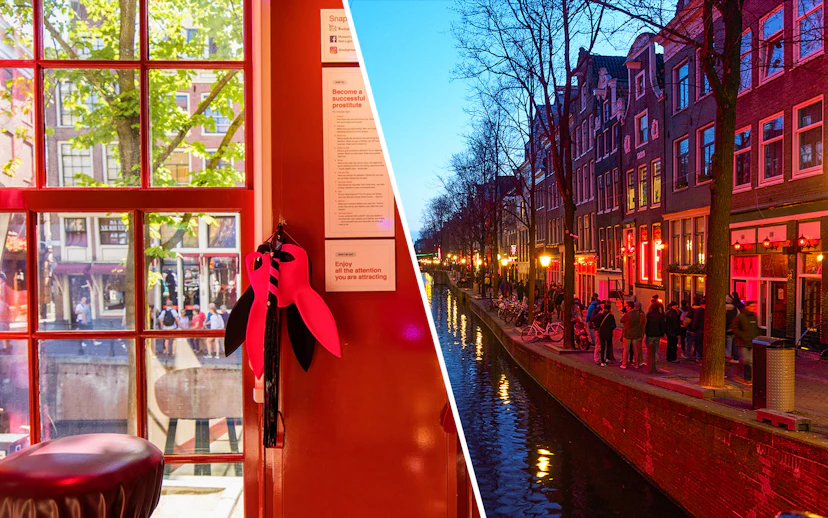
This replica window lets you sit behind the glass under red light and momentarily see the district from the other side. It’s playful, but it also lands the basic premise of window prostitution more effectively than a text panel can. Most visitors treat it as just a photo op and rush past the fact that it’s one of the clearest demonstrations of how visibility and performance shape the job.
Where to find it: Mid-route in the main exhibit area, where the traffic flow naturally slows.
The confessional wall
Exhibit type: Interactive installation
Styled like a darkened confessional booth, this section asks visitors to leave anonymous notes or read what others have written. It works because it shifts the focus from voyeurism to discomfort, honesty, and taboo, often with humour. Many visitors breeze through it after the photo booth, but it’s one of the few spaces that makes you reflect on your own assumptions.
Where to find it: Near the end of the route, after the upper-floor exhibits.
Luxury suite and fetish room
Exhibit type: Recreated interiors and object display
These rooms show how uneven the trade can be, from more theatrical high-end settings to fetish-focused encounters. The contrast matters: the museum isn’t just showing one type of work space, but a spectrum of environments and expectations. Most visitors notice the explicit objects first and miss the sharper point, which is how different the working conditions could be within the same district.
Where to find it: Upstairs, in the later part of the museum route.
The history panels and worker-rights displays
Exhibit type: Context exhibit
The wall panels on legalization, regulation, and worker rights are what stop the museum from feeling like pure curiosity tourism. They explain how Amsterdam’s prostitution system changed over time and why the district still carries contradictions. Most people skim these on the way in, but reading them early makes the audio stories and room recreations make much more sense.
Where to find it: Near the beginning of the visit and scattered between room-based exhibits.
Facilities and accessibility
- 🎧 Audioguide: Admission includes a portable audioguide with 12 stories, so you don’t need to download anything before you arrive.
- 🛍️ Gift shop/merchandise: There’s a small shop near the exit with books, souvenirs, and novelty items rather than a full retail browse.
- 📸 Photo station: The replica red-window photo setup is included in your ticket and is usually the busiest stop inside the museum.
- 🪑 Seating/rest areas: This is a short visit in a narrow historic building, so don’t expect large lounge-style rest areas between exhibits.
- ♿ Mobility: The museum is not wheelchair accessible and is set inside a historic canal house with stairs and tight interior spaces.
- 👁️ Visual impairments: The visit is strongly audio-led, which helps with storytelling, but the rooms are dim and still rely on moving through compact visual exhibits.
- 🧠 Cognitive and sensory needs: Weekday late mornings are the easiest low-stimulation window, because darker rooms, explicit content, and crowding can make the museum feel intense once it fills up.
- 👨👩👧 Families and strollers: Children under 16 are not admitted, and the narrow historic layout is not stroller-friendly.
This is not a family attraction; the museum is designed for adult visitors and only admits guests ages 16 and up.
- 🕐 Time: Not applicable for young children because entry is restricted to visitors 16 and older.
- 🏠 Facilities: Not applicable because the venue does not operate as a child-focused museum.
- 💡 Engagement: Older teens who meet the age rule are more likely to get value from the audio guide and history than from the photo booth alone.
- 🎒 Logistics: Bring ID if anyone in your group looks young, because the age minimum matters here.
- 📍 After your visit: If part of your group skips the museum, the canal belt and Dam Square area offer a much easier mixed-age time nearby.
Rules and restrictions
What you need to know before you go
- Entry requirement: You need a valid ticket, and entry is limited to visitors ages 16 and up.
- Bag policy: This is a tight historic interior, so a small day bag is much easier to manage than a large backpack or suitcase.
- Re-entry policy: Not applicable.
Not allowed
- 🚫 Children under 16: The museum does not admit younger visitors because the subject matter and exhibits are explicitly adult.
- 🖐️ Disruptive behavior: Treat it as an educational museum rather than a party stop, especially around the audio exhibits and confessional wall.
Photography
- Personal photos are most clearly encouraged at the replica red-window setup, which is built for that exact purpose.
- In the rest of the museum, keep photography discreet and avoid blocking the narrow rooms while people are listening to the audio guide.
- If you want to shoot more than a quick phone photo, check with staff first rather than assume flash, filming, or tripods are fine.
Good to know
- The museum feels much better when you follow the audio guide in order, because the rooms on their own can seem lighter on context than they really are.
- One loud group changes the mood quickly here, so timing matters more than at a larger museum.
Practical tips
- Booking and arrival: Book a few days ahead if you want a weekend or holiday visit, and arrive about 10 minutes early, so you can collect your audio guide without starting flustered.
- Pacing: Don’t burn half your visit at the red-window photo stop right away; the Chinese Annie room and Inga’s stories are where the museum earns its ticket.
- Crowd management: Weekday late mornings work best here because De Wallen is quieter, the museum’s narrow route stays listenable, and the photo booth line is usually shorter.
- What to bring or leave behind: Bring ID if anyone in your group could be mistaken for under 16, and keep your bag small because the rooms are tight and browsing space is limited.
- Audio strategy: Listen to the clips fully instead of half-moving through them, because this is a museum where the narration carries more of the experience than the objects alone.
- Food and drink: Plan this between meals rather than around one — the visit is only about an hour, and there isn’t a café built into the experience.
- Mindset: If you go in expecting a big adult-theme attraction, it may feel slight; if you treat it as a compact social-history museum inside a real brothel, it lands much better.
What else is worth visiting nearby?
Commonly Paired: Amsterdam canal cruise
Distance: About 1km — 15 min walk
Why people combine them: It balances a compact, intense indoor visit with a calmer classic Amsterdam experience, and it’s an easy same-day pairing from the city centre.
Commonly Paired: Red Light District walking tour
Distance: About 800m — 10 min walk from common central meeting points
Why people combine them: The museum gives you the inside perspective, while a district walk explains the streets, churches, laws, and contradictions outside the windows.
Also nearby
Oude Kerk
Distance: About 100m — 2 min walk
Worth knowing: Amsterdam’s oldest building sits almost next door, which makes it one of the sharpest possible contrasts to the museum’s subject matter.
Erotic Museum
Distance: About 350m — 5 min walk
Worth knowing: This is the closer, lighter, and more explicitly novelty-driven companion if you want a second adult-themed stop in the same neighborhood.
Eat, shop and stay near Red Light Secrets Museum
Options nearby
- Mata Hari (2-min walk, Oudezijds Achterburgwal 22): Modern European/Dutch. Ideal for a post-visit sit-down. It has a fantastic terrace right on the canal and an interior that feels like a chic, old-world 'hidden' living room. Much higher quality than the surrounding snack bars.
- Omelegg City Centre (4-min walk, Nieuwebrugsteeg 24): Breakfast/Brunch (Omelettes). The ultimate pre-visit fuel. They specialise entirely in creative omelettes. It’s high energy, friendly, and significantly better value than the English breakfast tourist spots nearby.
- Cannibale Royale Lange Niezel (2-min walk, Lange Niezel 15): Steaks, burgers, and ribs. A great late-night or hearty dinner spot. It has a dark, edgy brasserie vibe that fits the neighbourhood perfectly. Their Le Cannibale burger is legendary for a quick but high-quality stop.
- Bellezza (1-min walk, Oudezijds Achterburgwal 47): Fine dining/Fusion. A high-concept, multi-sensory dinner hidden in a courtyard. If you want to lean into the secrets theme of the museum, this is a theatrical dining experience with mirrors, screens, and top-tier gastronomy.
💡 Pro tip: The Red Light District gets incredibly crowded after 7pm. If you want a sit-down meal at Mata Hari or Cannibale Royale, booking ahead is essential even on weeknights. For a local secret, head two blocks east to the Zeedijk (Chinatown) for world-class Thai or Surinamese food if you want to escape the tourist menu pricing entirely.
- Museum gift shop: The small exit shop is the most convenient option here, with quirky souvenirs and books that make more sense as a quick browse than a dedicated shopping stop.
Staying near the museum is convenient if you want to walk everywhere in central Amsterdam and don’t mind nightlife, foot traffic, and a louder after-dark atmosphere. De Wallen is undeniably central, but it’s not the calmest or most relaxed base in the city. It suits short trips best, especially if you want to be out late and back on foot in minutes.
- Price point: Central location keeps prices toward the higher side, with fewer quiet-value stays than in less tourist-heavy neighborhoods.
- Best for: Visitors on a short trip who want maximum walkability and don’t mind the neighborhood’s busy nightlife energy.
- Consider instead: The canal belt or Jordaan works better for longer stays, quieter evenings, and a more balanced Amsterdam base without giving up easy central access.
Frequently asked questions about visiting Red Light Secrets Museum
Most visits take 45–60 minutes. That’s enough time to follow the included audio guide, move through the recreated brothel rooms, and stop at the red-window photo booth. If you read every panel and linger at the confessional wall, you may stay a little longer, but this is still a compact museum rather than a half-day visit.
Booking in advance is smart for weekends, holidays, and summer evenings, but it’s not usually something you need weeks ahead. The museum is small, so even modest crowds can make it feel full fast. Pre-booking mainly helps you plan your day better and avoid deciding at the door when De Wallen is already busy.
Arrive about 10 minutes early even if your ticketing feels flexible. That gives you time to check in, collect the audio guide, and start the route without feeling rushed. It also helps if you’re aiming for the quietest part of the day, because the first people through the rooms get the calmest experience.
Yes, but a small bag works much better than a bulky backpack. The museum is set inside a narrow former brothel, so large bags quickly become awkward in the darker, tighter rooms. If you’re carrying luggage or a shopping-heavy daypack, it’s better to leave it elsewhere before you visit.
Yes, at least the red-window photo setup is clearly designed for pictures and is included with admission. Elsewhere, keep photos quick and discreet because the museum is small and people are often listening to audio clips in close quarters. If you want to film or use anything more than a phone camera, ask staff first.
Yes, but smaller groups work much better than large ones. The building is compact enough that a noisy cluster can affect everyone else’s visit, especially around the audio stops and photo booth. If you’re visiting with several people, try a quieter weekday slot so you’re not competing with the room layout.
No, this is not a family attraction. The museum is adults-only and does not admit children under 16 because the subject matter and exhibits deal directly with sex work. It suits older teens who meet the age rule, but even then, it lands best for visitors interested in social history, not novelty alone.
No, the museum is not wheelchair accessible. It’s housed inside a historic canal-side building with stairs and tight interior rooms, and that historic layout shapes the whole visit. If step-free access is a priority, this is one of the most important things to know before you book.
Food is easy to find near the museum, but not inside it. Because the visit only takes about an hour, most people do this between meals rather than during one. You’re in central Amsterdam, so it’s simple to head toward Dam Square, Nieuwmarkt, or the canal belt afterward for more choice.
Yes, the museum is limited to visitors ages 16 and up. That rule matters because the content is explicitly about prostitution, working conditions, and adult themes rather than being a light novelty stop. If someone in your group looks young, bring ID so there’s no awkward delay at the entrance.
Yes, English is one of the audio guide languages, and it’s one of the best reasons to visit. The narration is built around first-person stories that turn the rooms into lived spaces instead of static displays. If you skip the audioguide, you’ll still understand the layout, but you’ll miss much of the museum’s depth.