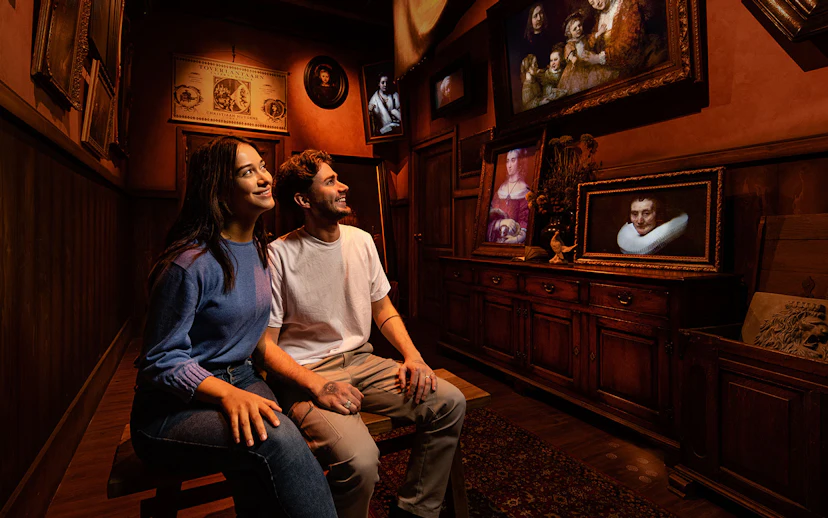
How to visit Rembrandts Amsterdam Experience
Rembrandts Amsterdam Experience is a short immersive art show best known for placing you inside a recreated 1663 Rembrandt studio through projections, sound, scent, and lighting. This is not a museum you wander through at your own pace — it runs more like a timed multimedia performance, and most visits are over in 25–30 minutes. The biggest difference between a smooth visit and a rushed one is arriving early enough for your show cycle. This guide covers timing, tickets, access, and what to prioritise.
Quick overview: Rembrandts Amsterdam Experience at a glance
- When to visit: Open daily, with showtimes running throughout the day, and the first sessions after opening are noticeably calmer than Friday–Sunday afternoons because this short indoor experience pulls in lots of walk-up visitors around busy Leidseplein.
- Getting in: From €17.50 for standard entry, with child tickets from €12.50 and discount-card entry from €9.50; walk-ins are possible, but booking ahead is smarter on spring weekends, in summer, and on rainy afternoons when the next show cycle fills quickly.
- How long to allow: 25–30 minutes for most visitors, or closer to 45–50 minutes if you want the AI portrait souvenir after the show.
- What most people miss: The family storytelling and late-career context add more than the spectacle alone, and many visitors walk straight past the AI portrait station after the finale.
- Is a guide worth it? A live guide usually is not necessary here because the show does the storytelling for you, but the multilingual audio support matters if you want cleaner narration in your preferred language.
Jump to what you need
🕒 Where and when to go
🗺️ Getting around
🎭 What happens inside
♿ Facilities and accessibility
Where and when to go
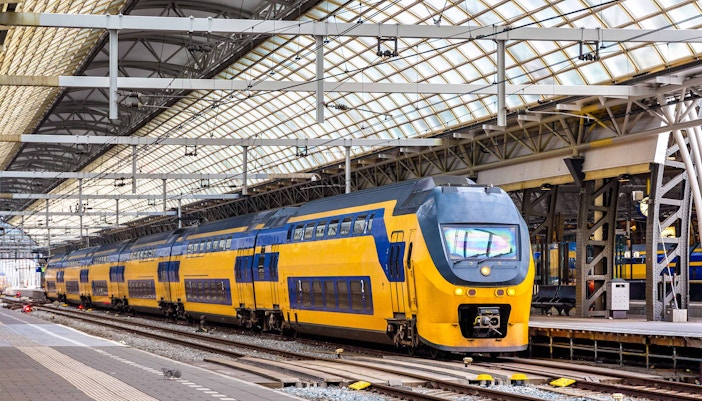
How do you get to Rembrandts Amsterdam Experience?
The venue sits on Weteringschans between Leidseplein and Max Euweplein, a short ride from Amsterdam Centraal and an easy add-on from Museumplein.
Weteringschans 2, Amsterdam, Netherlands → Open in Google Maps
- Tram: Leidseplein stop → 1–2 min walk → Lines 2, 3, 5, 12, and 19 all get you closest.
- Train + tram: Amsterdam Centraal → 15–20 min total → Tram 2 or 12 is the simplest public transit route.
- Taxi/rideshare: Hard Rock Café / Max Euweplein drop-off → 1–2 min walk → easiest if you’re arriving in bad weather.
- Bike: Leidseplein bike parking → 2–3 min walk → useful if you’re sightseeing locally first.
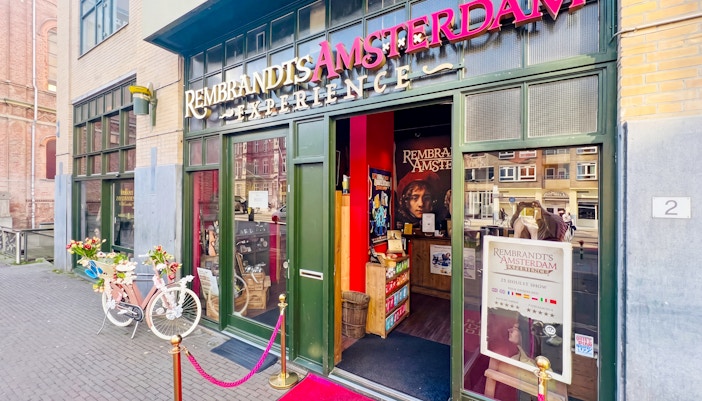
Which entrance should you use?
There’s one main entrance, and the mistake most people make is assuming they can arrive at any moment and walk straight in. Because the show runs in short cycles, late arrivals can end up waiting for the next session instead.
- Main entrance: Located at Weteringschans 2 beside Hard Rock Café. Best for all ticket holders. Expect little to no outdoor queue, but you may wait for the next show cycle during busy afternoon windows.
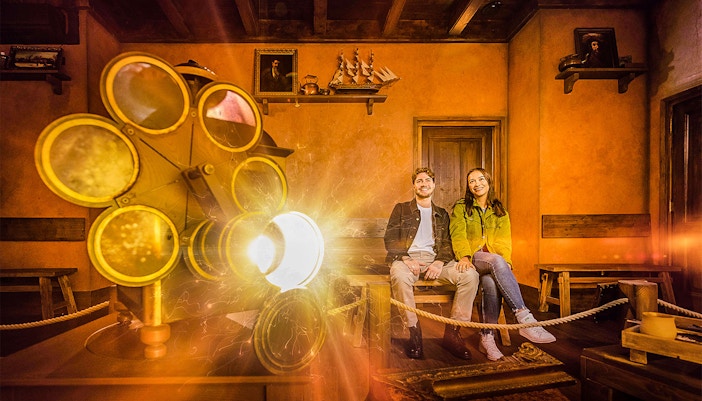
When is Rembrandts Amsterdam Experience open?
- Daily: Showtimes run throughout the day, with entry based on scheduled sessions rather than free roaming.
- Last entry: The final admission is tied to the day’s last listed show, so don’t arrive right at closing.
When is it busiest? Friday–Sunday afternoons, school breaks, and rainy summer days are the busiest, because short indoor attractions around Leidseplein fill fast with walk-up visitors.
When should you actually go? The first sessions after opening or a weekday late-afternoon slot usually mean less waiting and a better choice of seats before the next show fills.
Pro-tip: Late arrivals don’t lose the ticket — they lose the best show slot
Because the experience runs in short cycles, arriving 5–10 minutes early usually means walking straight into your session instead of waiting through the next 25-minute show, especially on wet weekends around Leidseplein.
How do you get around Rembrandts Amsterdam Experience?
Layout and route
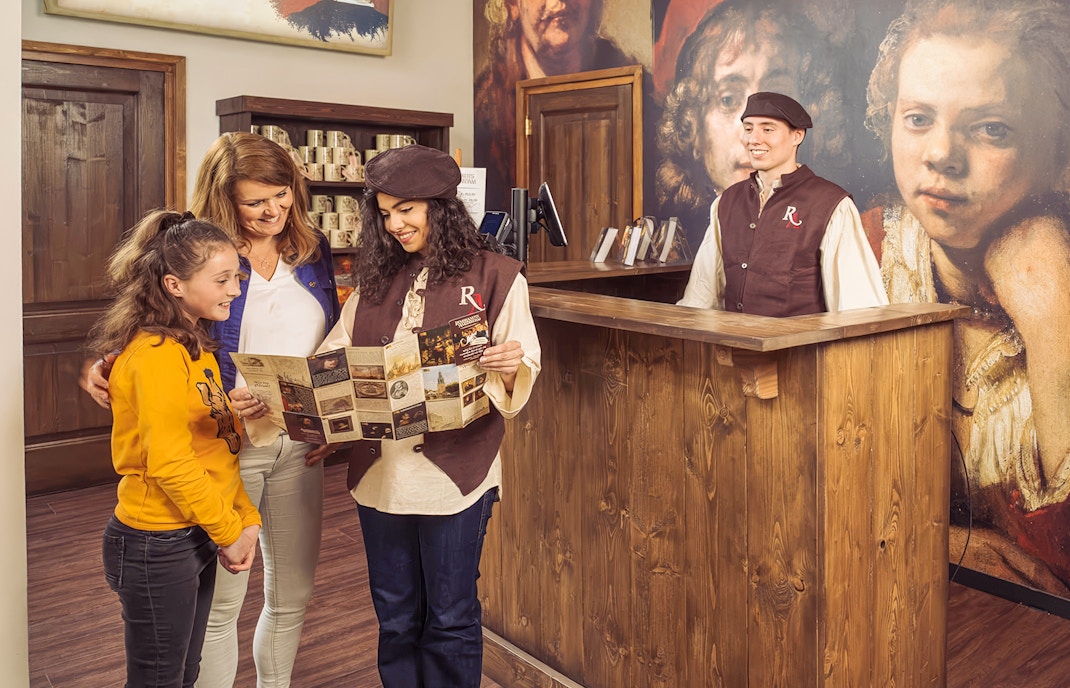
The venue is compact and runs more like a guided show than a museum, so navigation is easy once you’re inside. You won’t need to choose your own route, but it helps to know where the extra time goes after the finale.
- Check-in area: Ticket scan and brief wait before entry → budget 5–10 min if you arrive early.
- Main studio room: Recreated 17th-century setting + full projection show + sound, wind, and scent effects → budget 25–30 min.
- Portrait and exit area: AI portrait station + gift shop → budget 10–20 min if you want the add-on.
Suggested route: Arrive early, go straight into the main show, and decide before the finale whether you want the AI portrait, because that’s the only part of the visit that meaningfully extends your time on-site.

Maps and navigation tools
- Map: None needed → the route is fixed from lobby to show room to portrait area → you don’t need to download anything before arrival.
- Signage: Clear enough for a compact venue → once staff begin seating, the flow is straightforward → the real challenge is timing, not wayfinding.
- Audio guide/app: Audio support is available in 8 languages → choose your language before the show starts → it adds more value than a venue map here.
💡 Pro tip: Decide on the AI portrait before you enter — if you wait until the end to think about it, your group can lose time at the exit while everyone makes up their mind.
What happens inside Rembrandts Amsterdam Experience?
Recreated Rembrandt studio
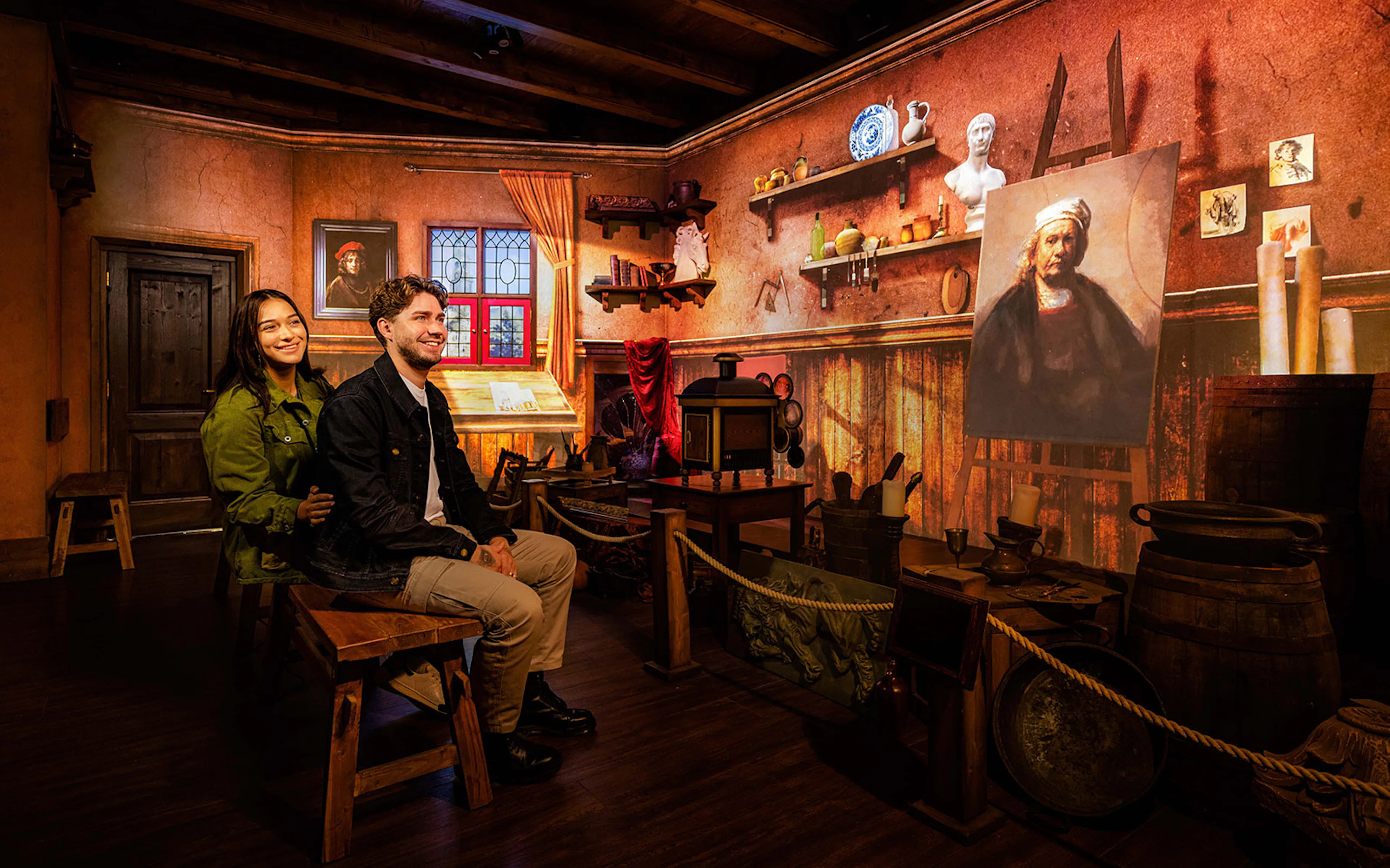
Era: 1663 Amsterdam studio reconstruction
This is the emotional center of the experience — a stylized recreation of Rembrandt’s last studio on the Rozengracht, built to make you feel like you’ve stepped into his working world rather than into a gallery. The period props and intimate setting do a lot of the heavy lifting before the projections even start. What most visitors rush past is how much the room itself sets up the story of his later years.
Where to find it: In the main show space immediately after check-in, before the projections fully take over the room.
The 5D show effects
Format: Multimedia show with projection, sound, wind, scent, and lighting
The attraction works best when you treat it like a short theatrical performance, not a museum exhibit. The effects are what make the visit memorable — the soundscape, changing lights, and scent cues turn a simple art-history story into something much more physical. What people often miss is that the strongest effects support the storytelling rather than replace it.
Where to find it: Throughout the central presentation room during the full 25-minute show.
Rembrandt and his family
Characters: Rembrandt van Rijn, Hendrickje Stoffels, Titus, and Cornelia
One of the smartest parts of the show is that it doesn’t focus only on paintings — it also turns Rembrandt into a person with a household, setbacks, and ambitions. The family scenes make the experience easier to follow if you don’t already know Dutch Golden Age history. Many visitors remember the visuals but miss how much of the emotional context comes through these character moments.
Where to find it: Woven through the show’s narrative sequences in the main studio room.
Projected masterpieces
Artwork focus: The Night Watch, late self-portraits, and other major works
Instead of hanging paintings on walls, the experience animates them around you. That makes famous works feel less like isolated masterpieces and more like part of a life story, especially if you’re seeing Rembrandt before going to the Rijksmuseum. The detail most visitors miss is how the projected works appear in sequence to match the turning points in his career.
Where to find it: On the walls and surrounding surfaces during the projection-heavy sections of the main show.
AI portrait souvenir
Add-on: AI-generated ‘Rembrandt-style’ portrait
This is the only part of the visit that’s really about you. If you want a light, memorable souvenir rather than another postcard, the portrait station turns your photo into a painterly image and lets you choose from multiple versions. Many visitors walk out without realizing it comes after the show, not before it, so they don’t leave enough time.
Where to find it: In the exit area after the main presentation ends.
Facilities and accessibility
- 🎁 Gift shop/merchandise: A small shop near the exit sells postcards, prints, and themed souvenirs, so it’s best for a quick keepsake rather than a long browse.
- 🚻 Restrooms: There are no restrooms on-site, so use nearby facilities before your session begins.
- 🪑 Seating/rest areas: The main presentation is designed as a seated show, which makes the short visit easier if you’re fitting it between longer museum stops.
- 🎧 Audio support: The experience offers narration in 8 languages, which matters more here than at a self-guided gallery because the story moves quickly.
- 📍 Location convenience: The venue sits right by Leidseplein and next to Hard Rock Café, so food, cafés, and transit are all close once you leave.
- ♿ Mobility: The attraction is fully wheelchair accessible, with a ground-floor entrance and step-free access through the short route.
- 👁️ Visual impairments: Audio narration helps with context, but the experience is heavily visual and projection-led, so it’s more rewarding if you can engage with the room-wide imagery.
- 🧠 Cognitive and sensory needs: The show uses sound, lighting, wind, and scent effects, so visitors who are sensitive to immersive effects should know it can feel intense even though it is brief.
- 👨👩👧 Families and strollers: The compact, mostly one-route layout makes family logistics easier than at a large museum, but very young children may find the dark room and sensory cues startling.
This is well-suited to children who enjoy lights, sound, and storytelling more than reading labels in a traditional museum.
- 🕐 Time: Around 25–30 minutes is realistic with children, and that short runtime is one of the venue’s biggest strengths for families.
- 🏠 Facilities: The seated show format helps with tired kids, but there are no restrooms on-site, so take care of that before you enter.
- 💡 Engagement: Prep children to watch for the moment paintings begin to move across the room — that usually hooks them faster than the historical backstory.
- 🎒 Logistics: Bring only what you need and arrive 10 minutes early, because the experience runs on show cycles rather than free wandering.
- 📍 After your visit: Leidseplein is close enough for an easy snack break or canal cruise add-on if your family still has energy.
Rules and restrictions

What you need to know before you go
- Entry requirement: Book standard, child, or qualifying discount-card entry in advance if you want a specific session, and arrive about 10 minutes early so you don’t miss the next show cycle.
- Bag policy: This is a short indoor show rather than a luggage-friendly stop, so a small day bag works far better than arriving with bulky shopping or travel bags.
- Re-entry policy: Plan the visit as one continuous stop, because the entire experience is built around a single 25-minute show rather than flexible in-and-out browsing.

Not allowed
- 🚫 Food and drink: It’s best to finish drinks and snacks before entry, since the attraction runs as a compact multimedia show in a darkened room.
- 🚬 Smoking/vaping: Smoking and vaping aren’t a fit for the indoor show environment, so step away from the entrance area if you need a break before going in.
- 🐾 Pets: Standard pets are not suited to this type of indoor immersive presentation, while service-animal access should be arranged before arrival.
- 🖐️ Touching sets or moving around during the show: Treat the recreated studio as part of the production rather than as a hands-on exhibit, because movement and bright screens affect the room experience for everyone.

Photography
Casual photos are easiest before or after the show rather than during it. Once the room goes dark, bright phone screens, flash, and long filming quickly distract from the projections and break the atmosphere, so this is one place where watching first and photographing later usually gives you the better visit.

Good to know
- No restrooms on-site: The visit is short, but this catches people out more often than they expect, especially if they’re arriving straight from a tram or canal cruise.
- It’s a show, not a free-roam museum: If you arrive late, you’re not just losing a few minutes — you may end up waiting for the next full cycle.
Practical tips
- Booking and arrival: Book ahead if you’re visiting on a spring weekend, a rainy afternoon, or during summer, and aim to arrive 10 minutes early, because missing your show cycle can mean waiting another 25 minutes.
- Pacing: Don’t expect a long museum visit here — save your deeper art-history energy for the Rijksmuseum or Rembrandt House Museum, and treat this as a sharp, immersive opener or reset in the middle of the day.
- Crowd management: Weekday mornings and later weekday afternoons work best because this short indoor attraction pulls in spontaneous foot traffic from busy Leidseplein when the weather turns.
- What to bring or leave behind: A small day bag is enough; anything bulkier feels awkward in a compact, seated show where you’re not moving through large galleries.
- Food and drink: Eat before you go if you’re heading into an evening session, because there’s no café inside and nearby Leidseplein spots get noticeably busier after 6pm.
- Portrait add-on: If you want the AI portrait, budget 15–20 extra minutes and decide in advance, because the exit area moves faster when everyone in your group already knows whether they want it.
- Language choice: Pick your preferred narration language before the show starts, because this isn’t the kind of attraction where you can pause and catch up later.
What else is worth visiting nearby?
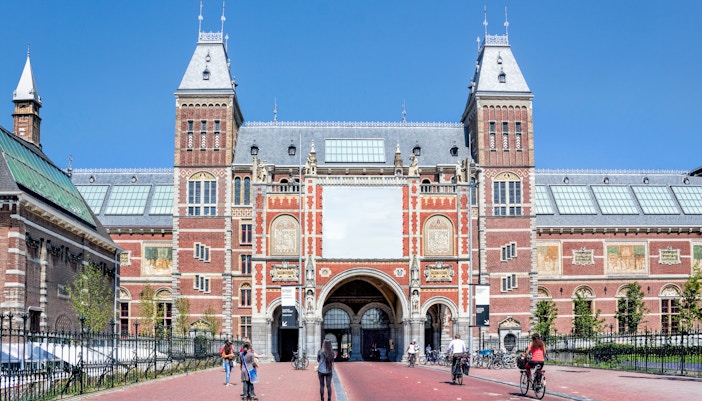
Commonly paired: Rijksmuseum
Distance: ~1.2km — about 15 minutes on foot
Why people combine them: You get the short immersive storytelling first, then the real paintings afterwards — including Rembrandt’s The Night Watch — which makes the museum visit land better.
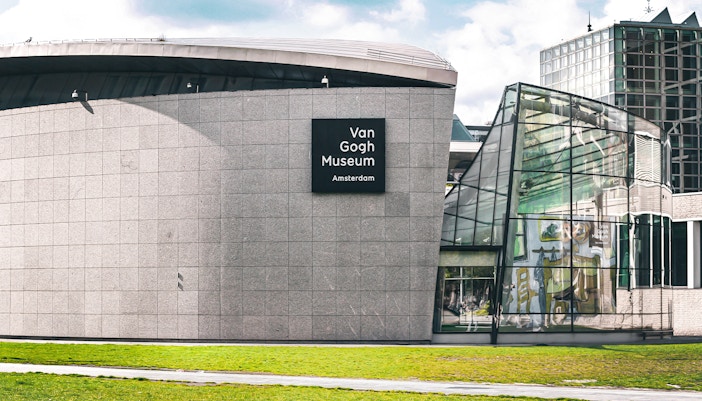
Commonly paired: Van Gogh Museum
Distance: ~1.4km — about 18 minutes on foot or a short tram ride
Why people combine them: It’s an easy, same-area art pairing if you want one fast multimedia stop and one more traditional museum in the same half-day.
Also nearby
Canal cruise
Distance: ~350m — about 5 minutes on foot
Worth knowing: This is the easiest add-on if you want to keep sightseeing without committing to another museum right away.
Rembrandt House Museum
Distance: ~2.5km — about 15 minutes by tram
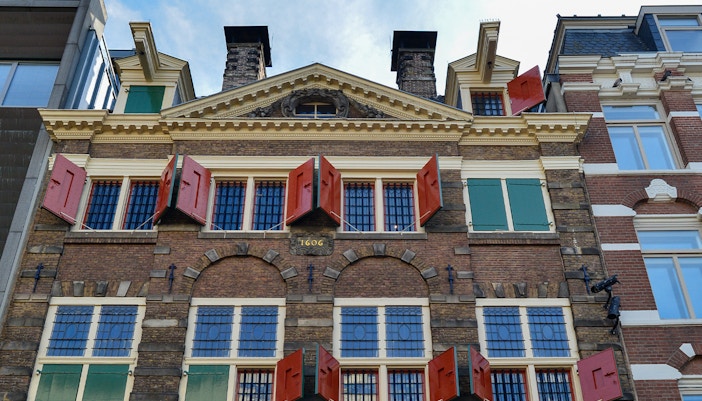
Worth knowing: This is the better follow-up if you want the authentic historic setting after seeing the multimedia version of Rembrandt’s world.
Eat, shop and stay near Rembrandts Amsterdam Experience
On-site: There’s no café inside, so this works best as a quick cultural stop between meals rather than a place to linger over food.
Options nearby:
- Hard Rock Café Amsterdam (1-minute walk, Max Euweplein 57–61): American comfort food, mid-range to high, and the easiest sit-down option right after the show.
- Rijks (15-minute walk, Museumstraat 2): Refined Dutch-inspired dining, high-end, and the best choice if you’re pairing the experience with Museumplein.
- Leidseplein café terraces (3–5 minutes on foot, Leidseplein): Casual coffee, snacks, and quick meals, which makes them useful before a show if you don’t want a full restaurant stop.
💡 Pro tip: Eat before evening sessions on Fridays and Saturdays — the show itself is short, but nearby Leidseplein restaurants fill fast once the dinner rush starts.
- Rembrandts Amsterdam Experience gift shop: Postcards, prints, and themed souvenirs right by the exit, which makes it the simplest stop if you only want one small keepsake.
- Rijksmuseum Shop: Art books, design gifts, and quality prints in the Museumplein area, and it’s a stronger pick if you want something more substantial than a standard souvenir.
- Van Gogh Museum Shop: Books, stationery, and giftable art merchandise, and it works well if you’re already planning to continue toward Museumplein.
Leidseplein is convenient, lively, and easy if you want to walk to theaters, canal cruises, nightlife, and several museums. It’s a practical short-stay base, but it can feel busy and tourist-heavy in the evenings. If you want quieter canal scenery or a more local neighborhood feel, you’ll probably sleep better elsewhere.
- Price point: Mostly mid-range to upper-mid-range, with higher prices on weekends and during festival periods because you’re close to nightlife and Museumplein.
- Best for: Short city breaks where you want to keep logistics simple and walk to multiple attractions without relying on transit.
- Consider instead: The Museumplein area suits travelers prioritizing museums and calmer evenings, while the Jordaan is a better fit for longer stays if you want canal views, restaurants, and less tourist churn.
Frequently asked questions about visiting Rembrandts Amsterdam Experience
Most visits take about 25–30 minutes. If you want the AI portrait after the show, plan for 45–50 minutes total. This is one of the few Amsterdam art attractions you can comfortably fit between bigger museum stops without losing half a day.
No, you don’t have to book far in advance, but it’s smart if you want a specific time. Walk-ins are possible, yet busy spring weekends, summer afternoons, and rainy days around Leidseplein can push you into the next available show cycle instead of the one you wanted.
Arrive about 10 minutes early. That gives you enough time to check in, choose your language support, and enter with your session instead of scrambling in as the show starts. Because the experience is only about 25 minutes long, even a short delay matters more than people expect.
Yes, a small bag is fine, but this isn’t a good stop for large luggage or heavy shopping. The visit is short, compact, and centered on a seated multimedia show, so traveling light makes the experience more comfortable.
You can usually take a few casual photos before or after the show, but the main presentation works better if you keep your phone away once projections begin. Bright screens and flash are especially distracting in a dark room built around full-wall visuals.
Yes, but groups should book ahead if they want to enter the same session together. Because the attraction runs on a fixed show cycle rather than open roaming, large groups are harder to accommodate smoothly at the last minute.
Yes, it’s one of the more family-friendly art experiences in Amsterdam because it lasts only about 25–30 minutes and relies on visuals, sound, and storytelling instead of long labels. Very young children can still find the dark room and sensory effects a bit intense, so a quick heads-up helps.
Yes, the venue is wheelchair accessible. The route is short, the entrance is step-free, and the experience is designed more like a ground-floor show than a multi-level museum. That makes it much easier logistically than some historic attractions in Amsterdam.
No food is served inside the attraction, but you’re right by Leidseplein, so nearby options are easy. Hard Rock Café is next door, and there are plenty of cafés and terraces within a 3–5 minute walk if you want a quick bite before or after your session.
Rembrandts Amsterdam Experience is a 25-minute immersive show, while Rembrandt House Museum is a more traditional historic-house visit. If you want a quick, sensory introduction, choose the Experience. If you want the authentic setting, original context, and a longer museum visit, choose the House Museum.
Yes, if you want a memorable keepsake and don’t mind spending about 15–20 extra minutes after the show. It adds novelty rather than depth, so it’s best for travelers who enjoy fun photo souvenirs more than for visitors focused only on art history.
The experience offers audio support in 8 languages: English, Dutch, German, French, Spanish, Italian, Russian, and Chinese. That matters because the narration moves quickly, and following it in your strongest language makes the short show much easier to enjoy.