- 1770s: Marie Tussaud learns wax modeling in Paris under physician Philippe Curtius, mastering lifelike portrait techniques that later inspire the Madame Tussauds museum tradition.
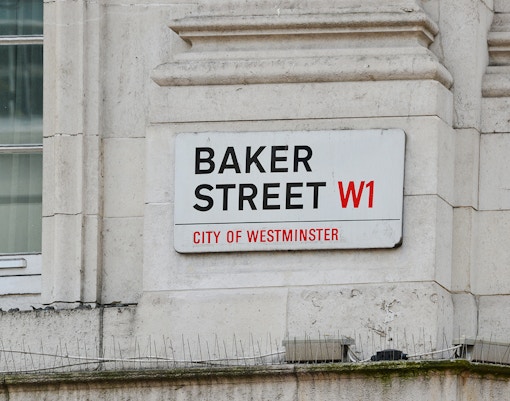
- 1835: Marie Tussaud establishes a permanent exhibition at Baker Street Bazaar in London, transforming her touring wax collection into a fixed public attraction.
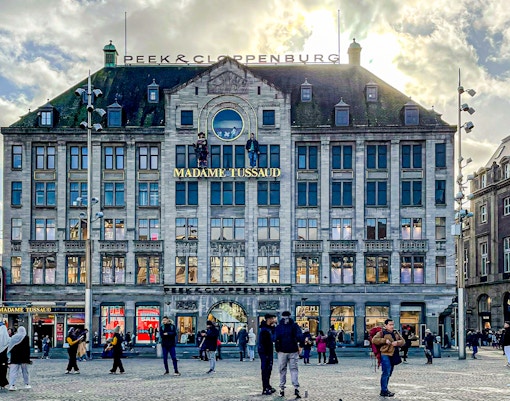
- 1914–1917: Architect A. J. Joling designs and completes a large Peek & Cloppenburg retail building on Dam Square, later becoming the home of Madame Tussauds Amsterdam.
- 1970: The Tussauds Group establishes the Amsterdam branch, marking the first Madame Tussauds museum outside the United Kingdom and beginning its international expansion.
- 1971: Madame Tussauds Amsterdam opens to visitors on Kalverstraat, displaying wax figures of well known celebrities, historical personalities, and public figures.
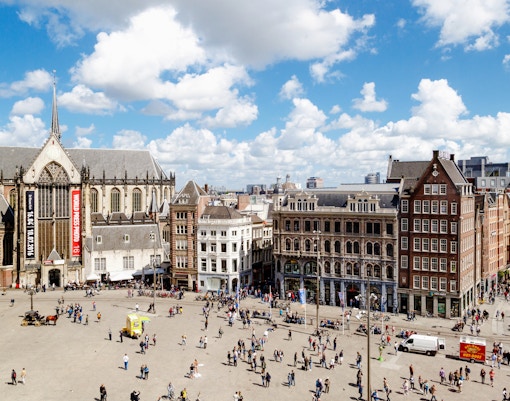
- 1991: The museum relocates to the upper floors of the Peek & Cloppenburg building on Dam Square, improving visibility and access within Amsterdam’s central tourist district.
- 2001: Dutch authorities designate the building housing Madame Tussauds Amsterdam as a protected rijksmonument, preserving its historic architecture and cultural significance.
- 2012: A major renovation introduces interactive displays, themed zones, and updated figures, transforming the museum from a traditional wax gallery into an immersive attraction.
History of Madame Tussauds Amsterdam | From Marie Tussaud’s wax studio to a global attraction
The history of Madame Tussauds begins in eighteenth century Paris, where Marie Tussaud learned wax modeling during the French Revolution. Her lifelike portraits gradually evolved into a famous museum tradition, eventually leading to Madame Tussauds Amsterdam on Dam Square. Here’s how that journey unfolded over centuries!
Madame Tussauds Amsterdam timeline

History of Madame Tussauds Amsterdam explained

Marie Tussaud’s early beginnings (1770s)
Marie Tussaud learned wax sculpting in Paris under physician Philippe Curtius, who created detailed wax models for teaching and exhibitions. During the French Revolution she produced death masks of executed figures, shaping the dramatic historical displays later shown across Britain.
The London foundation (1835)
After years of touring Britain with portable exhibitions, Marie Tussaud opened a permanent display at Baker Street Bazaar in London in 1835. Visitors could view wax portraits of royal figures, politicians, and notorious personalities in carefully arranged gallery rooms.
The Dam Square building takes shape (1914–1917)
The building that later housed Madame Tussauds Amsterdam was constructed as a Peek & Cloppenburg department store. Designed by architect A. J. Joling, it featured symmetrical façades, decorative stonework, and large windows overlooking Dam Square.

The Amsterdam branch is founded (1970)
In February 1970, the Tussauds Group established the Amsterdam branch during a period of growing international tourism. Josephine Tussaud, a descendant of Marie Tussaud, supported the expansion, making Amsterdam the first Madame Tussauds location outside the United Kingdom.

Opening on Kalverstraat (1971)
Madame Tussauds Amsterdam opened in 1971 on Kalverstraat, one of the city’s busiest commercial streets. Visitors could see wax figures of film stars, musicians, and political leaders displayed in themed settings that encouraged close viewing.
Moving to Dam Square (1991)
In 1991 the museum relocated to the upper floors of the Peek & Cloppenburg building on Dam Square. This move placed the attraction in Amsterdam’s historic center, surrounded by landmarks and steady streams of visitors.

National monument recognition (2001)
In 2001 the building housing Madame Tussauds Amsterdam was designated a rijksmonument, the Netherlands’ protected heritage status. This recognition preserves its historic architecture while allowing the interior spaces to continue functioning as exhibition galleries.

A modern interactive museum (2012)
A major renovation completed in 2012 introduced interactive exhibits where visitors could stand beside wax figures and pose for photographs. The redesign added themed zones focused on music, sports, film, and Dutch history.
Construction and architecture of Madame Tussauds Amsterdam
The building that houses Madame Tussauds Amsterdam was designed by Dutch architect A. J. Joling and completed in 1917. Its architecture draws inspiration from styles popular around the year 1800, featuring balanced proportions, decorative stonework, and tall windows facing Dam Square. The structure was originally built for the clothing retailer Peek & Cloppenburg and functioned as a department store for decades before the museum moved into its upper floors.
Inside, the layout was adapted to support exhibition spaces while preserving the historic exterior. Floors were redesigned to accommodate galleries, lighting systems, and display platforms required for wax figures. Because the building is a protected monument, renovations must respect its original structure while carefully integrating modern museum technology and visitor facilities.
Madame Tussauds Amsterdam today
Today, Madame Tussauds Amsterdam occupies several floors of a historic building overlooking Dam Square, placing it among the busiest visitor areas in the city. Inside, galleries present lifelike wax figures of global celebrities, political leaders, athletes, musicians, and important Dutch personalities.
The museum now focuses on interactive experiences rather than traditional display cases. Visitors can stand beside figures, use staged sets for photographs, test music or sports themed activities, and learn about notable Dutch figures through multimedia installations and storytelling displays.
Frequently asked questions about the history of Madame Tussauds Amsterdam
The Amsterdam branch was founded in 1970 by the Tussauds Group and opened to the public in 1971, becoming the first Madame Tussauds museum outside the United Kingdom.
Marie Tussaud was a French wax sculptor born in 1761 who created lifelike wax portraits. Her touring exhibitions eventually became the famous Madame Tussauds museums.
Amsterdam attracted growing international tourism in the late twentieth century. Its busy historic center and reputation as a cultural destination made it an ideal location.
The museum first opened on Kalverstraat, one of Amsterdam’s busiest shopping streets, before moving in 1991 to its current location overlooking Dam Square.
The building was designed in 1917 by architect A. J. Joling and later received rijksmonument status, recognizing it as a protected historic structure.
Earlier displays focused on static wax figures placed behind barriers. Modern renovations introduced interactive exhibits where visitors can pose with figures and explore themed environments.
The museum relocated in 1991 to the upper floors of the Peek & Cloppenburg building on Dam Square, improving visibility and accessibility for visitors.
A large renovation completed in 2012 introduced themed zones, interactive displays, and updated figures that reflect modern entertainment and global popular culture.


