Is Body Worlds Amsterdam worth visiting?

Walking through Body Worlds Amsterdam is an intense, deeply intimate experience that forces you to confront your own mortality and physical mechanics simultaneously. The atmosphere is quiet, respectful, and slightly surreal, with dramatic lighting casting deep shadows over flawlessly dissected muscle groups, nerve pathways, and vital organs.

The original intent behind the exhibition is to democratize anatomy, pulling it out of hidden medical schools and offering ordinary people a literal mirror of their inner selves. The ultimate emotional payoff is an overwhelming sense of awe for your own body’s resilience and complexity; you leave with a renewed desire to take better care of your physical health.

Skip it if: You are highly squeamish about human anatomy, find scientific dissections unsettling, or strictly prefer traditional art museums and historic canal houses.

What to see at Body Worlds Amsterdam
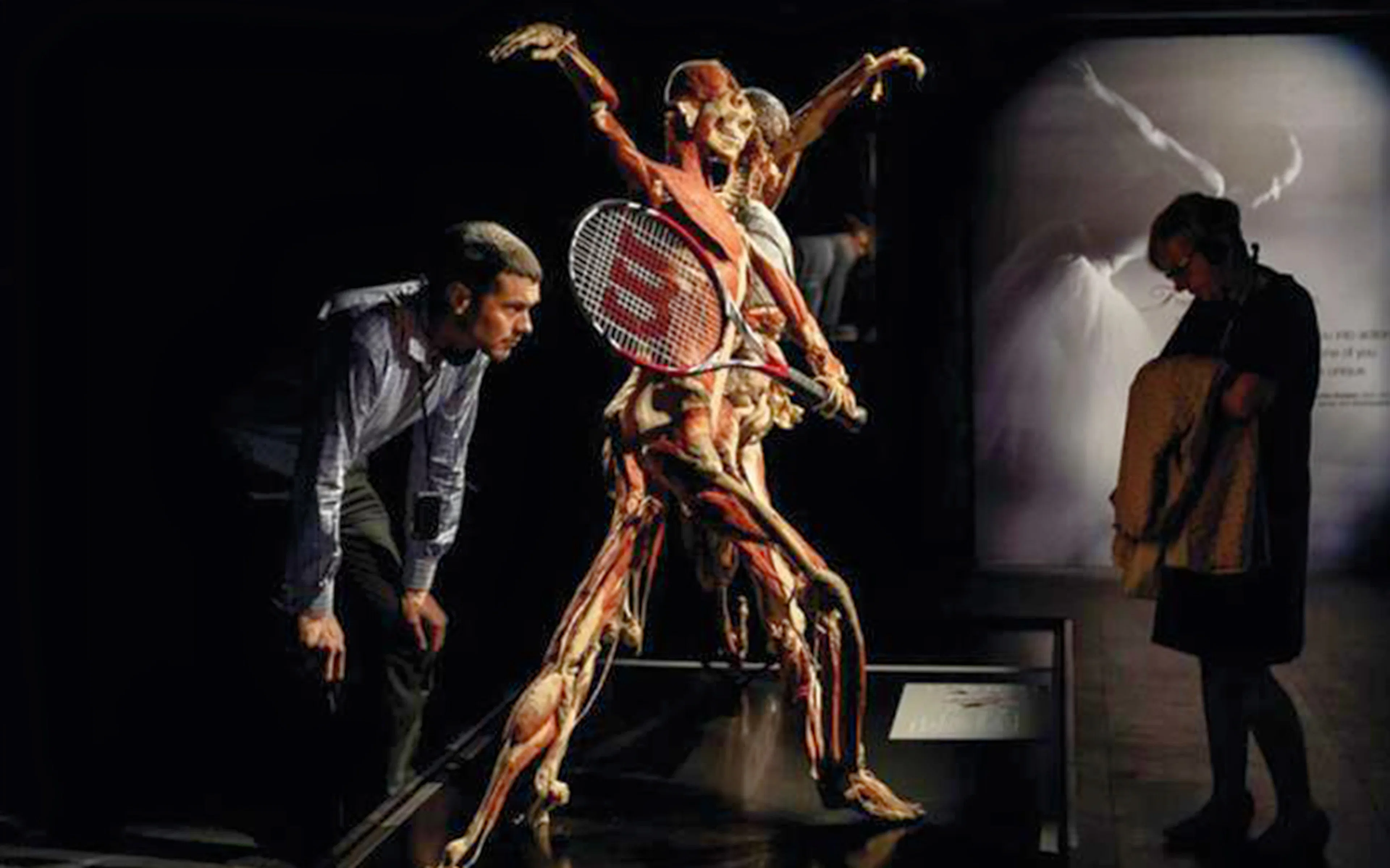
Human anatomy exhibit with tennis racket at Body Worlds London.
1/5

The plastinated full-body specimen gallery

The anchor of the entire exhibition. These full-size human figures are frozen mid-motion, running, jumping, playing sports, to showcase exactly how muscles contract, tendons stretch, and bones align under physical exertion. This section draws the most footfall, and most visitors spend at least 20 minutes studying the diverse poses.

The cardiovascular display

A breathtaking, intricate web of blood vessels stripped entirely of muscle and bone. Using specialized red polymers, it highlights the immense network of capillaries feeding the human heart and brain, revealing how stress damages our arterial pathways.

The healthy vs. diseased organ comparison

A stark, educational zone contrasting healthy internal organs with those ravaged by lifestyles or illness. Seeing a smoker’s blackened lungs positioned directly next to a pair of healthy, pink lungs provides a visual impact that health textbooks cannot replicate.

The human development & embryology room

A secluded, highly sensitive section documenting the journey of life from conception. It displays real, preserved embryos and fetuses at various stages of growth, emphasizing the fragility and complexity of early human development.

The interactive InBody Matrix

A modern tech zone located near the end of the tour where visitors can get a personal body composition analysis. It measures your muscle mass, fat percentage, and water levels, grounding the exhibition's lessons directly into your own physical reality.

How to explore Body Worlds Amsterdam

Budget a minimum of 90 minutes to navigate the multi-level layout comfortably. First-time visitors are often surprised by the depth of the anatomical notes, so pacing yourself is key to avoiding sensory overload.

Suggested route: Start on the top floor via the lift and work your way down. This path flows chronologically through the systems of the body, starting with structural bones and skeletal frameworks, moving down through musculature, cardiovascular channels, nervous systems, and finally ending with the interactive lifestyle zones on the lower levels.

  • Must-see: The full-body athletic plastinates, the healthy vs. smoker's lung comparison, and the spectacular cardiovascular web.
  • Optional: The InBody composition scan at the end is highly insightful but can be skipped if you want to bypass the brief queuing area.

Self-paced vs. guided: A self-paced visit using the free audio guide works beautifully here. The written plaques are detailed and available in multiple languages, allowing you to linger over specific anatomical sections without a group rushing you forward.

Brief history of Body Worlds Amsterdam

  • 1977: Dr. Gunther von Hagens invents the revolutionary process of plastination at the University of Heidelberg, replacing bodily fluids with reactive polymers.
  • 1995: The first public Body Worlds exhibition opens in Japan, sparking international medical, ethical, and cultural debates while drawing unprecedented crowds.
  • 1982: The Institute for Plastination formally establishes its body donor program, ensuring all future exhibits rely entirely on voluntary consent.
  • 2014: Body Worlds establishes its permanent home in Amsterdam on the bustling Damrak avenue, branding the location as 'The Happiness Project'.
  • Today: The exhibition remains one of the city's premier interactive educational highlights, constantly updating its lifestyle research and anatomical specimens.

Architecture and design

Style

Modern corporate exhibition space housed within a historic, classic Amsterdam brick townhouse.

Key materials

Matte-black partition walls, high-intensity directed LED spotlights, and reinforced low-iron glass display vitrines designed to maximize specimen visibility.

The design vision

Developed by creative director Dr. Angelina Whalley, the layout uses darkness and isolated lighting pools to elevate the human body as an artistic sculpture rather than a clinical medical specimen.

Experiential detail

As you move through the rooms, the temperature is kept deliberately cool to help preserve the environment, while the ambient soundtrack remains low, creating an atmosphere that feels like a cross between a silent sanctuary and a futuristic laboratory.

Frequently asked questions about Body Worlds Amsterdam

Yes, especially if you enjoy interactive science and want a truly unique alternative to traditional art galleries. Booking a timed mobile ticket in advance is highly recommended to skip the entry queues along the busy Damrak street.