Why is Keukenhof a must-visit attraction?

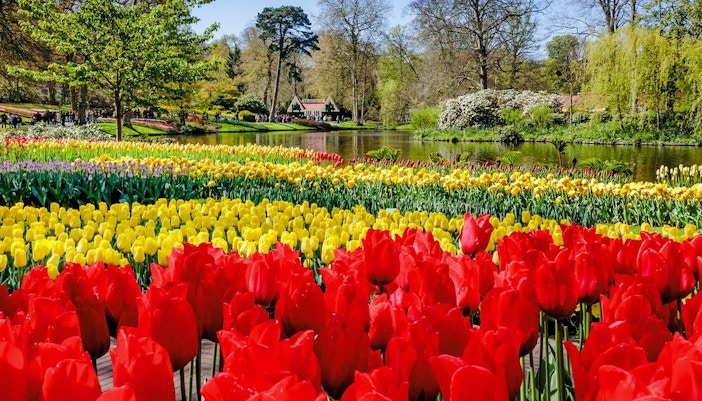
As you step through the gates, the scent of millions of hyacinths and the sight of endless tulip rows create an atmosphere of pure magic. It is the only place on earth where you can witness over 800 varieties of tulips in a single location, ranging from the classic red ‘Apeldoorn’ to the rare, dark ‘Queen of Night’.

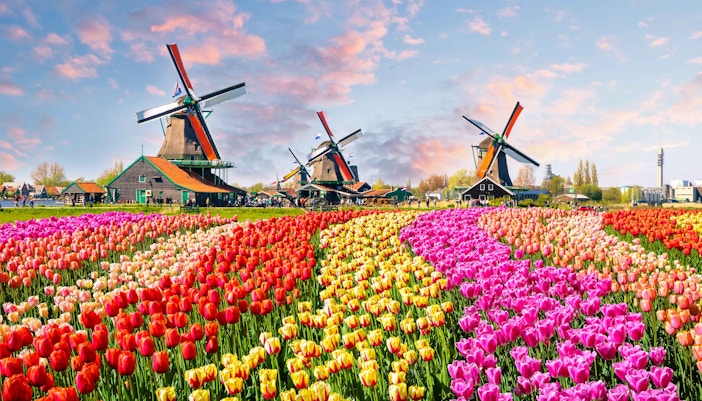
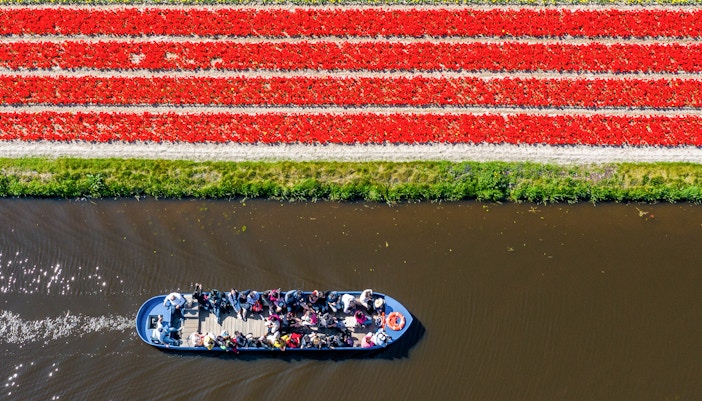
Keukenhof 2026 represents the pinnacle of Dutch floriculture. Beyond the aesthetic beauty, it offers a deep dive into a tradition that has shaped the Netherlands since the 17th-century ‘Tulip Mania’. Whether you are gliding through the nearby bulb fields on a silent electric ‘whisper boat’ or capturing the perfect photo by the historic windmill, the park provides a serene escape.

Keukenhof is not just for flower enthusiasts; the art installations, petting zoo, and maze make it a world-class destination for families and photographers alike. Because the gardens are only open for roughly eight weeks a year, being there feels like catching a fleeting, beautiful moment in time.

What to see at Keukenhof?

The Thematic Gardens
Each year, Keukenhof features diverse garden styles. From the Inspirational Gardens that offer ideas for your own backyard to the historic Clusius Garden, which recreates the 16th-century botanical style, there is a design for every taste.

Indoor flower shows

When you want to step inside, the pavilions (Oranje Nassau, Willem-Alexander, and Beatrix) host rotating floral displays. These shows feature lilies, orchids, and roses in artistic arrangements that change weekly to reflect the peak of the season.
Keukenhof pavilions

The historic windmill

Located at the edge of the park, this 19th-century mill offers more than a photo op. You can climb to the gallery for a panoramic view of the surrounding commercial tulip fields that stretch toward the horizon.
Keukenhof Castle

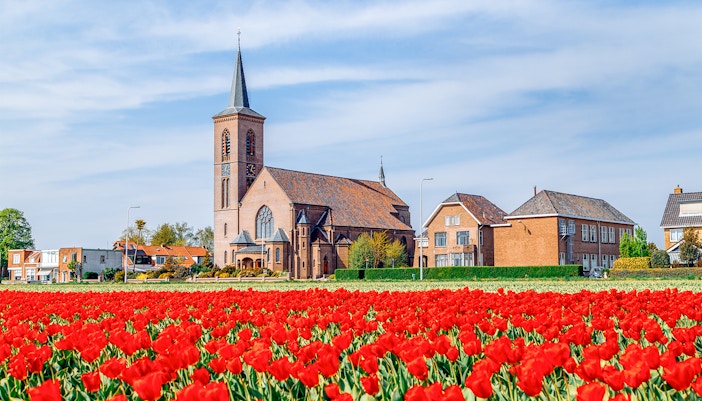
Located just across the road from the flower gardens, the 17th-century Keukenhof Castle stands on a lush estate. While the flower park is seasonal, the castle grounds are often open year-round for walks through history.
About Keukenhof Castle

The whisper boats

For a unique perspective, hop on an electric-powered whisper boat. These vessels navigate the narrow canals surrounding the park, allowing you to see the vibrant stripes of the tulip farmers' fields from the water level.
Sculpture Park

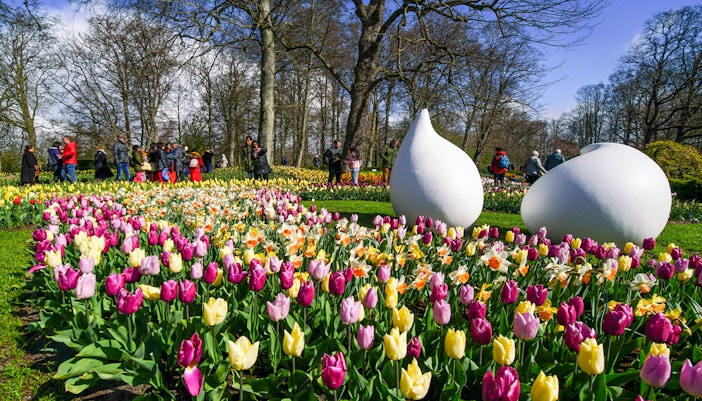
Keukenhof is not just about flowers; it is the largest sculpture park in the Netherlands. As you wander, you’ll find over 100 contemporary artworks by local artists strategically placed to complement the floral landscapes.
Highlights of Keukenhof in Lisse

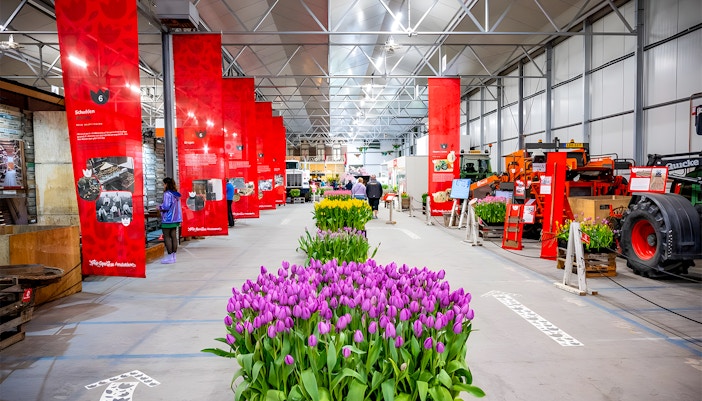
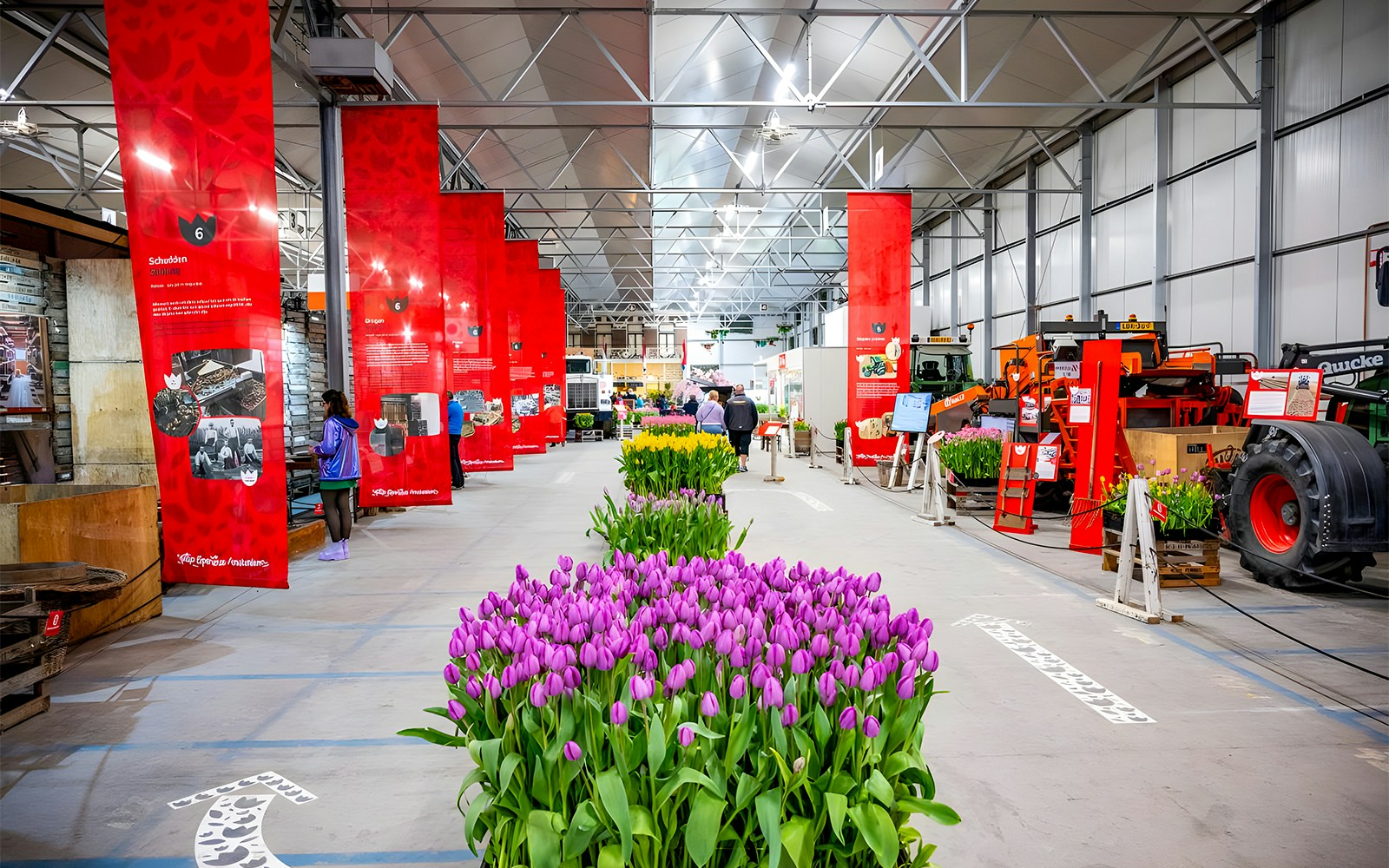
Keukenhof indoor tulip display with vibrant purple and yellow flowers, surrounded by red informational banners.

Willem-Alexander Pavilion

Home to thousands of tulips and, later in the season, a massive lily show.

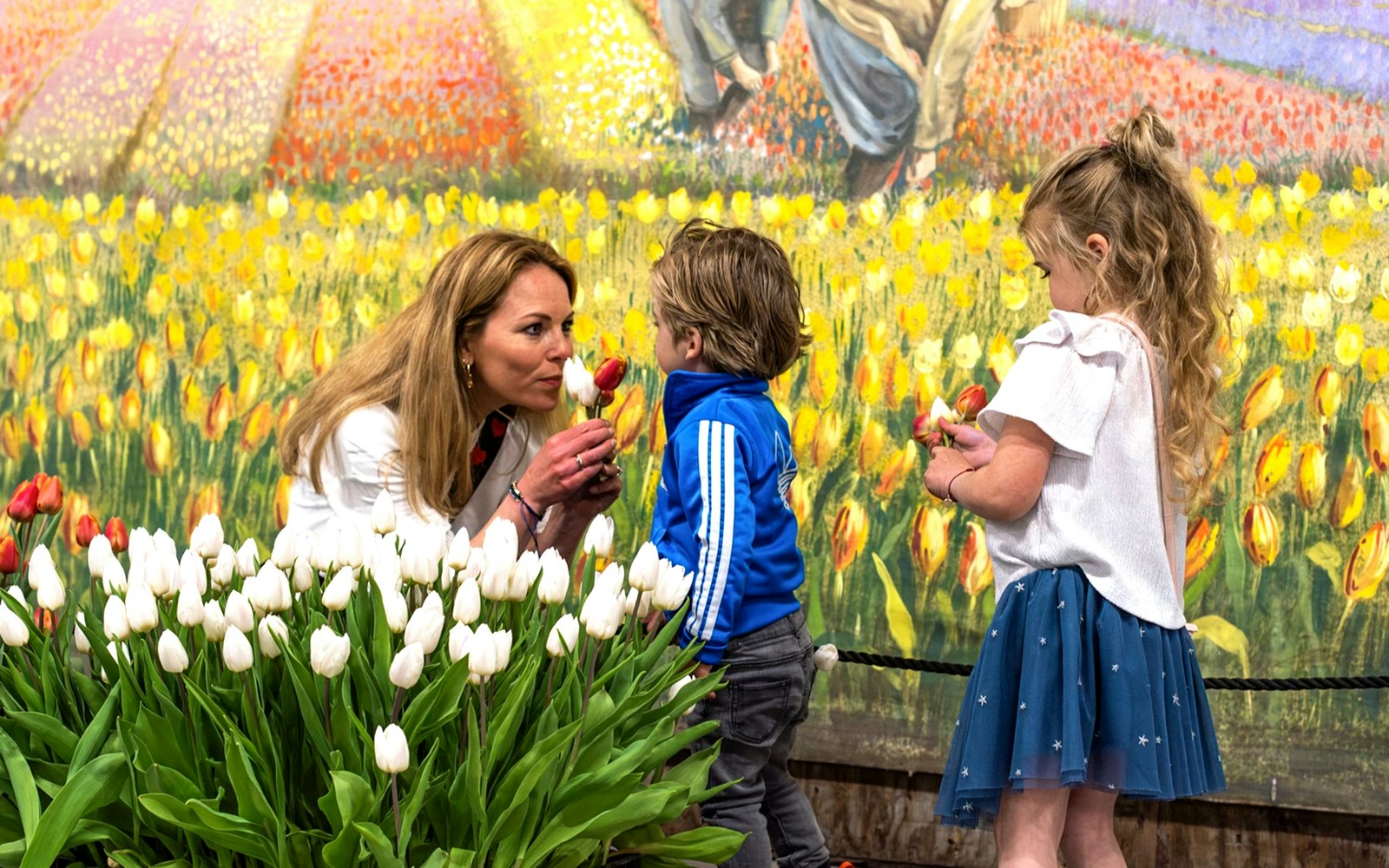
Visitors enjoying tulips at Keukenhof Tulip Experience, Amsterdam.
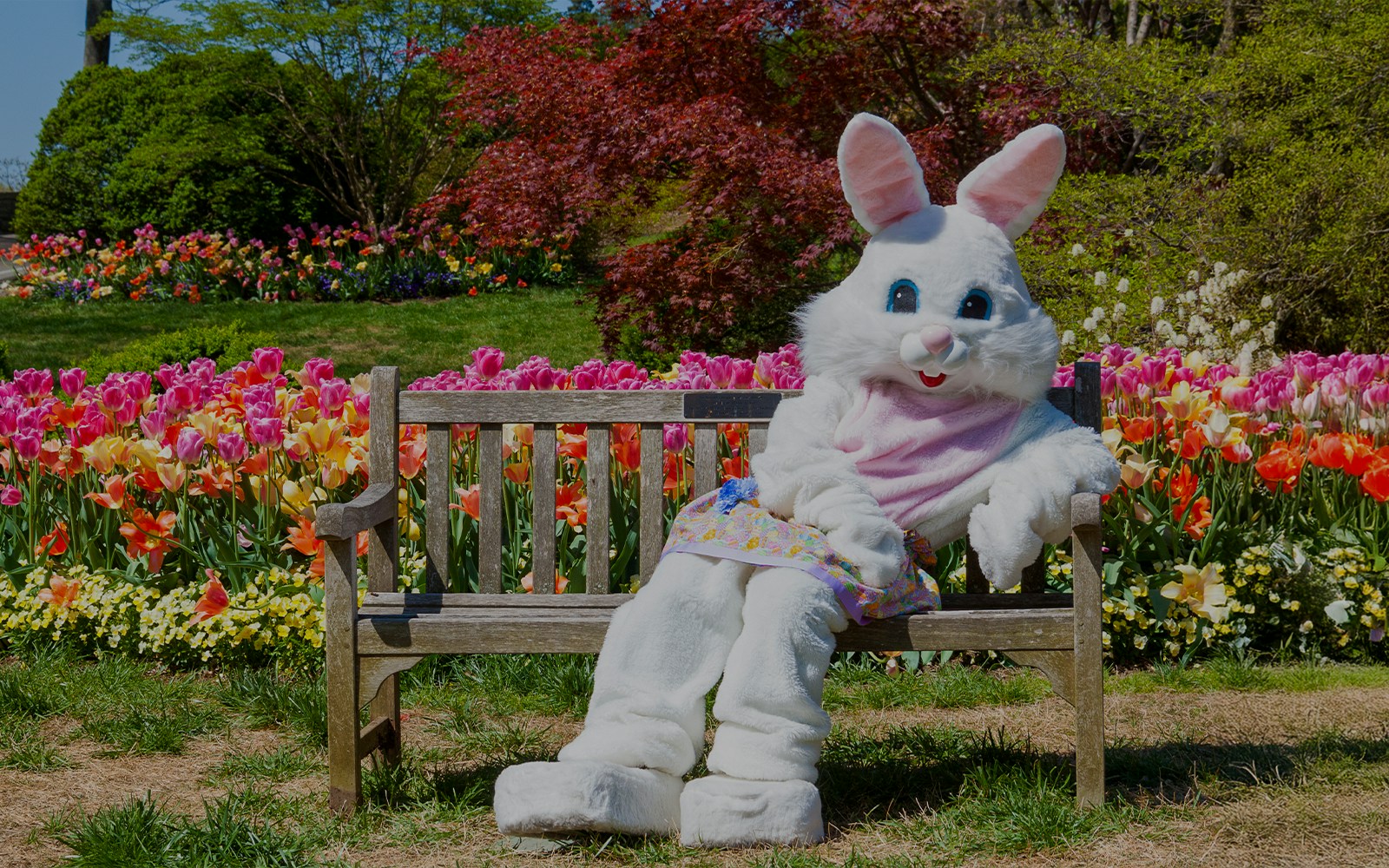
Easter Bunny sitting on a bench surrounded by tulips at Keukenhof Gardens.

Brief history of Keukenhof

The history of the grounds dates back to the 15th century. The name ‘Keukenhof’ translates to ‘Kitchen Garden’, as the land provided herbs and game for the kitchen of Countess Jacoba van Beieren’s castle. In 1857, landscape architects Jan David Zocher and his son Louis Paul Zocher, who also designed Amsterdam’s Vondelpark, laid the foundations for the current English landscape style.

The transition to a flower exhibit occurred in 1949, when a group of 20 leading flower bulb exporters decided to use the estate to showcase their products. The gates opened to the public in 1950, instantly becoming a national treasure.

Who built Keukenhof?

The original landscape was designed by Jan David Zocher and Louis Paul Zocher. Today, the park is meticulously maintained by a team of 40 gardeners. The iconic modern entrance was designed by the firm Mecanoo, featuring a striking wooden roof that symbolises the geometry of nature.

Architecture of Keukenhof

The architectural identity of the park is defined by the English Landscape Style, often called the ‘Zocher Style’. Unlike formal, symmetrical gardens, this style mimics nature through winding paths, vistas, and irregular water features that create a sense of organic discovery. This romantic layout provides the perfect backdrop for the vibrant tulip displays. In contrast, the main entrance (opened in 2017) uses sustainable timber and glass to create a modern transition into the historic garden.

Tulp Festival 2026

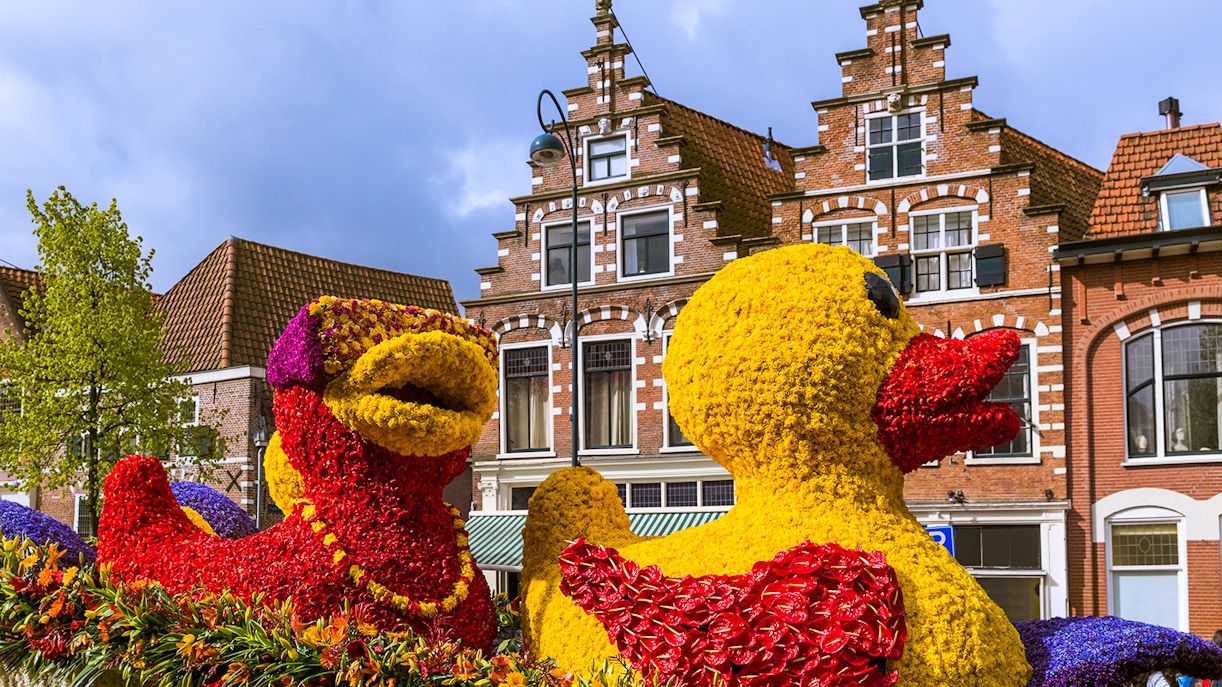
Flower sculptures of ducks at the Amsterdam Tulip Festival parade.

The Tulp Festival is the heartbeat of Keukenhof 2026, celebrating the bloom of over 800 tulip varieties. From April 1 to April 30, 2026, the entire country transforms into a living museum of floriculture. Beyond Keukenhof’s outdoor beds, the festival includes the world-famous Flower Parade (Bloemencorso Bollenstreek), where massive floats decorated with hyacinths and tulips travel from Noordwijk to Haarlem. Visitors can also enjoy various workshops, traditional Dutch music days, and flower-arranging demonstrations that showcase the artistry behind the bulbs.

About the Tulp Festival

Frequently asked questions about Keukenhof

The gardens are scheduled to be open from March 20 to May 11, 2026. This period marks the peak blooming season for spring bulbs in the Netherlands.