History of Keukenhof | The royal bloom of the ‘kitchen garden’

Spanning 79 acres of vibrant floral tapestries, Keukenhof is the world’s most famous spring garden—nearly 10 times the size of London’s St. James’s Park. While it feels like a timeless wonderland, Keukenhof actually began as a humble 15th-century herb garden for a countess's kitchen. The best part? You can explore 500 years of heritage and 7 million blooms without needing a green thumb!

About Keukenhof

Keukenhof timeline

  • 15th century: The ‘Kitchen Garden’ is born 
    Countess Jacoba van Beieren harvests herbs and game from the estate for Teylingen Castle’s kitchen.
  • 1641: Construction of Keukenhof Castle 
    Adriaen Maertensz Block, a captain for the Dutch East India Company, built the manor house that still stands today.
  • 1857: The Zocher design 
    Famous landscape architects Jan David Zocher and his son Louis Paul redesigned the gardens in the classic English landscape style.
  • 1949: The visionary meeting 
    A group of 20 leading bulb growers and the Mayor of Lisse propose an open-air exhibition to showcase the Dutch floral trade.
  • 1950: Keukenhof opens to the public 
    The park officially debuts, attracting over 236,000 visitors in its very first season.
  • 1957: The arrival of the windmill 
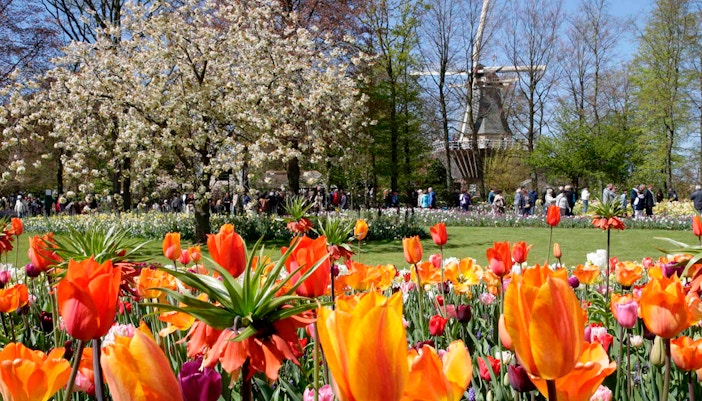
    A 19th-century windmill from Groningen is donated by Holland America Line and becomes an iconic landmark.
  • 1974: The Juliana Pavilion 
    Queen Juliana inaugurates a new pavilion, cementing the long-standing bond between the Dutch Royal Family and the park.
  • 2024: The 75th anniversary 
    Keukenhof celebrates three-quarters of a century as a global phenomenon and a ‘living catalogue’ for the bulb industry.

Keukenhof’s history explained

The Countess’s county (15th century)
The early history of Keukenhof is rooted in the ‘Keukenduyn’ (kitchen dunes). Countess Jacoba van Beieren utilised this uncultivated land for hunting and gathering herbs for the Teylingen Castle kitchen. This practical origin gave the park its name: Keukenhof literally translates to ‘Kitchen Garden’.

The architectural shift (1857)

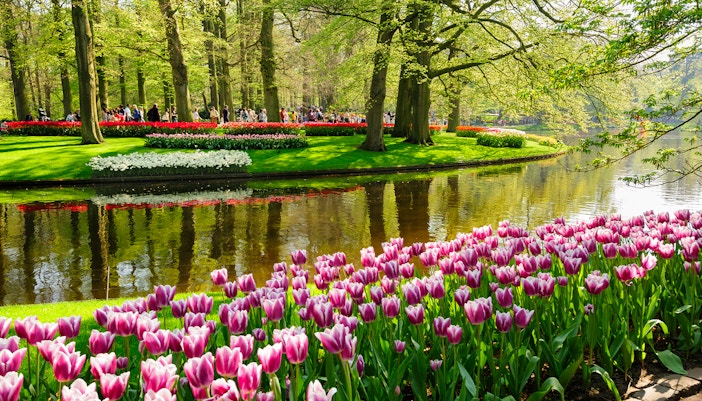
In the 19th century, the Baron and Baroness Van Pallandt transformed the estate’s aesthetic. They hired the Zocher architects (the same minds behind Amsterdam’s Vondelpark) to implement the English landscape style. Their winding paths and scenic water features still form the structural foundation of the park today.

The birth of the spring park (1949–1950)

The modern Keukenhof was born from economic necessity. Following WWII, Dutch bulb exporters needed a way to showcase their products to the world. By transforming the historic estate into a ‘living catalogue’, they created a permanent spring exhibition that saved the industry and became a global tourism icon.

Construction and architecture of Keukenhof

While the flowers change every year, the architecture of the Keukenhof estate is a permanent marvel. Keukenhof Castle, built in 1641, reflects the Dutch Golden Age's wealth with its classic manor style and later 19th-century Neo-Gothic towers. The park's layout follows the English Landscape style, characterised by ‘hidden’ views, organic water lines, and curated vistas that make the 32-hectare grounds feel like an endless natural forest.

Keukenhof today – Why it matters

Today, Keukenhof is an international showcase for the Dutch floricultural sector, involving over 100 royal suppliers who provide 7 million bulbs annually. It remains a crucial symbol of Dutch identity and a world-leader in horticultural innovation. Beyond the tulips, visitors can explore 15 kilometres of hiking trails, historic listed buildings, and the iconic 1892 windmill that offers panoramic views of the surrounding bulb fields.

Frequently asked questions about the history of Keukenhof

The park officially opened its gates in 1950, following a successful exhibition proposal by bulb growers and the Mayor of Lisse in 1949.