
Quick Information

Is the National Holocaust Museum Amsterdam worth visiting?

The first thing you notice is the quiet. Rooms are spare, voices stay low, and the personal objects, photographs, and testimonies pull you close rather than overwhelm you with spectacle. It feels less like sightseeing and more like entering a place that asks for attention.

That tone is deliberate. The museum stands in a part of Amsterdam directly tied to the wartime persecution of Jews in the Netherlands, near the Hollandsche Schouwburg and the former school building linked to rescue efforts. It was created to show how exclusion, deportation, resistance, and survival unfolded in ordinary streets and institutions.

The payoff is clarity rather than release. You leave with a sharper sense of how the Holocaust happened in Dutch daily life, and how individual choices by victims, bystanders, and resisters shaped real outcomes.

Skip it if you’re looking for a light, fast museum stop or are visiting with children who aren’t ready for sustained, difficult material.

What can you see at the National Holocaust Museum Amsterdam?
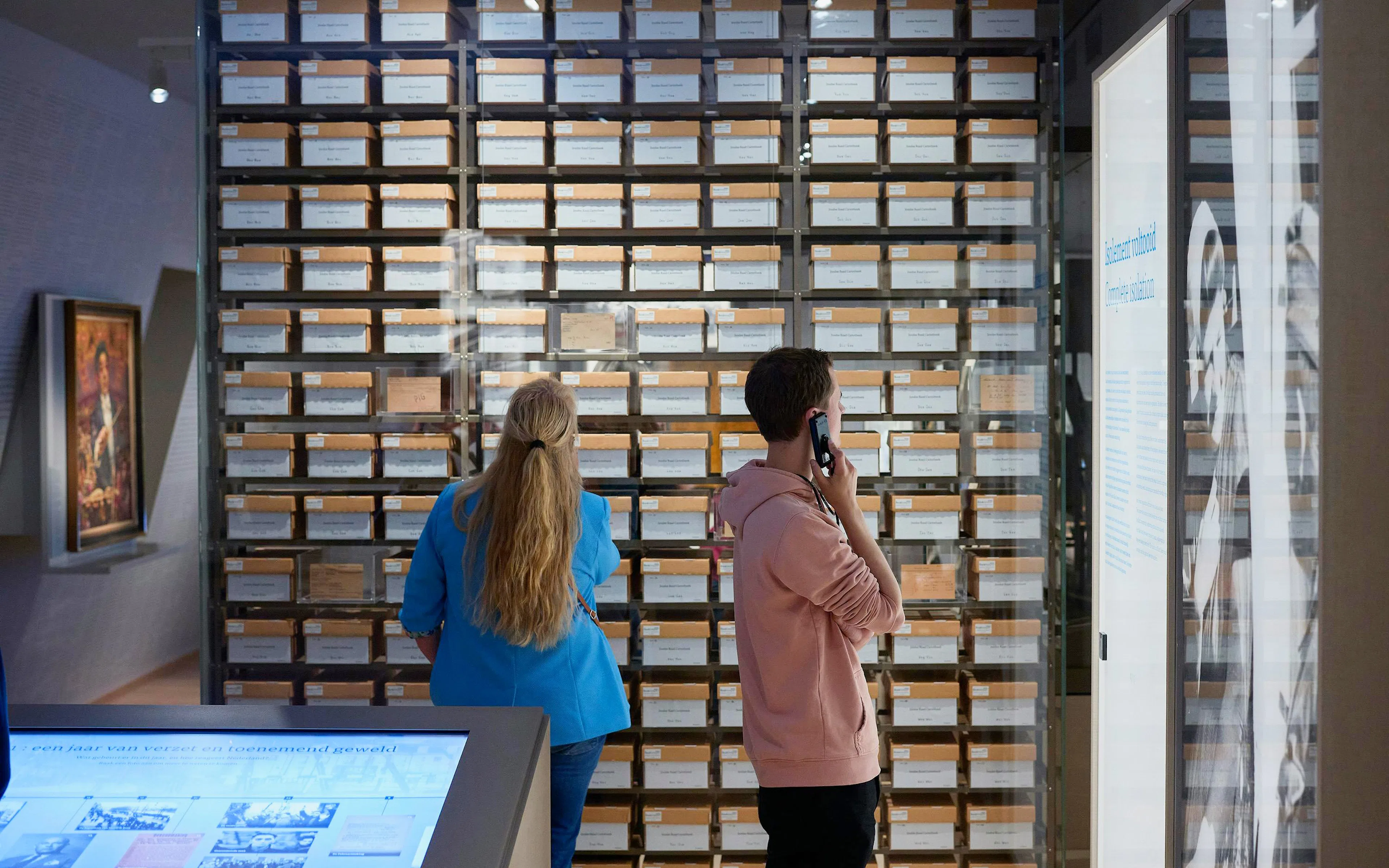
Permanent exhibition at National Holocaust Museum Amsterdam
1/6

The permanent exhibition

This is the backbone of the visit: persecution, exclusion, deportation, resistance, and survival told through personal objects, photographs, and testimony. Start here before moving to nearby memorial sites, because the galleries give names and context to the neighborhood.

Children’s stories

Some of the most affecting rooms focus on children who were separated, hidden, deported, or rescued. The scale of the Holocaust becomes immediate here, because toys, school details, and family traces replace abstract numbers.

The former school building

The setting matters as much as the displays. Moving through a real former educational building reinforces that these events unfolded in everyday civic spaces, not somewhere distant or detached from ordinary urban life.

Links to Hollandsche Schouwburg

The museum makes more sense when read alongside the memorial landscape outside. Leave time to cross to Hollandsche Schouwburg afterward; together, the two sites turn history into geography you can physically follow.

Temporary exhibitions

Rotating exhibitions widen the story beyond the core display, often through art, documents, or overlooked perspectives. If one is running during your visit, budget extra time, because it can change the rhythm of the museum considerably.

Spaces for pause and reflection

Not every important part of the visit is an object in a case. The quieter transition spaces matter because they let testimony settle, especially if you’re reading slowly or visiting with family members of different ages.

How to explore the National Holocaust Museum Amsterdam

How much time to spend?

Budget 1.5–2 hours for the museum itself, or 2.5–3 hours if you also want Hollandsche Schouwburg and time to pause between galleries. Families, school groups, and visitors who read every testimony will move more slowly.

Best visit order

Start inside the museum with the permanent exhibition and follow the story chronologically. Let the galleries establish the wartime context first, then pay attention to the building itself and its surroundings. Visit Hollandsche Schouwburg after the museum, not before; the exhibits make what you see across the street much more legible.

Must-see highlights

Must-see: the core galleries on persecution and deportation, the sections centered on children, and the museum’s links to rescue and resistance in the surrounding neighborhood. Optional: the temporary exhibition and slower rereading of testimonies, which usually add 30–45 minutes.

Worth adding nearby

Hollandsche Schouwburg is the essential add-on and needs about 20–30 minutes. If you want a broader WWII half-day, add the Dutch Resistance Museum nearby; together, the sites give you three different angles on occupation, choice, and survival.

Guided or self-paced?

Self-paced works well if you prefer to read slowly and leave space for pauses; this is a museum that rewards silence and attention. Guided context is worth it for school groups, first-time visitors to Dutch WWII history, or anyone wanting deeper explanation of the neighborhood links.

Brief history of the National Holocaust Museum Amsterdam

  • 1942: The Hollandsche Schouwburg nearby is turned into a deportation center for Jews in Amsterdam during the Nazi occupation.
  • 1943: Jewish children are separated from adults and held across the street; rescue networks use the neighboring school and surrounding route to smuggle many of them to safety.
  • Postwar years: The neighborhood becomes a place of mourning, testimony, and public remembrance rather than ordinary civic use.
  • 21st century: The former school building is redeveloped as a national museum dedicated to the Holocaust in the Netherlands.
  • 2024: The National Holocaust Museum opens, creating a national space for remembrance, education, and debate within Amsterdam’s Jewish Cultural Quarter.
  • Today: The museum presents persecution, resistance, rescue, and survival through personal stories, objects, and the geography of the streets where these events unfolded.

Architecture of National Holocaust Museum Amsterdam

The building does not impress through monumentality; it works through restraint. Red brick, classroom-scale rooms, stairways, and corridor sequences keep you aware that this was once an ordinary school, which is exactly why the setting lands so hard. The architecture narrows the distance between past and present. Instead of grand memorial symbolism, you move through institutional spaces that feel local, civic, and alarmingly familiar. Notice how little theatrical staging is needed. The building itself carries part of the evidence, while the museum design wisely lets objects, testimony, and sightlines to the surrounding memorial landscape do most of the emotional work.

Who built it?

The original structure was built as a teacher-training college in Amsterdam’s Plantage district, not as a memorial building. Its present role was shaped much later, when Dutch cultural institutions and the Jewish Cultural Quarter reimagined it as a national Holocaust museum. No single historical architect dominates the experience; adaptive reuse does.

Additional information about the National Holocaust Museum Amsterdam

If you have time for only one WWII-related site, choose by focus. The Anne Frank House is intimate and biographical, centered on hidden life in one set of rooms. The Dutch Resistance Museum widens the lens to occupation-era choices across Dutch society. National Holocaust Museum Amsterdam sits between them: larger than a house museum, more concentrated than a general war museum, and explicitly focused on persecution, deportation, rescue, and survival of Jews in the Netherlands. It is the strongest choice if you want the Holocaust itself, rather than a single diary or the wider war, at the center.

Frequently asked questions about National Holocaust Museum Amsterdam

Yes. The museum occupies a former school building whose wartime role is part of the story, so the setting is not decorative backdrop; it is one of the reasons the visit feels so immediate and local.