
Tickets Amsterdam

Neighborhood at a glance

  • Why visit: Home to the Albert Cuypmarkt, the largest daily outdoor market in the Netherlands, running nearly a kilometre along Albert Cuypstraat, plus the original Heineken brewery on its western edge.
  • Atmosphere: Dense, multicultural, café-lined, residential.
  • Top things to do: Walk the length of Albert Cuypmarkt, tour the Heineken Experience, sit out in Sarphatipark, browse the boutiques on Gerard Doustraat.
  • Best for: Market shoppers, food-led travellers, repeat Amsterdam visitors, café sitters.
  • Time needed: 3 to 4 hours.
  • Best time to visit: Weekday late morning, when the Cuyp is full but Saturday crowds (50,000+ people) are absent.
  • Nearby: Heineken Experience, Sarphatipark, Marie Heinekenplein, Rijksmuseum, Museumplein, Sarphatistraat.

Top things to do in De Pijp

Pro tip

Enter Albert Cuypmarkt from the Ferdinand Bolstraat (west) end and walk the full length once before buying anything, then loop back; the fish and cheese stalls cluster in the middle around Govert Flinckstraat.

Quick navigation

🏛️ Why visit  | 🎟️ Best ways to explore |🧭 Plan your visit | 🌟 Free things to do | 📋 Itinerary | 💡 Tips |🍴 Dining

Why visit De Pijp

Placeholder Image Headout Blimp
1/5

The largest daily market in the Netherlands is the neighborhood's spine

Albert Cuypmarkt has run six days a week since 1905, with more than 260 stalls stretched almost a full kilometre down Albert Cuypstraat. It is where Amsterdammers still buy fish, cheese, flowers and fabric, not a tourist re-creation. You can eat your way along it for under 10 euros, from herring at the Sweelinckstraat end to a stroopwafel pressed fresh at stand 144. The market gives De Pijp a daily rhythm few central neighborhoods keep.

Heineken's first brewery still stands here

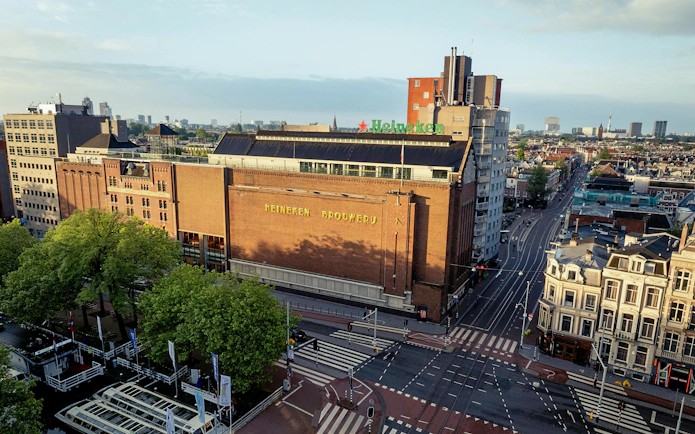
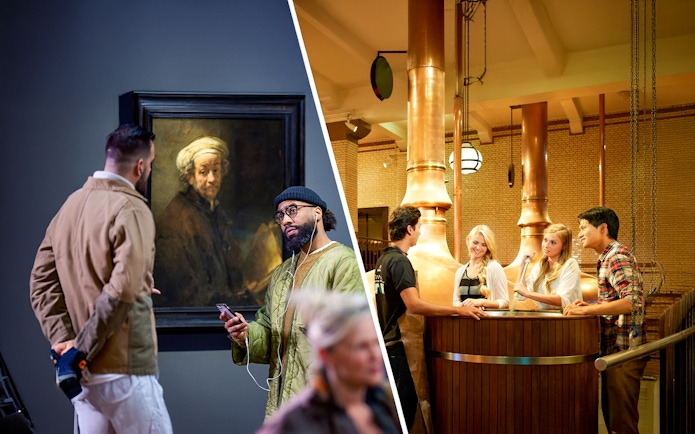
Gerard Adriaan Heineken built his original brewery on Stadhouderskade in 1873, and it brewed beer on this spot until 1988. It reopened as a visitor attraction in 1991, keeping the old copper kettles and brick brewhouse in place. The result is one of Amsterdam's most-visited sites sitting on the western edge of an otherwise residential district. You can walk straight from the market to the brewery in about ten minutes.

A genuine immigrant food map, not a food court

As De Pijp filled out in the 1920s and 30s it became Amsterdam's densest immigrant district, with Surinamese, Turkish, Moroccan and Indonesian communities settling around the market. That history is still on the plate: Surinamese roti and Indonesian rijsttafel on Gerard Doustraat, Turkish bakeries on Ferdinand Bolstraat, Middle Eastern hummus counters near the Cuyp. The variety is built from migration, not menus designed for visitors.

Easy to reach and easy to walk

The North-South metro line 52 has a stop named De Pijp, and tram 4 and 24 run straight down Ferdinand Bolstraat from Centraal. Once you arrive, the whole district is flat and walkable: market to park to brewery is a triangle you can cover on foot in under fifteen minutes. There is no need for further transport inside the neighborhood.

A park and squares that locals actually use

Sarphatipark, Marie Heinekenplein and the café terraces of Eerste van der Helststraat are working public spaces, busiest in the early evening when day-trippers have gone. Sarphatipark's ponds and the Sarphati monument anchor the green centre of the district. Marie Heinekenplein fills with after-work drinkers beside the brewery. These are where you see De Pijp as residents use it.

Best ways to explore De Pijp

A De Pijp walk centres on Albert Cuypstraat and its side streets (Gerard Doustraat, Frans Halsstraat, Eerste van der Helststraat), covering the market's 1905 origins, the working-class architecture and the immigrant food map, usually ending at Sarphatipark.

Pro tip

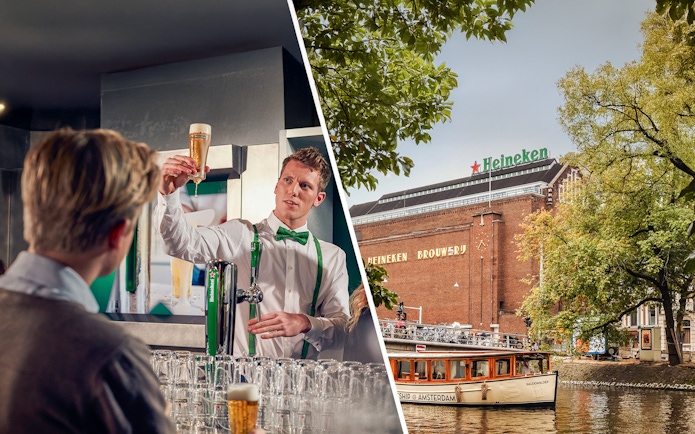
De Pijp's strongest identity is its beer heritage, so start at the source: the self-guided tour of Heineken's original 1873 brewery ends with a pouring lesson and two beers. Upgrade to the rooftop bar for a third drink and a view over the district.

Plan your visit

Free things to do in De Pijp

Suggested itinerary for visiting De Pijp

De Pijp is flat, compact and grid-like: the market, the park and the brewery form a tight triangle you can walk between in under fifteen minutes, so no route here requires transport once you arrive.

Tips for visiting De Pijp

  • Enter Albert Cuypmarkt from the Ferdinand Bolstraat end and walk the whole kilometre once before buying; the fish and cheese stalls cluster mid-market near Govert Flinckstraat, and the best stroopwafels are at stand 144, roughly 60% of the way down.
  • Pre-book a Heineken Experience timeslot rather than queuing at Stadhouderskade 78; last admission is about two hours before closing, so check that day's hours before arriving.
  • Carry small cash for the market. Many produce and food stalls are cash-only, and stalls charge around 0.30 euro for a plastic bag, so bring a foldable one.
  • For free toilets near the market, the Albert Heijn supermarket on Ferdinand Bolstraat is your best bet (small charge), since public toilets along the Cuyp are scarce.
  • Skip Saturday afternoon at the market if you dislike crowds; it pulls over 50,000 people. A weekday late morning gives the same stalls with room to move.
  • Flowers and tulip bulbs at Albert Cuypmarkt are cheaper and fresher than at the central Bloemenmarkt, so buy them here instead.
  • The market is closed Sundays. Plan brewery, park and café time for that day rather than expecting the stalls.
  • Watch the red bike lanes on Ferdinand Bolstraat and Ceintuurbaan when leaving the metro; cyclists move fast and do not expect pedestrians standing in them.

Best photo spots in De Pijp

Placeholder Image Headout Blimp

Albert Cuypstraat fish stalls at mid-morning

Stand at the Govert Flinckstraat intersection, roughly halfway down the market, facing west. The frame catches the long row of red-and-white striped awnings, the fishmongers filleting herring and the crowd funnelling between stalls. Shoot before noon while light still reaches street level between the buildings.

Placeholder Image Headout Blimp

Dining in De Pijp

Must-eat tip

Skip the sit-down restaurants for one snack and get a stroopwafel pressed fresh at stand 144 on Albert Cuypmarkt, where the thin waffles are glued with warm caramel syrup to order, the way the market has sold them for decades.

Should you stay in De Pijp?

Short answer: Yes, if you want a residential, food-led base with a local feel. Less convenient if your priority is canal-side views or being inside the historic centre.

  • The vibe: After the market packs up around 4pm and day-trippers leave, De Pijp becomes a quiet residential grid of brown cafés and terraces. Marie Heinekenplein and Eerste van der Helststraat stay lively into the evening; the rest of the streets go calm and local.
  • The logistics: Accommodation leans toward small boutique hotels, B&Bs and apartment rentals in late-19th-century townhouses rather than big chains. Buildings are old, so expect steep stairs and few lifts. Prices sit below the Canal Ring but have risen with gentrification.
  • Who it's for: Suits return visitors, food-focused travellers and those wanting neighborhood life over postcard canals. Not ideal for first-timers who want to walk out into the historic centre, or anyone needing a quiet street, since terrace noise carries.
  • Top recommendation: Look for a boutique hotel or apartment around Frans Halsstraat or near Sarphatipark, central to the market yet a street back from the busiest terraces.

Explore other neighborhoods

Frequently asked questions about De Pijp

Not quite. The Heineken Experience sits on the western edge of De Pijp at Stadhouderskade 78, but the neighborhood's centre is Albert Cuypmarkt, about a 10-minute walk east. Many visitors only see the brewery and miss the market that defines the district.