No other museum comes close to the scale of this collection. The Van Gogh Museum holds more than 200 paintings, around 500 drawings, and hundreds of letters by Vincent, giving you a rare chance to follow his entire artistic evolution, from the dark Dutch years to the luminous canvases from Arles and Saint-Rémy.
16 interesting facts about the Van Gogh Museum in Amsterdam
Home to the world’s largest collection of Vincent van Gogh’s paintings and drawings, Amsterdam’s Van Gogh Museum feels instantly familiar. Yet behind the famous Sunflowers lies a story of architecture, family stewardship, and carefully staged encounters with the artist’s life.
Interesting facts about the Van Gogh Museum
Built around family stewardship
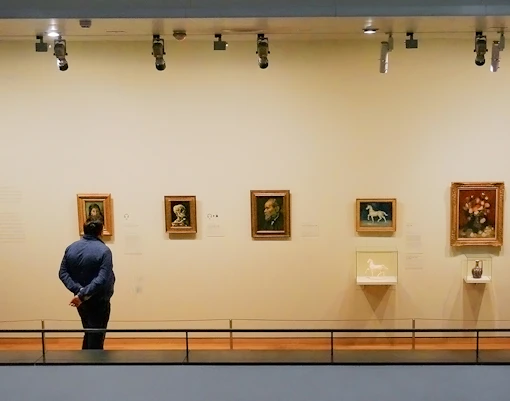
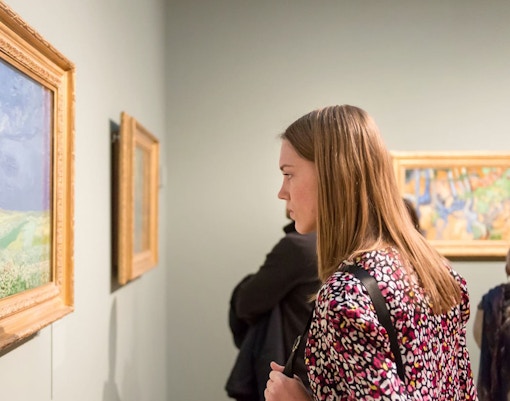
The museum exists because Van Gogh’s family kept his work together instead of letting it scatter across the art market. After Theo’s death, his widow, Johanna van Gogh-Bonger, preserved and promoted Vincent’s art, and their son, Vincent Willem, later helped place the collection in the foundation that made the museum possible.
It took decades to open
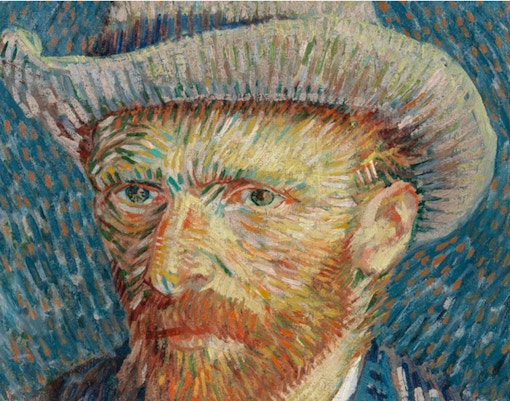
Although Van Gogh died in 1890, the museum dedicated to him didn’t open until 1973. That long gap reflects how carefully the collection was managed and how much planning went into creating a permanent home worthy of an artist whose reputation rose dramatically after his death among critics and the public around the world.
A museum of letters
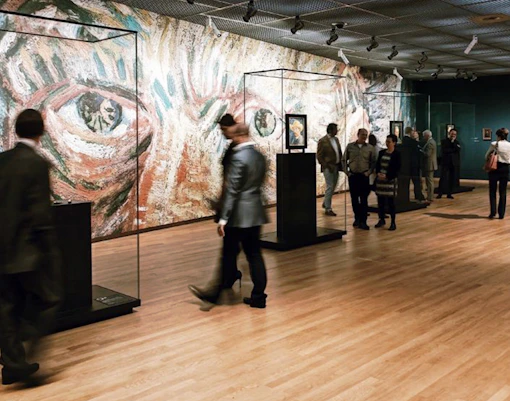
Paintings may draw the crowds, but the letters are what make the visit unusually intimate. The museum preserves hundreds of Van Gogh’s letters, many written to Theo, so you can read his thoughts on colour, money, ambition, loneliness, and the daily struggles behind works that now seem untouchably famous.
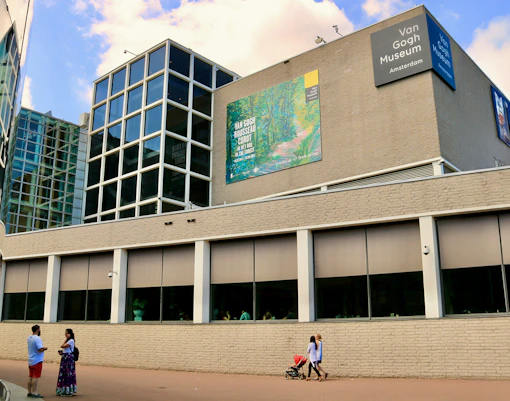
Two architects shaped it
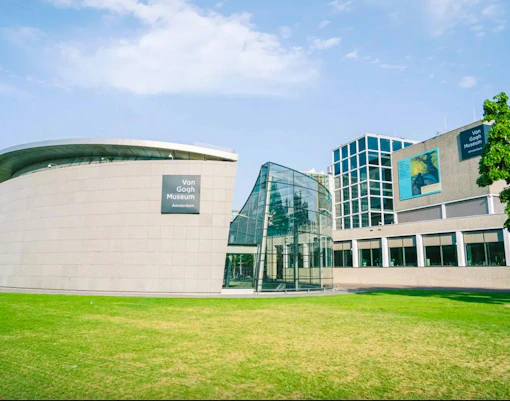
The museum isn’t the work of one architect. Its main building was designed by Gerrit Rietveld, while the curved exhibition wing came later from Japanese architect Kisho Kurokawa. That pairing gives the museum a quietly unusual identity — part Dutch Modernism, part late-20th-century international landmark in Amsterdam’s Museumplein cultural district.
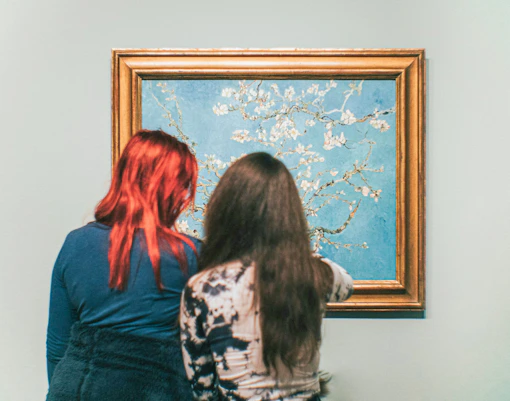
A Japanese influence lingers
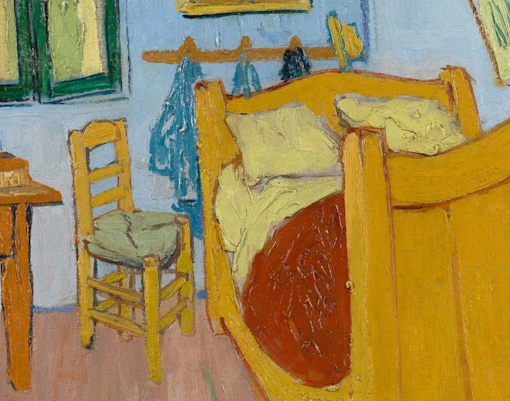
Look closely at works like Almond Blossom or The Bedroom, and you’ll spot Van Gogh’s fascination with Japanese prints. Flat colour fields, bold outlines, and unusual cropping weren’t accidents. The museum uses these paintings and related material to show how Japanese art shaped his sense of composition, calm, and colour.
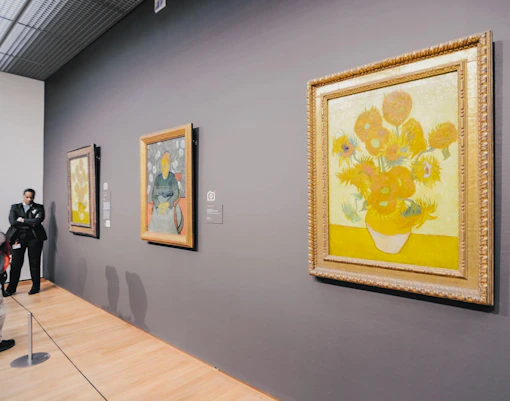
'Sunflowers' was meant as decor
One of the museum’s best-known paintings began as part of a practical idea. Van Gogh painted Sunflowers to decorate a room for Paul Gauguin in the Yellow House at Arles, turning a guest-room gesture into a recognisable image in Western art. Seen in person, its thick paint feels far more tactile than reproductions.
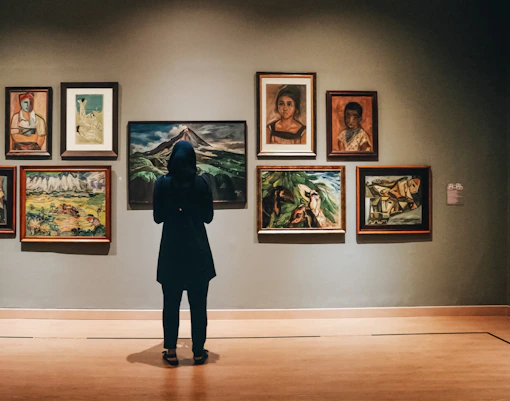
The route tells a story
Rather than scatter masterpieces by theme, the museum largely guides you through Van Gogh’s life in sequence. That curatorial choice turns the visit into a narrative, not a treasure hunt. You see the heavy browns of his early years give way to Paris experimentation, then the blazing colour of Arles and Saint-Rémy.
It’s bigger than one artist
The galleries don’t stop at Van Gogh alone. Works by artists such as Gauguin, Monet, Toulouse-Lautrec, and others appear throughout the museum to place Vincent inside a wider 19th-century art world. That context makes his experiments feel less isolated and shows exactly where he followed trends and where he broke away from them.
Home to Van Gogh's only surviving palette
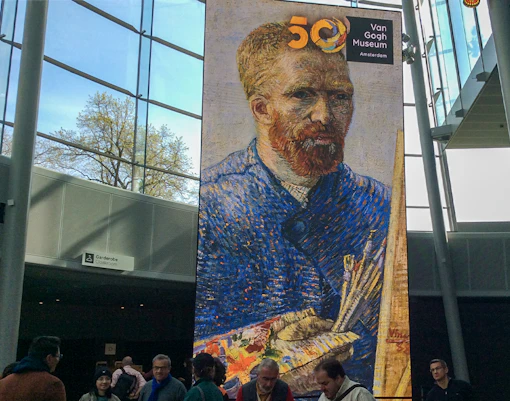
The Van Gogh Museum houses the only confirmed, original colour palette used by Vincent van Gogh that has survived to this day. It contains remaining dried paint dabs from his time in Auvers-sur-Oise in 1890, offering art historians direct evidence of his mixing techniques and colour choices during his final months.
Van Gogh's paintings were stolen!
The museum has been the target of major art heists twice. In 1991, 20 paintings were stolen but recovered nearby within hours. In December 2002, thieves broke through the roof and stole two priceless masterpieces—Seascape at Scheveningen and Congregation Leaving the Reformed Church in Nuenen. Both paintings were finally recovered by Italian anti-mafia police near Naples in 2016 and returned to the museum display.
The museum's first-ever painting
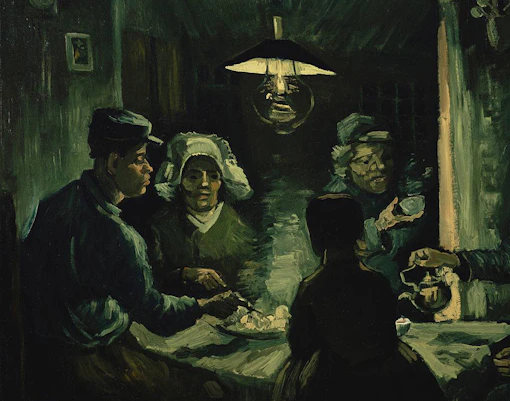
The foundational artwork of the museum's collection is The Potato Eaters (1885), which Van Gogh considered his first true masterpiece. Unlike his later vibrant works, this painting features dark, earthy tones aimed at capturing the harsh, honest reality of peasant life in Brabant.
Van Gogh only sold one painting in his life
During his decade-long career creating over 2,000 artworks, Van Gogh only officially sold one painting during his lifetime: The Red Vineyard (La Vignoble Rouge). It was bought in 1890 by Belgian painter and collector Anna Boch for 400 Belgian francs (around $2,000 today).
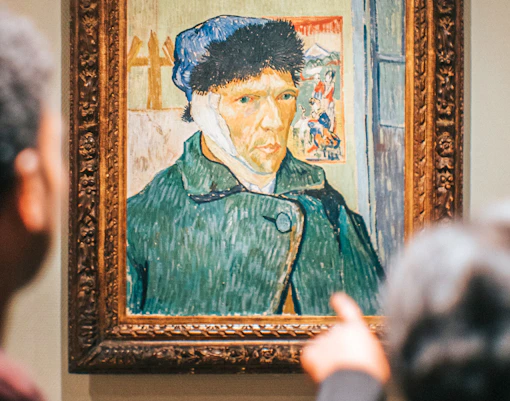
No one knows why Van Gogh cut off his ear
On December 23, 1888, following a heated argument with fellow artist Paul Gauguin in Arles, Van Gogh severed part of his left ear with a razor. While theories range from acute mental breakdown to heavy drinking or acute distress over his brother Theo's engagement news, historians still debate the exact psychological trigger.
Epilepsy meds might have influenced the paintings
During his time at the asylum in Saint-Rémy, Van Gogh was treated with digitalis (derived from the foxglove plant), a common 19th-century treatment for epilepsy and mental ailments. A known side effect of digitalis toxicity is xanthopsia, a medical condition that causes visual perception to tint toward yellow or make glowing halos appear around lights (often seen in The Starry Night).
Van Gogh's last words were…
According to his brother Theo, who was by his bedside when Vincent died on July 29, 1890 from a gunshot wound, Van Gogh’s tragic final words were: "La tristesse durera toujours" ("The sadness will last forever").
Frequently asked questions about Van Gogh Museum facts
Yes, yellow was famously Vincent van Gogh’s favourite colour. He viewed yellow as a symbol of hope, light, warmth, and joy. It prominently defined his famous Arles period, featuring heavily in masterpieces like Sunflowers, The Yellow House, and Wheatfield with Crows.
The Starry Night was inspired by the view from Van Gogh’s room at the Saint-Paul-de-Mausole asylum in Saint-Rémy-de-Provence, France, where he stayed in 1889. While it reflects his view of the swirling night sky just before sunrise, the composition was painted from memory during the day, incorporating elements of his imagination and memories of Dutch landscapes.
Yes. Before pursuing painting, Van Gogh aspired to follow in his father's footsteps as a minister. In his mid-twenties, he worked as an unpaid lay preacher in an impoverished mining community in the Borinage region of Belgium. He turned fully to art around 1880 after being dismissed by church authorities for taking his lifestyle vows to extremes.
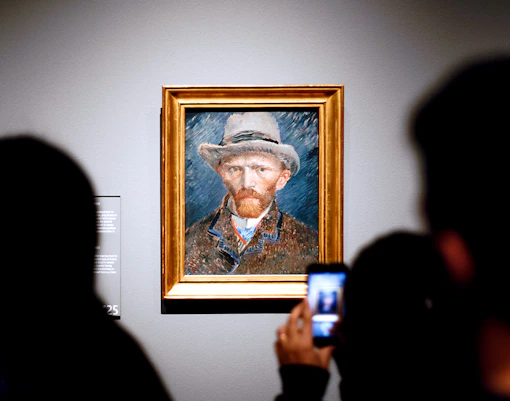
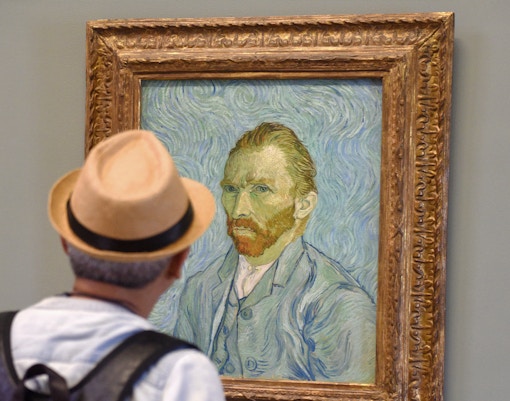
Van Gogh painted over 35 self-portraits during his decade-long artistic career, mostly between 1886 and 1889. He frequently painted himself not out of vanity, but out of necessity: he could rarely afford to hire models and used a mirror to practice painting human expression and experimenting with colour techniques.
The Van Gogh Museum in Amsterdam holds one of the original, iconic versions of Sunflowers with a yellow background, painted in January 1889. Because the chrome yellow pigments used by Van Gogh are light-sensitive and degrade over time, the museum no longer allows this original artwork to travel, making Amsterdam the exclusive place to view it.
Van Gogh was heavily influenced by French Impressionism, Neo-Impressionist pointillism, and Japanese woodblock prints (ukiyo-e). After moving to Paris in 1886, he abandoned the dark, earthy palette of his earlier Dutch period in favour of bright, complementary colour theory (such as pairing blue with orange or yellow with purple) to convey deep human emotion and spiritual energy.


