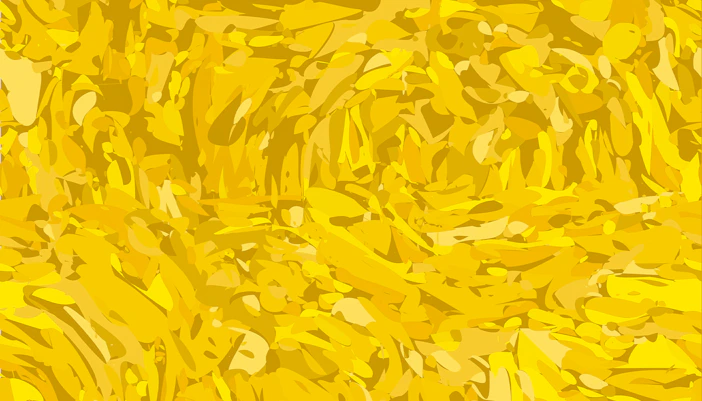
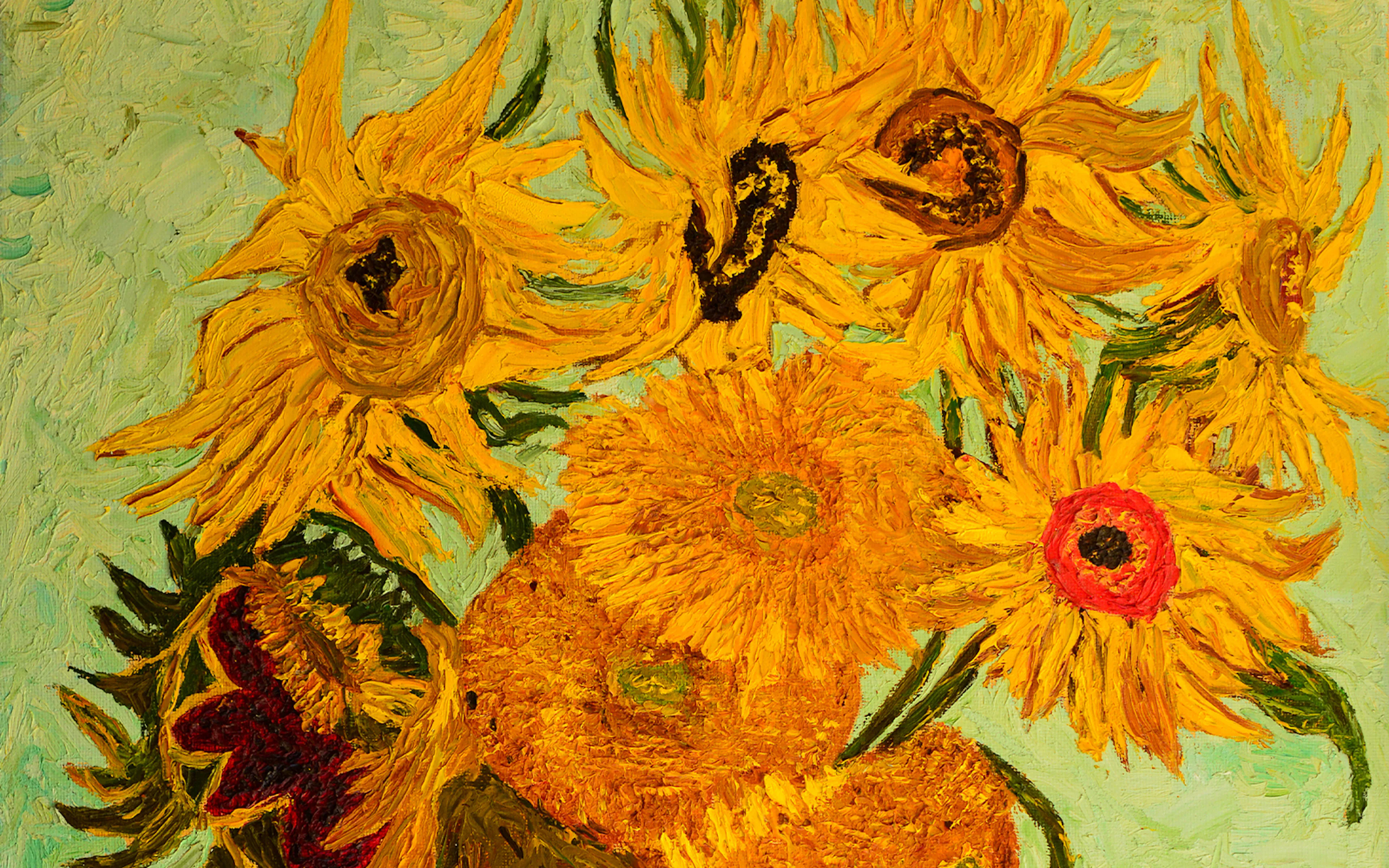
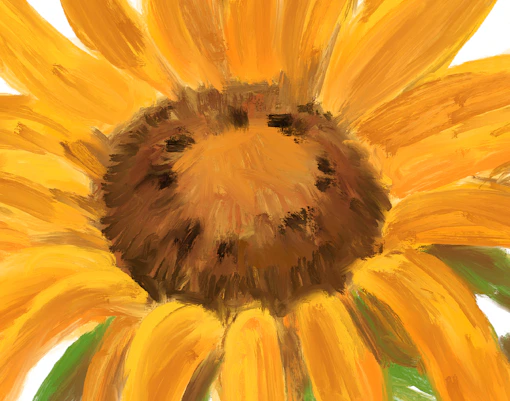
Sunflowers was created using mostly a single colour palette—varying shades and tones of yellow.
Witness 'Sunflowers' by Vincent van Gogh in Amsterdam – A Post-Impressionist masterpiece
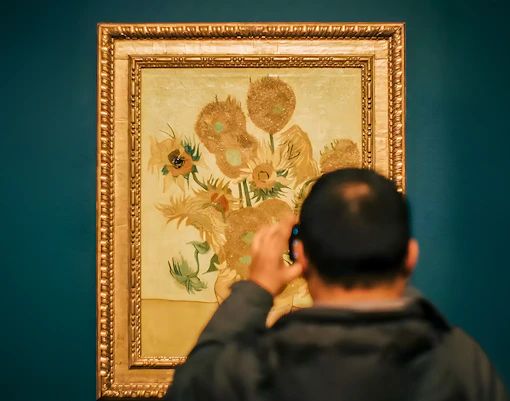
Vincent van Gogh painted Sunflowers in 1889 during his stay in Arles, France, creating one of the most recognisable and beloved artworks in the world. Depicting fifteen vibrant sunflowers in a yellow vase, the painting is celebrated for its dramatic use of colour, thick brushwork, and emotional intensity. Using varying shades of yellow to convey warmth, gratitude, and life, Van Gogh transformed a simple subject into a radiant masterpiece of Post-Impressionism.
Initially created to decorate his friend Paul Gauguin’s bedroom in the famous Yellow House, the artwork has since become a global cultural icon. Today, it resides permanently at the Van Gogh Museum in Amsterdam, captivating millions of visitors every year.
Where is it located?
You’ll find Sunflowers displayed prominently in the main collection on the 1st floor of the Van Gogh Museum in Amsterdam.
Tickets
Entry is included with your standard Van Gogh Museum ticket; no separate pass is required, though advance timed-entry booking is mandatory.
How to best visit Sunflowers
- Enhance your experience with a guide: An audio guide or guided tour provides fascinating context regarding Van Gogh's mental state in Arles, his relationship with Gauguin, and his innovative colour theory.
- Best viewing spot: Step back 5 to 7 feet to appreciate the painting in its entirety, then move closer to observe the heavy, textured application of paint (impasto).
- Observe the delicate yellow tones: Pay close attention to how Van Gogh utilised subtle variations of a single colour, yellow, to create depth, texture, and light.
- Best time to visit: The Van Gogh Museum is busiest during midday. Visit early in the morning right at opening (9am) or late in the afternoon/evening for a quieter experience.
- How much time to allocate? Allow about 15–20 minutes at the Sunflowers display to take in the details and navigate through surrounding gallery visitors.
- View surrounding masterpieces: Don't miss Van Gogh’s other iconic works nearby, including The Bedroom, Almond Blossom, and his famous self-portraits.
Did you know?
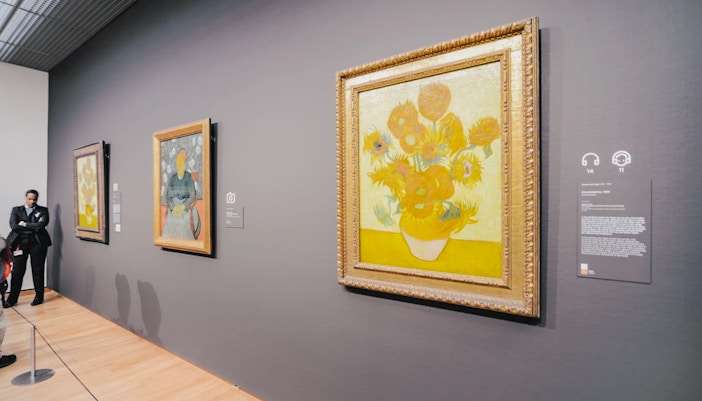
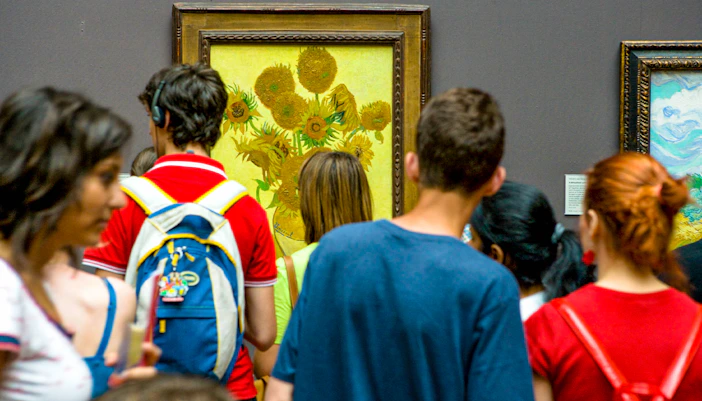
Van Gogh painted this specific version as a gesture of friendship to decorate Paul Gauguin’s room.
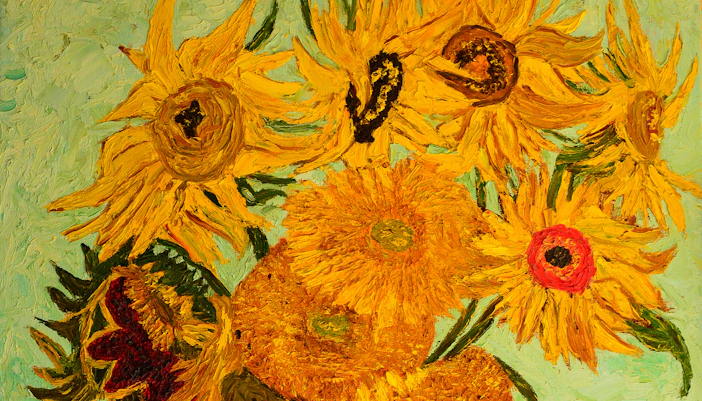
The heavy application of paint, known as impasto, gives the flower petals a almost three-dimensional, sculpted quality.
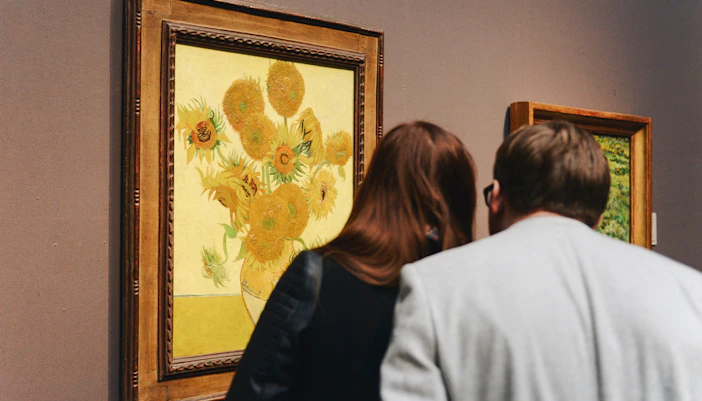
Because the original chrome yellow pigments are sensitive to light, the painting is kept under carefully controlled museum lighting.
Van Gogh considered the sunflower to be uniquely his own symbol, much like the lotus is to Asian art.
The museum announced in 2019 that Sunflowers is now too fragile to travel, meaning it will never leave the Van Gogh Museum again.
Scientific insights & chemical secrets
Modern conservation science has revealed fascinating technical details about how Van Gogh painted Sunflowers and how the canvas has changed over time:
- Fading chrome yellow pigments: Van Gogh made heavy use of industrial chrome yellow paint, a relatively new pigment in the late 19th century. Research shows these pigments react over time to light exposure, gradually darkening from bright yellow toward olive-brown shades.
- Added canvas strip: High-resolution scans show that Van Gogh added a small strip of wood to the top of his canvas to give the tallest sunflower more breathing room within the composition.
- Fragile condition: Detailed physical examinations in 2019 revealed that the paint layers are extremely sensitive to vibration and humidity changes. As a result, museum curators permanently banned the painting from traveling abroad.
Story behind 'Sunflowers'
A warm welcome in Arles
In 1888, Van Gogh moved to Arles in southern France, dreaming of founding an artists’ community. Excited for the arrival of his friend and fellow painter Paul Gauguin, Vincent set out to paint a series of sunflower canvases to decorate Gauguin’s guest room.
Expressing gratitude through yellow
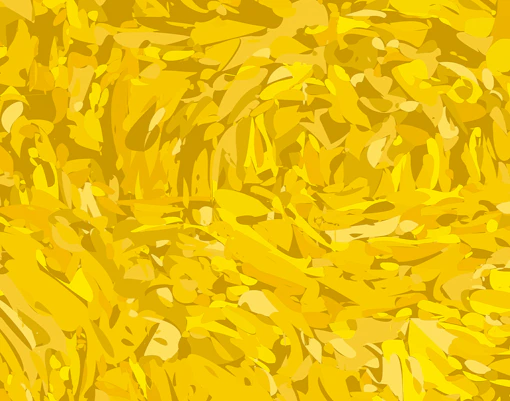
For Van Gogh, sunflowers symbolized warmth, friendship, and hope. Working quickly before the flowers withered, he produced several versions using unprecedented amounts of yellow, demonstrating that a painting could convey deep emotion using subtle variations of a single hue.
Gauguin's arrival and departure
Gauguin was deeply impressed by the sunflower series, calling them "completely Vincent". However, their creative partnership turned volatile, culminating in the famous incident where Van Gogh severed part of his own ear, leading to Gauguin's departure.
A fragile masterpiece's final home
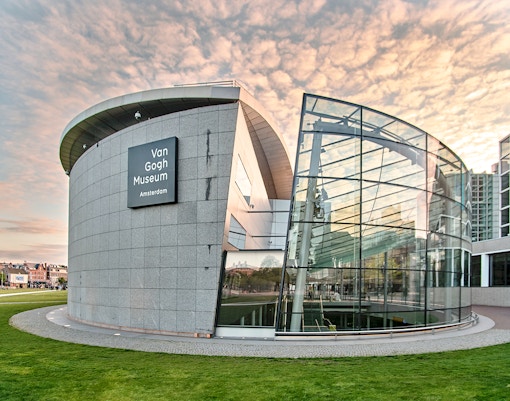
In 1889, Van Gogh created a copy (repetition) of his original Arles canvas, which is the version housed today in Amsterdam. After decades of international loans, conservationists determined the canvas was too delicate to travel, securing its permanent home at the Van Gogh Museum.
Who created 'Sunflowers'?
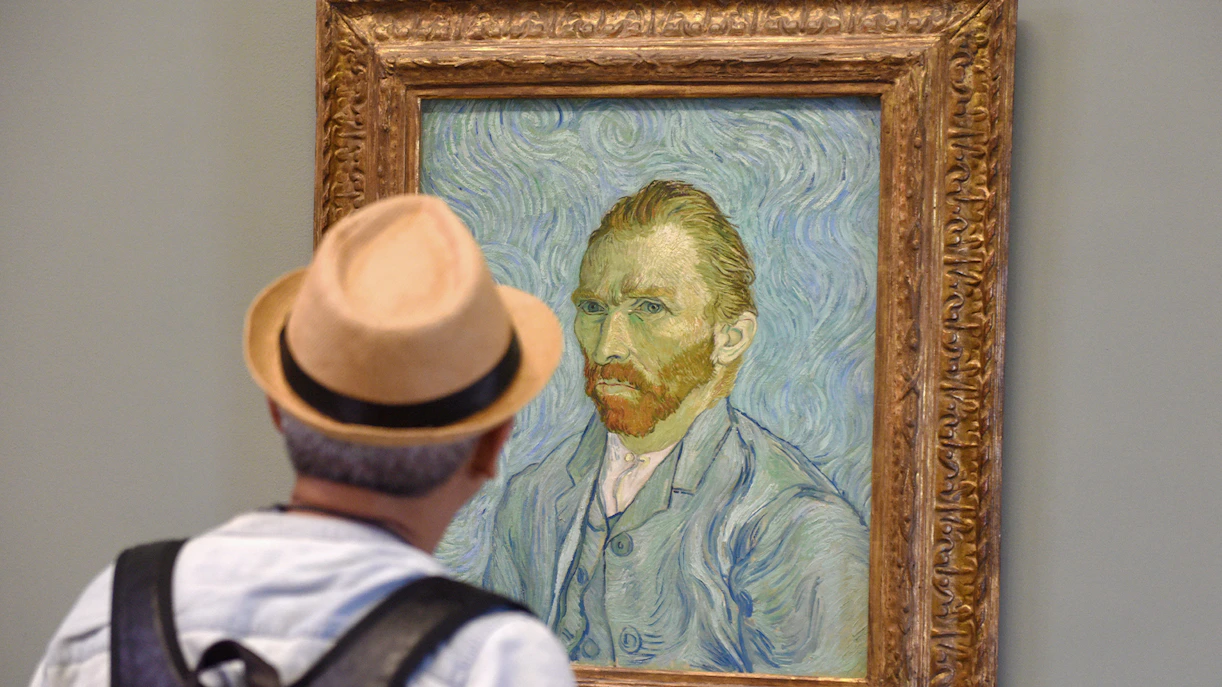
Sunflowers was created by Vincent van Gogh (1853–1890), a Dutch Post-Impressionist painter who became one of the most influential figures in Western art history. Although he struggled with severe mental illness and sold only a single painting during his lifetime, Van Gogh's expressive brushwork and bold colour choices laid the groundwork for modern art. His short, intense career produced over 2,000 artworks, with Sunflowers standing as a defining testament to his artistic genius.
What makes 'Sunflowers' a masterpiece? See for yourself
1/5
Mastery of colour theory
Van Gogh challenged traditional painting rules by using almost exclusively yellow shades, from bright cadmium to dull ochre, to generate warmth, light, and visual contrast.
Thick impasto technique
The paint is applied so thickly that the brushstrokes and palette knife marks stand out in relief, giving the flowers a raw, tactile energy.
Expressive symbolism
Rather than depicting realistic flowers, Van Gogh infused the sunflowers with personal meaning, transforming them into symbols of life, gratitude, and hope.
Dynamic composition
The contrasting stages of the flowers, from full bloom to drooping decay, convey the passing of time and nature's cycle.
Enduring cultural impact
The painting revolutionized how artists used colour and emotion, inspiring generations of modern artists worldwide.
The other 'Sunflowers' paintings in the series
While the Van Gogh Museum in Amsterdam houses one of the most famous versions, Vincent van Gogh actually created two distinct series of sunflower paintings during his career.
The Paris Series (1887)
Before painting sunflowers in a vase, Van Gogh depicted cut sunflowers resting on flat surfaces while living in Paris:
Four Cut Sunflowers (Kröller-Müller Museum, Otterlo)
Shows four seed heads lying on a table, highlighting detailed textures and earth tones.
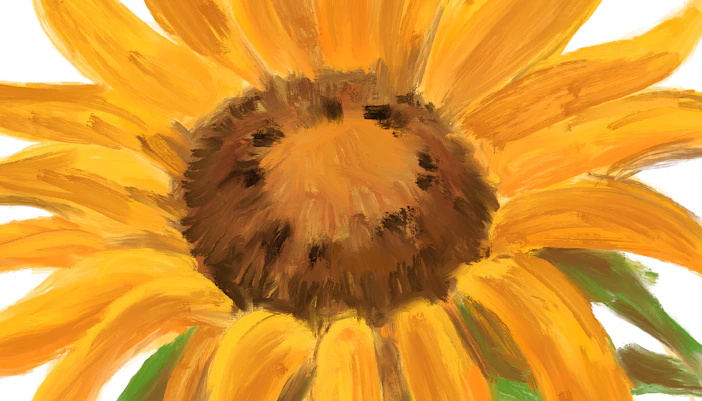
Two Cut Sunflowers (Metropolitan Museum of Art, New York)
Captures two flower heads in rich blues and yellows.
Two Cut Sunflowers (Kunstmuseum Bern)
Features vibrant orange and yellow hues against a dark background.
The Arles Series (1888–1889)
Created in southern France, this series features sunflowers standing upright in vases:
National Gallery, London
The original 15-sunflower version painted in August 1888.
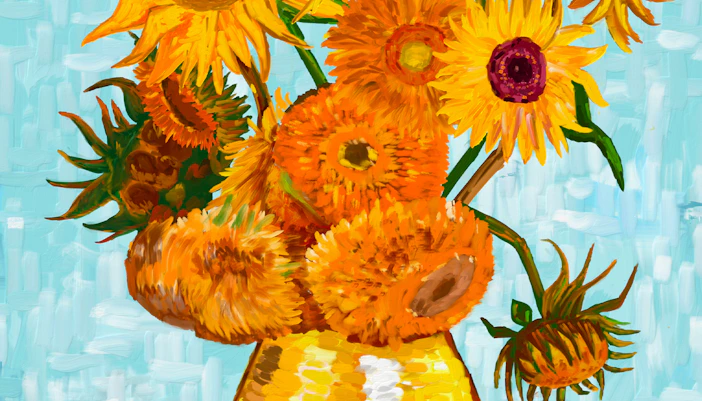
Neue Pinakothek, Munich
A 12-sunflower composition set against a bright turquoise background.
Philadelphia Museum of Art
A repetition of the 12-sunflower version painted in early 1889.
Sompo Museum of Art, Tokyo
A repetition of the 15-sunflower version purchased in 1987.
Destroyed version (formerly in Japan)
A 6-sunflower version destroyed by fire during World War II.
Cultural impact & modern legacy
Van Gogh’s Sunflowers has transcended the museum wall to become one of the most recognized visual motifs in global culture.
- Record-breaking auction history: In 1987, the Tokyo repetition of Sunflowers sold at auction for nearly $40 million—a record at the time that captured worldwide media attention and solidified Van Gogh's legendary status in popular culture.
- Modern collaborations & pop culture: The masterpiece continues to inspire global pop culture, from pop-up immersive art displays to official commercial tributes, such as the detailed LEGO® Art Sunflowers set developed in collaboration with the Van Gogh Museum.
- Symbol of environmental & art preservation: As one of the world's most recognizable cultural treasures, Sunflowers frequently sits at the center of global conversations regarding art conservation, museum security, and the preservation of historical artifacts.
Frequently asked questions about 'Sunflowers'
No, entry to see Sunflowers is included with a standard Van Gogh Museum ticket.
Yes, non-flash photography for personal use is permitted inside the museum galleries.
Van Gogh painted a series of sunflower canvases in Arles to decorate Gauguin’s room and later created copies (repetitions) of his favourite versions.
No, due to the fragile state of the canvas and paint layers, the museum decided in 2019 that Sunflowers will no longer travel.
A typical visit to see Sunflowers and the rest of the Van Gogh Museum collection takes around 1.5 to 2 hours.


