Van Gogh painted Almond Blossom to celebrate the birth of his nephew, Vincent Willem van Gogh, who later founded the Van Gogh Museum.
Witness 'Almond Blossom' by Vincent van Gogh in Amsterdam – A Post-Impressionist masterpiece
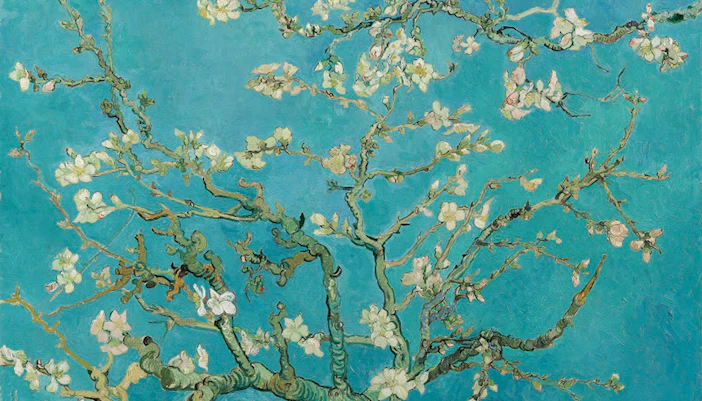
Painted in 1890 for the birth of his nephew, Vincent van Gogh’s Almond Blossom turns a spray of white flowers against a blue sky into a symbol of renewal. Its bold outlines and cropped branches reveal his deep admiration for Japanese prints, while the calm palette sets it apart from his more turbulent late works. Seeing the original in person lets you appreciate its scale, brushwork, and quiet emotional force, especially with a timed entry or guided museum visit.
Where is it located?
You’ll usually find it in the Van Gogh Museum’s upper-floor galleries devoted to Van Gogh’s late work in Amsterdam; exact room placement can change during rehanging or loans.
Tickets
Entry is included with a standard Van Gogh Museum ticket; no separate pass is required. Guided tour options also include museum access.
How to best visit Almond Blossom
Use a guide for context
A guided visit helps Almond Blossom land with more force because the painting’s emotion is tied to family news, recovery, and Van Gogh’s admiration for Japanese prints. The Van Gogh Museum guided tour includes skip-the-line entry, a 2-hour route, and headsets, which is especially useful if you want to connect this painting to the rest of his late work quickly.
Start from a few feet back
Begin about 6–8 feet away so the dark branches read clearly against the blue ground and the whole composition feels balanced, almost like a decorative screen. Then move closer to study how the blossoms are built with short, controlled strokes rather than the heavier impasto you might expect from Van Gogh.
Read the Japanese influence
Notice how the branches are cropped by the edges of the canvas, as if the scene continues beyond the frame. That flattened space, strong contouring, and uncluttered sky show how deeply Van Gogh absorbed Japanese ukiyo-e prints, and it changes the way the painting feels in person.
Visit at the edges of the day
The Van Gogh Museum is busiest from late morning into mid-afternoon, when headline works draw the densest crowds. For a calmer look at Almond Blossom, book one of the first timed slots on a weekday or aim for the final entry window, when gallery flow usually softens.
Confirm the current display status
Almond Blossom belongs to the Van Gogh Museum collection, but gallery placement can shift during rehanging, loans, or conservation rotations. Check the museum’s current collection listing before your visit so you know whether it is on view and where it is being shown that day.
Follow a short late-career route
If you want a focused museum path, move chronologically through the collection and save Almond Blossom for the later galleries, after works such as Sunflowers, The Bedroom, and the Paris self-portraits. Ending with this canvas, and then comparing it with other late paintings such as Irises or Wheatfield with Crows, makes its calm optimism stand out more sharply.
Did you know?
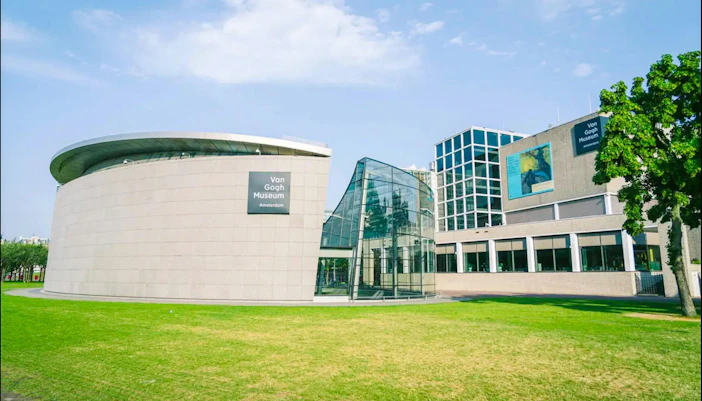

Almond trees flower early in the spring, making their blossoms a powerful symbol of new beginnings and awakening life for the artist.
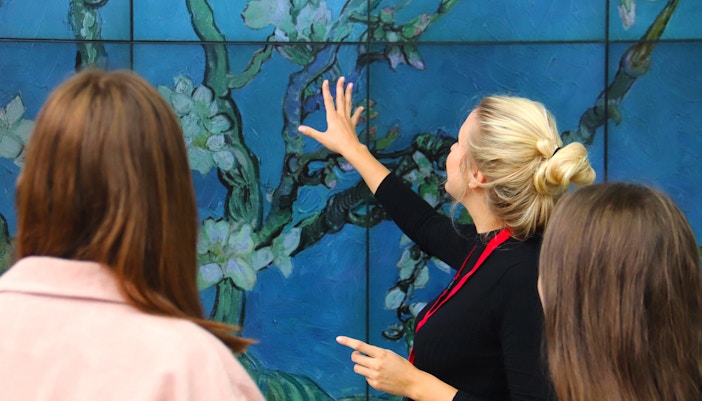
The composition's unusual perspective, viewing the branches close-up from below, was directly inspired by Japanese ukiyo-e woodblock prints.
Theo and Jo were deeply moved by the gift and hung the painting directly over the baby's crib in their Paris apartment.

Unlike many of his tumultuous works, this painting radiates pure joy, calm, and optimism during a turbulent period in Van Gogh's life.
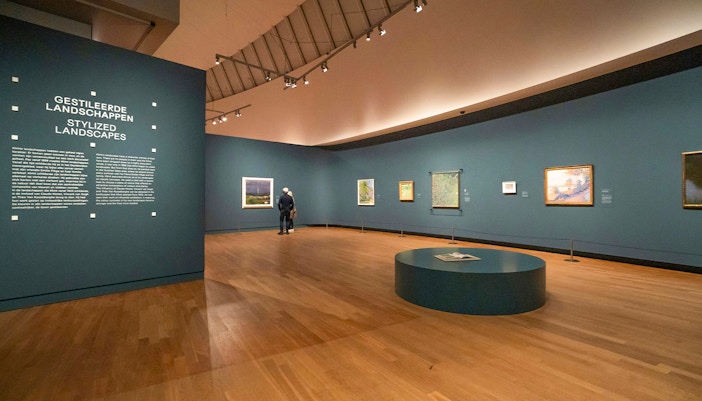
The painting remained in the Van Gogh family's private possession for decades before becoming a permanent centrepiece of the museum's collection.
Story behind 'Almond Blossom'
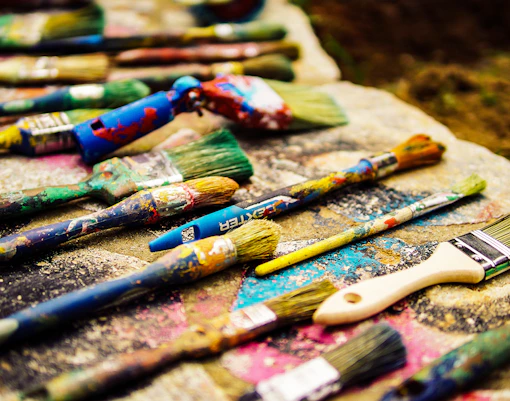
A joyous announcement
In late January 1890, Vincent van Gogh received a letter in Saint-Rémy from his brother Theo announcing the birth of his baby boy. Thrilled by the news, Vincent immediately set out to paint a dedicated present for the newborn.
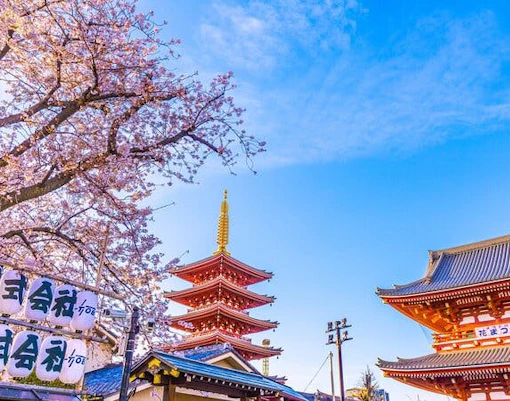
Drawing inspiration from nature and Japan
Captivated by the early spring almond blossoms outside his asylum room, Vincent chose them as his subject. Drawing on his passion for Japanese printmaking, he painted cropped, dramatic branches from a low angle against an expansive blue sky.
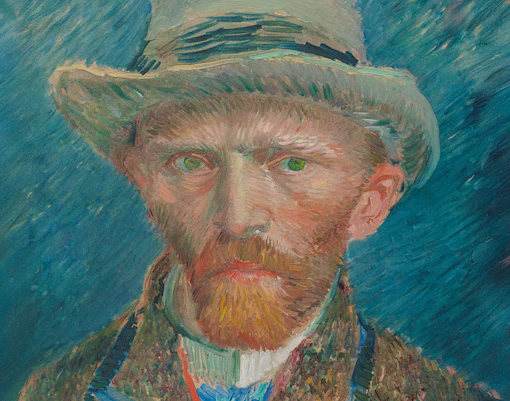
Overcoming adversity
Shortly after finishing the painting, Van Gogh suffered a severe mental health crisis that prevented him from painting for weeks. Despite this struggle, Almond Blossom remained one of the few canvases he considered a complete artistic success.
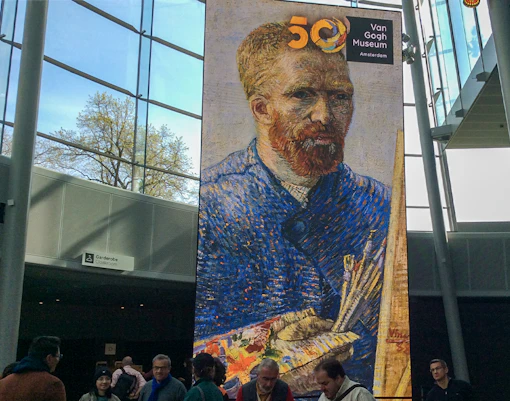
A lasting legacy
The painting was cherished by Theo's family and passed down to Vincent Willem van Gogh. In 1973, it became one of the crowning jewels of the newly opened Van Gogh Museum, inspiring millions of visitors worldwide.
Who created 'Almond Blossom'?
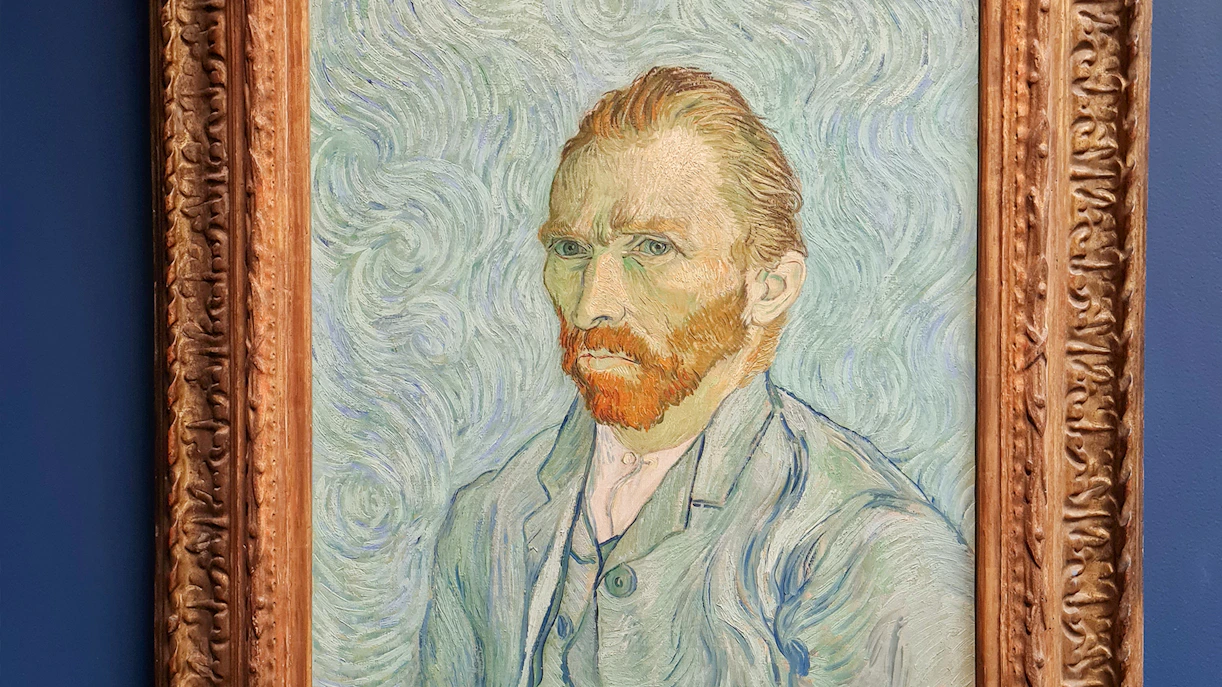
Vincent van Gogh was a Dutch Post-Impressionist painter whose short career transformed modern art. He remains one of the defining figures of European painting. By the time he painted Almond Blossom in 1890, he had moved beyond the dark realism of The Potato Eaters and the blazing colour experiments of Arles into a more distilled late style.
For this canvas, Van Gogh combined personal feeling with formal control: strong outlines, cropped branches, and a clear blue ground drawn from Japanese woodblock prints, yet painted with the tactile brushwork that remained unmistakably his own.
The picture also reveals a softer register than works such as Sunflowers, Irises, or Wheatfield with Crows. Van Gogh’s gift was turning visible nature into emotional language without losing structural clarity. That balance made him a decisive bridge between 19th-century realism and the expressive freedoms later explored by Fauvist and Expressionist painters.
What makes 'Almond Blossom' a masterpiece? See for yourself
1/4
Striking Japanese aesthetics
Notice the sharp outlines, dramatic cropping, and absence of a traditional horizon, reflecting Van Gogh's deep admiration for Japanese woodblock techniques.
Vibrant colour palette
Marvel at the contrast between the delicate pinkish-white petals and the brilliant turquoise-blue sky, evoking the refreshing atmosphere of early spring.
Masterful brushwork
Observe the varied texture of the paint—thick impasto on the twisted wooden branches contrasting with softer, fluid strokes across the open sky.
Emotional resonances
Feel the profound sense of peace and hope, a rare contrast to the emotional distress present in many of Van Gogh's other works from 1890.
Frequently asked questions about 'Almond Blossom'
No, access to Almond Blossom is included with your standard entry ticket to the Van Gogh Museum.
Yes, booking your timed-entry ticket online in advance allows you to bypass general admission lines at the entrance.
Photography without flash is permitted in specific designated areas of the museum. Always check current gallery guidelines on site.
He painted it to celebrate the birth of his nephew, using almond blossoms to symbolize new beginnings and hope.
It is a Post-Impressionist painting that strongly incorporates elements of Japanese ukiyo-e woodblock print style.
Almond Blossom is prominently displayed on the 1st floor of the Van Gogh Museum in Amsterdam.


