Wheatfield with Crows belongs to the broad, double-square format Vincent van Gogh explored in Auvers-sur-Oise, giving the landscape unusual horizontal force.
Witness 'Wheatfield with Crows' by Vincent van Gogh in Amsterdam – A late masterpiece
Painted in July 1890 in Auvers-sur-Oise, Wheatfield with Crows distils Vincent van Gogh’s late style into one charged panorama: a 50.5 x 103 cm oil painting of split paths, black birds, and a sky pushed by wind. Its thick brushwork, compressed horizon, and electric contrast between yellow fields and blue-black clouds make it one of the artist’s most debated final works. See it in person with timed entry or on a guided museum tour.
Where is it located?
You’ll find it in the third-floor galleries of the Van Gogh Museum in Amsterdam, within the section devoted to Van Gogh’s final months in Auvers-sur-Oise.
Tickets
Viewing Wheatfield with Crows is included with a standard Van Gogh Museum ticket; no separate pass is required.
How to best visit Wheatfield with Crows
Stand back before you move in
Begin from several feet away so the painting’s wide, double-square format reads clearly. From that distance, the three paths, the low horizon, and the sweep of the sky work together before the surface detail starts pulling your attention closer.
Read the surface from a slight angle
Shift a little off-centre once you’ve taken in the full composition. The gallery lighting catches the impasto more clearly from the side, making the wheat feel rougher, the sky more turbulent, and the crows more distinct against the blue.
Choose a quieter timed slot
The museum’s late-period galleries are among the most visited rooms in the building, and this canvas often attracts a cluster of viewers around late morning and midday. The first timed slot of the day or a late-afternoon weekday visit usually offers a calmer viewing experience.
Photograph it without blocking the room
Photography in the permanent collection is allowed without flash. Because the canvas is broad rather than tall, step back for a quick shot, avoid lingering directly in front of the painting, and follow any gallery-specific signage.
Use expert commentary for the final-months debate
If you want more than a visual encounter, the 2-hour Van Gogh Museum guided tour adds useful context on Auvers-sur-Oise, Van Gogh’s final weeks, and the long debate over whether this was his last painting. Headsets also help in busy rooms where spoken commentary can otherwise get lost.
Build your route around the ending
If Wheatfield with Crows is your main goal, allow 90–120 minutes for the museum so you can see how Van Gogh arrived here. A strong route is The Potato Eaters, The Bedroom, Almond Blossom, and then the final Auvers galleries, ending with this canvas while the arc of his development is still fresh.
Did you know?
A double-square canvas
Painted in his final month
He painted it in July 1890, only weeks before his death, during an intensely productive stretch in Auvers-sur-Oise.
Part of a wider wheatfield series
This was not Van Gogh’s only late wheatfield painting. It belongs to a group of final landscapes that revisit the same motif with different moods and skies.
The ‘last painting’ label is disputed
The long-standing claim that it was Van Gogh’s final work remains unproven. Scholars also point to other late Auvers canvases, including Tree Roots, as possible last paintings.
Three paths, not one
Many reproductions flatten the composition, but in person, the road splits into three separate paths. That branching structure is central to the painting’s tension.
The crows are never explained
No surviving letter identifies the birds as symbols of death. That silence is one reason the painting remains open to very different interpretations.
Colour carries the drama
The emotional charge comes as much from the clash of yellow wheat, deep blue sky, and black strokes as from the subject itself. The palette creates unease before symbolism even enters the discussion.
Its width surprises visitors
At about 50.5 x 103 cm, the painting is wider than many expect. In the gallery, that proportion makes the field and sky feel more immersive than printed reproductions suggest.
Story behind 'Wheatfield with Crows'
A final move to Auvers-sur-Oise
In May 1890, Vincent van Gogh left the asylum at Saint-Rémy and settled in Auvers-sur-Oise, north of Paris, under the care of Dr Paul Gachet. The village gave him open fields, quiet roads, and a new working rhythm. He responded with extraordinary speed, producing painting after painting in just over two months.
A new panoramic experiment
During this period, Van Gogh explored an unusually wide, double-square format that let land and sky stretch across the canvas. In Wheatfield with Crows, that format turns a familiar rural subject into something unstable and charged. Your eye moves laterally across the field, then back into the path and upward into the storm.
Wheatfields as emotional language
Van Gogh wrote about vast wheat fields under troubled skies as a way of expressing sadness and extreme loneliness. Scholars are careful not to treat every detail as autobiography, but this painting clearly uses landscape as emotional language. The split paths, black birds, and compressed horizon create tension without forcing a single meaning.
The myth of the last painting
For decades, Wheatfield with Crows was widely presented as Van Gogh’s final work, which made it seem like a visual farewell. Modern scholarship is more cautious. Several late Auvers paintings were made around the same time, and there is no definitive proof that this canvas came last.
From late canvas to cultural icon
What began as one painting among Van Gogh’s final Auvers landscapes became one of the defining images of his legend in the 20th century. Biographies, films, and reproductions turned it into shorthand for artistic intensity and personal crisis. Seen at full scale in the museum, it feels less like an illustration of myth and more like a work still alive with motion.
Who created 'Wheatfield with Crows'?
Vincent van Gogh (1853–1890) was a Dutch Post-Impressionist painter whose brief, intense career transformed modern art. In Wheatfield with Crows, he brought together the lessons of his final years: forceful colour contrasts, urgent brushwork, and a landscape charged with emotion rather than description alone. Instead of presenting nature as calm scenery, Van Gogh turned the field, paths, and sky into a psychological space, using rhythm and paint texture to make the scene feel unstable and alive. This approach grew out of the experiments he pursued in Arles and Saint-Rémy, where works such as Sunflowers, The Bedroom, and Almond Blossom showed his increasing freedom with colour and composition.
Van Gogh sold little in his lifetime, yet his paintings reshaped how later artists understood expression, proving that a landscape could convey inner life as powerfully as a portrait or religious scene across Europe and beyond.
What makes 'Wheatfield with Crows' a masterpiece? See for yourself
1/6
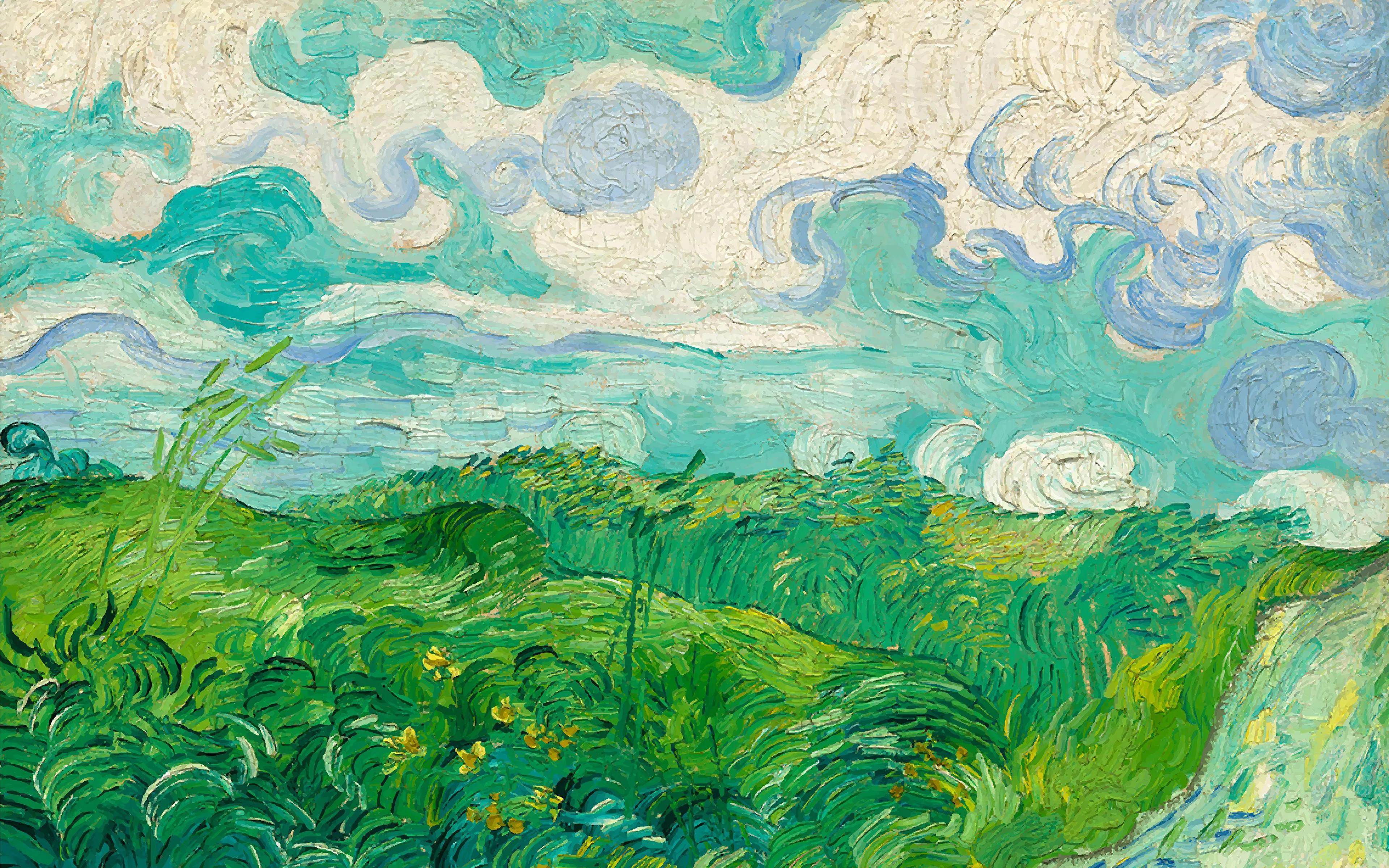
A horizon under pressure
Van Gogh pushes the horizon line low, giving the sky unusual weight. When you stand before the canvas, the clouds feel less like a background and more like an advancing force pressing down on the field.
A split path with no resolution
The road divides into three directions and never leads to a clear destination. That unresolved structure keeps your eye moving through the painting without ever letting it settle.
A field built from motion
Look closely at the wheat, and you’ll see short, loaded strokes rather than smooth blending. The paint surface stays active and visible, making the field vibrate instead of lying still.
A violent colour contrast
The yellows are not simply pastoral, and the blues are not simply atmospheric. Van Gogh sets intense warm and cool zones against each other so the painting feels emotionally charged before any symbolism is applied.
A panoramic late style
At about 50.5 x 103 cm, the canvas belongs to Van Gogh’s broad double-square experiments in Auvers-sur-Oise. That unusual ratio lets him compress earth and sky into one continuous sweep of motion.
An ending without closure
Part of the painting’s power comes from what it refuses to explain. The crows, storm, and paths do not add up to one fixed message, which is why the work still feels open, modern, and unsettling in person.
Other 'Wheatfield' paintings by Van Gogh
Vincent van Gogh painted dozens of landscapes depicting wheat fields, using them to capture light, movement, and the cycles of life. Below are some of his most celebrated wheatfield works and where they are displayed globally:
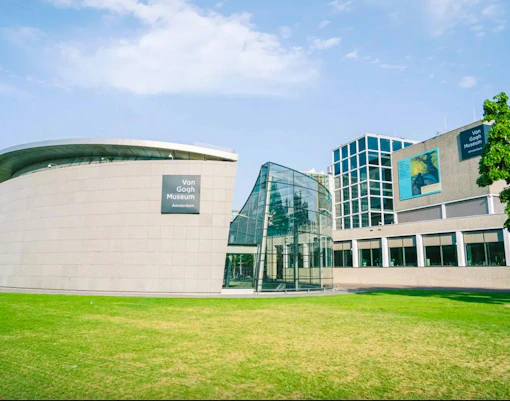
Wheatfield under Thunderclouds (1890) — Van Gogh Museum, Amsterdam
Painted during his final weeks in Auvers-sur-Oise alongside Wheatfield with Crows, this dramatic panoramic canvas emphasizes the vastness and solitude of the French countryside under a tempestuous sky.
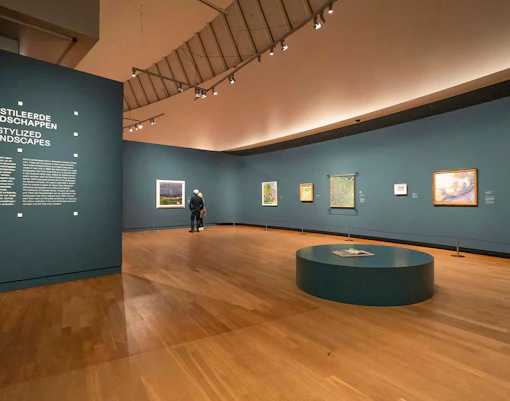
Wheatfield with a Reaper (1889) — Van Gogh Museum, Amsterdam
Created from his asylum window in Saint-Rémy-de-Provence, this painting depicts a lonely worker harvesting golden grain under a blazing sun. Van Gogh viewed the reaper as a poignant symbol of humanity's mortality.
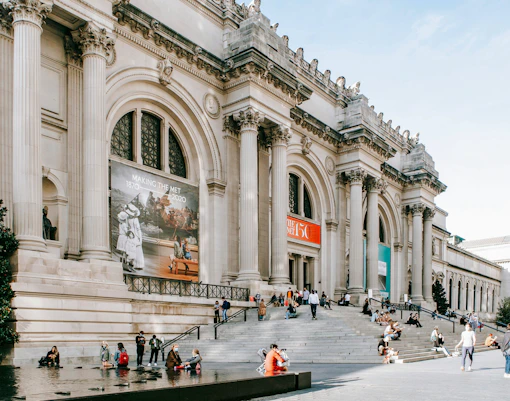
Wheat Field with Cypresses (1889) — The Metropolitan Museum of Art, New York City
Featuring swirling clouds, towering cypresses, and windblown stalks, this vibrant summer view from Saint-Rémy is one of the artist's most iconic landscapes.
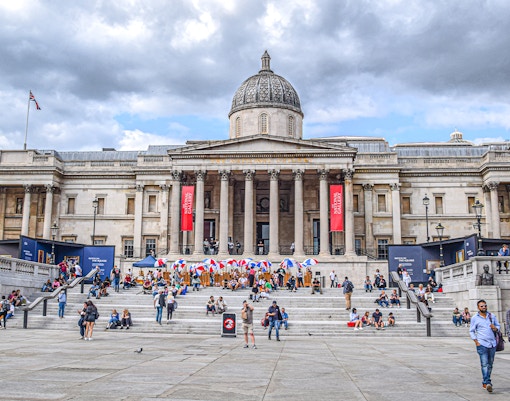
A Wheatfield, with Cypresses (1889) — The National Gallery, London
A studio rendition of the same composition as the New York painting, executed with thick, impasto brushwork and cool turquoise tones.
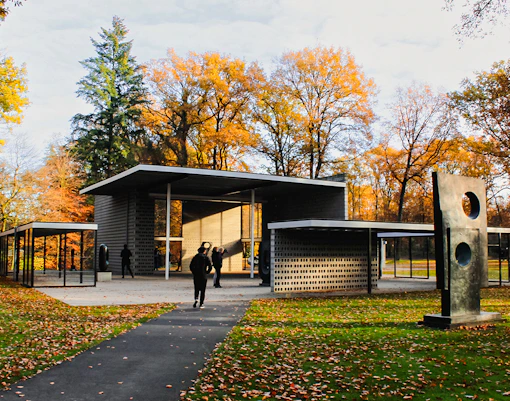
Enclosed Wheat Field with Rising Sun (1889) — Kröller-Müller Museum, Otterlo
Located in the Netherlands' second-largest Van Gogh collection, this piece captures the early morning light breaking over a stone-walled field outside his cell window.
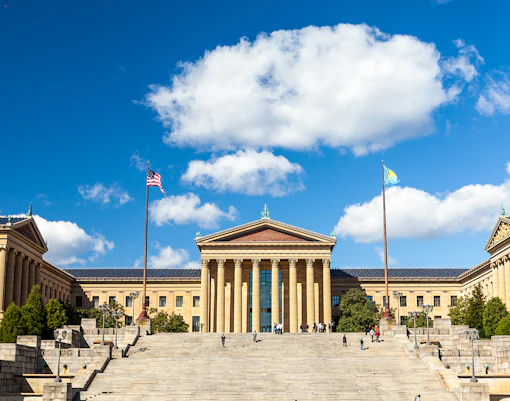
Rain/Enclosed Wheat Field in the Rain (1889) — Philadelphia Museum of Art, Philadelphia
A unique depiction of weather, using diagonal, dark brushstrokes to evoke heavy rain pouring across a walled field.
Wheat Fields after the Rain (1890) — Carnegie Museum of Art, Pittsburgh
A patchwork landscape from Auvers showing lush green crops meeting golden grain beneath a clearing storm.
Frequently asked questions about 'Wheatfield with Crows'
No. It’s included with standard timed Van Gogh Museum entry, but advance booking is essential because popular slots often sell out.
You’ll find it in the museum’s third-floor Auvers-sur-Oise galleries, where Van Gogh’s final works are displayed.
Yes. Photography in the permanent collection is allowed without flash. Follow gallery signage and keep your shot brief when the room is crowded.
Not definitively. Scholars still debate the claim, and several late Auvers-sur-Oise paintings remain plausible candidates for Van Gogh’s final canvas.
If context matters to you, then yes. The Van Gogh Museum guided tour explains his final months, techniques, and the debates surrounding this painting.
Plan 90–120 minutes for the museum, including 10–15 minutes to study this canvas closely and compare it with nearby late works.
Yes, the Van Gogh Museum is wheelchair- and pram/stroller-accessible.
Book the first timed slot of the day or a late-afternoon weekday visit. The final galleries are busiest from late morning through midday.


