Van Gogh considered The Potato Eaters his best work up to that point and defended it fiercely in letters after criticism from Theo and artist friends.
Witness 'The Potato Eaters' by Vincent van Gogh in Amsterdam – A Dutch masterpiece
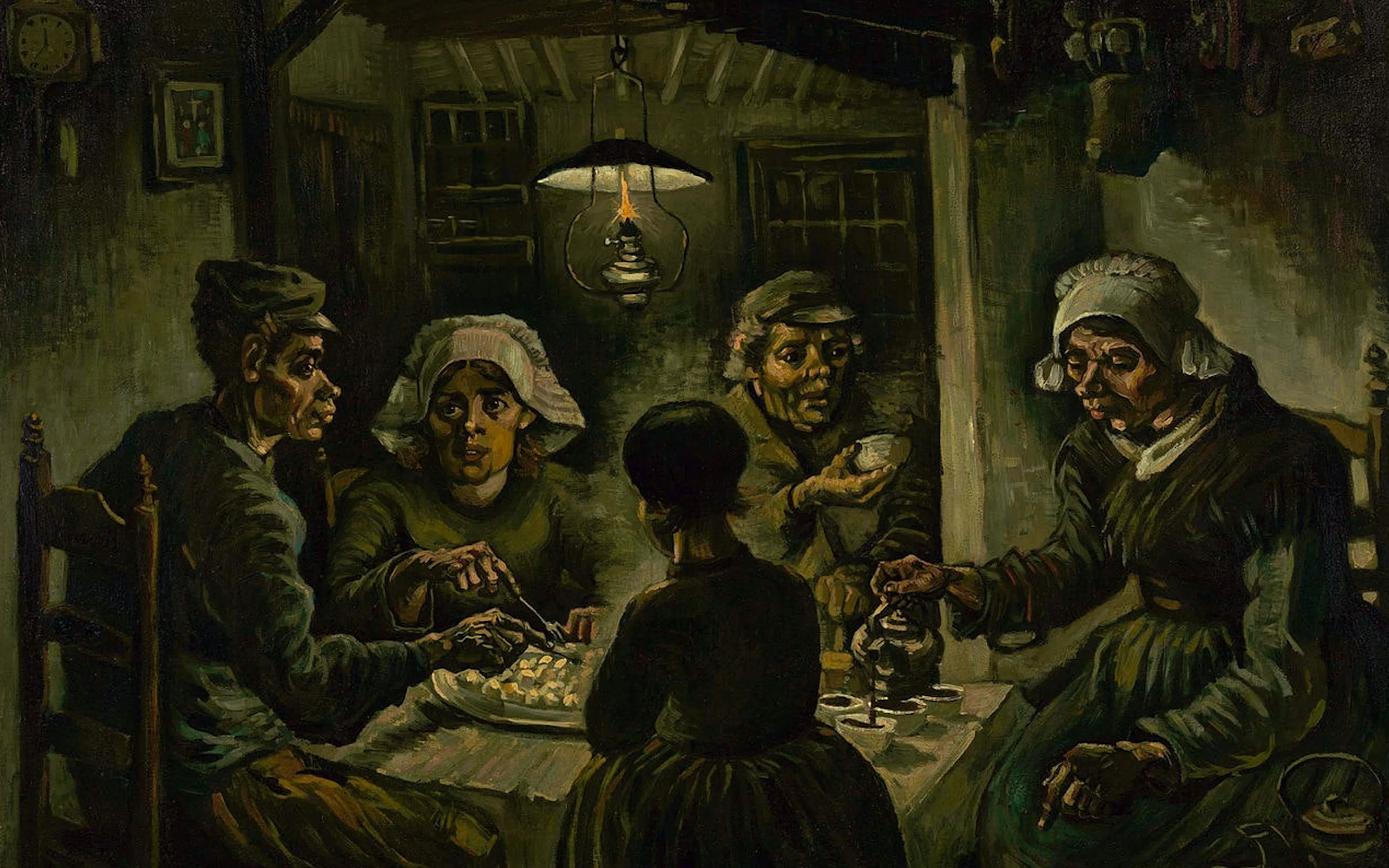
Painted in 1885, The Potato Eaters is Vincent van Gogh’s first ambitious figure composition and one of the emotional anchors of the Van Gogh Museum. Its smoky greens, rough faces, and lamp-lit table turn a peasant supper into a statement about labour, dignity, and honesty. Created in Nuenen before the bright colours of Arles, it shows the artist testing mood, anatomy, and narrative on a large scale. See it with timed entry, or deepen the experience on a 2-hour guided tour.
Where is it located?
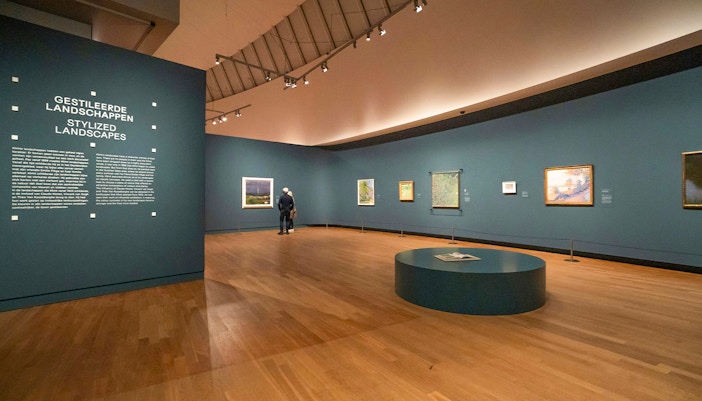
You’ll usually find it in the first-floor Dutch-period galleries of the Rietveld building at the Van Gogh Museum in Amsterdam.
Tickets
Entry is included with a standard Van Gogh Museum ticket; no separate pass is required. Timed entry covers the permanent collection, including The Potato Eaters when it is on display.
How to best visit The Potato Eaters
Start with the full composition
Stand a few steps back before moving closer. From that distance, the hanging lamp, clustered heads, and tight table form a compact circle that makes the room feel closed, smoky, and intimate. You’ll read the painting more clearly if you first take in the entire scene rather than isolating details.
Move in for the hands and faces
After the full view, step closer to study the workers’ hands, cheekbones, and eyes. Van Gogh wanted these figures to look as if the same hands digging the earth were now reaching for the potatoes. The painting’s emotional force sits in those rough surfaces and tired expressions.
Watch the dark palette carefully
This is one of the darkest major paintings in the museum, so reflections and gallery traffic can flatten it if you rush. Shift slightly left or right to reduce glare on the deepest browns and greens, especially around the background wall and the faces nearest the lamp. If photography is permitted in the gallery, shoot without flash and avoid blocking the central sightline.
Visit at the edges of the day
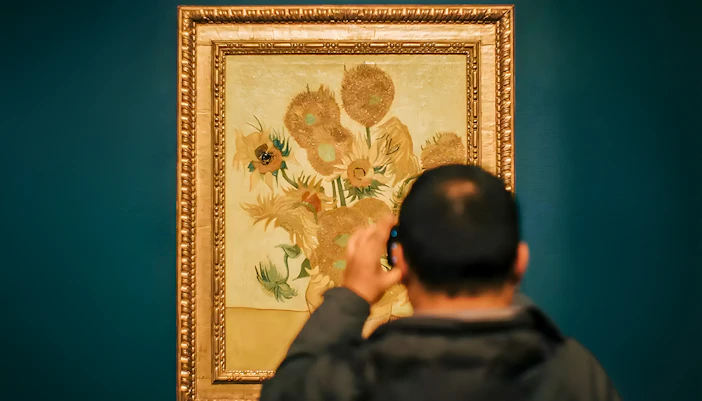
The Van Gogh Museum is busiest from late morning into mid-afternoon, when visitors cluster around the most famous later works. Seeing The Potato Eaters soon after opening, or during the final stretch before closing, usually gives you more space to study its subdued tones. That quieter setting matters more here than it does with brighter paintings like Sunflowers.
Add guided context if you want the full story
This painting rewards explanation because it sits far from the colour and optimism many visitors expect from Van Gogh. The Van Gogh Museum guided tour includes skip-the-line entry, a 2-hour guided route, and headsets, which can help you connect this early work to his later paintings and letters. If you prefer to move at your own pace, timed entry tickets let you linger in the Dutch-period rooms longer.
Build a mini-route through the museum
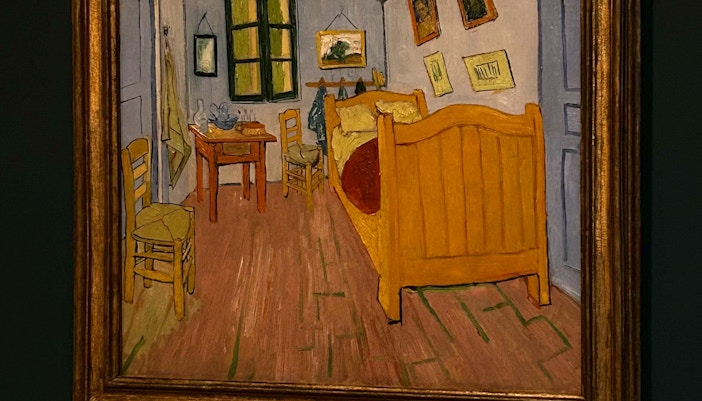
Use The Potato Eaters as the starting point for Van Gogh’s evolution. Follow it with the self-portraits, then continue to The Bedroom, Sunflowers, and Almond Blossom to watch his palette open from earth tones to saturated blues and yellows. Set aside 30–45 minutes for this early section and the immediate onward route if you want more than a quick stop.
Did you know?
His own bold claim
Built through studies
He did dozens of preparatory head, hand, and figure studies before painting the final scene. The finished canvas was the result of long observation, not a single burst of inspiration.
Painted in Nuenen
Van Gogh created the work in April 1885 while living in Nuenen in the southern Netherlands. It belongs to the darkest phase of his career, before Paris transformed his palette.
Real labour, not idealized peasants
He wanted the diners to look like people who had earned their meal through physical work. That is why the hands are so prominent and the faces so weathered.
A print followed the painting
Soon after finishing the canvas, Van Gogh made a lithograph version of the composition. He hoped the image could circulate more widely than the painting itself.
Colour was intentionally restrained
The greens, browns, and smoky blacks were deliberate, not a limitation. Van Gogh wanted the palette to feel as earthy as the potatoes and the dimly lit room.
A rare early multi-figure statement
This is Van Gogh’s first fully realised large-scale group scene. It marks the moment when he tried to combine social observation, character, and mood in one composition.
Its Dutch title matters
The original Dutch title, De aardappeleters, keeps the emphasis on the act of eating rather than simply on a family portrait. The meal is the subject as much as the people.
Story behind 'The Potato Eaters'
The Nuenen ambition
In 1885, Vincent van Gogh was living in Nuenen and had become deeply focused on rural life. He was studying weavers, labourers, cottages, and the physical reality of farm work rather than urban modernity. The Potato Eaters grew from that commitment to peasant subjects. Van Gogh wanted to make a serious, morally weighty painting out of ordinary people sharing an evening meal.
The long preparation
Van Gogh did not arrive at the final scene quickly. He drew heads, hands, and individual sitters repeatedly, trying to learn how to build believable figures under lamplight. He also wrestled with how to arrange five people around a small table without losing the sense of cramped intimacy. That preparation is part of why the final painting feels so deliberate, even in its roughness.
The final evening scene
When Van Gogh painted the finished canvas in April 1885, he centred everything on a single hanging lamp. Its light falls unevenly across faces, cups, and potatoes, turning a simple supper into a theatrical moment. The compressed space, muted palette, and awkward angles were intentional tools, not mistakes to be polished away. He wanted truth, not prettiness.
The backlash and defense
The painting did not receive universal praise, even among those close to Van Gogh. Theo and some artist acquaintances criticised its anatomy, finish, and overall execution. Vincent answered by arguing that a peasant picture should not look refined if it was to remain honest to its subject. That exchange matters because it shows how strongly he believed in the work’s social and artistic purpose.
From early experiment to essential masterpiece
Later, Van Gogh became known for blazing colour, rhythmic brushwork, and scenes from Arles and Saint-Rémy. As a result, The Potato Eaters can surprise visitors who expect immediate brightness. Yet its place in the Van Gogh Museum is crucial: it reveals the seriousness of his early ambitions and the emotional groundwork beneath the later colour. Seen within the full museum route, it becomes not an outlier, but a beginning.
Who created 'The Potato Eaters'?
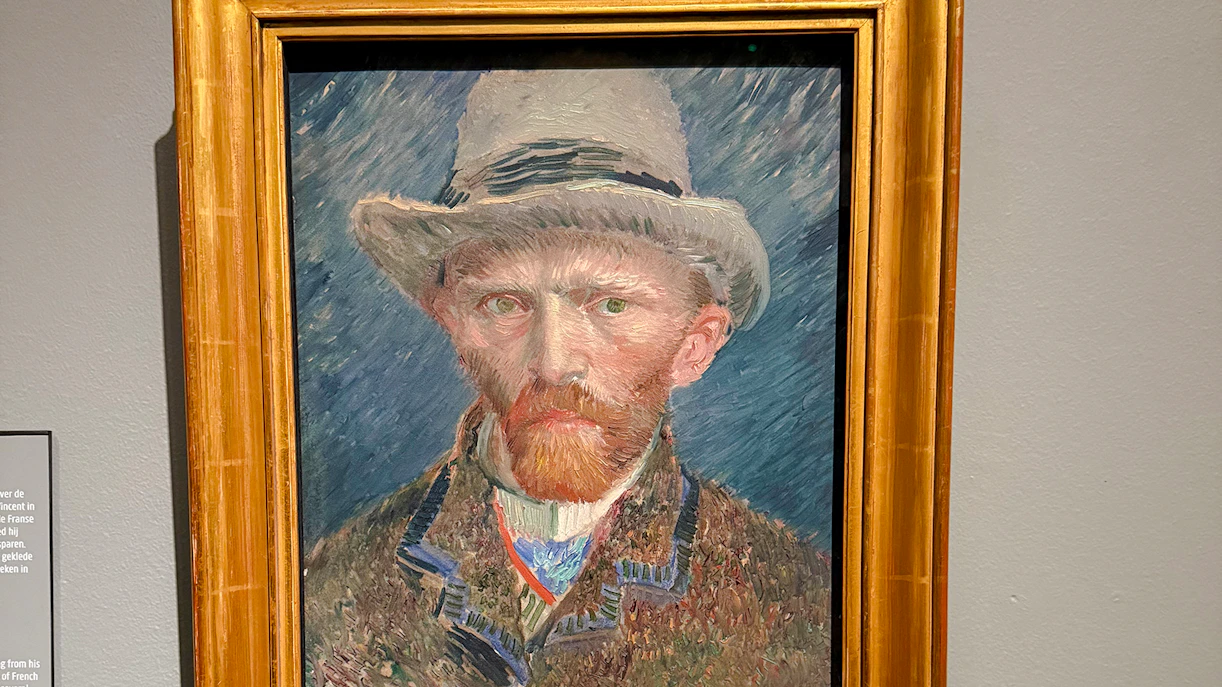
Vincent van Gogh was a Dutch artist whose brief, restless career transformed modern painting. Although he is now associated with the luminous colour of Arles and Saint-Rémy, The Potato Eaters belongs to his earlier Nuenen period, when he was studying peasant life, dark tonal harmony, and the moral weight of everyday labour. He built the painting through repeated head studies, figure sketches, and experiments in arranging five sitters around a single lamp, using rough brushwork and earthy colour to stress honesty over elegance.
Seen alongside later works such as Sunflowers, The Bedroom, and his self-portraits, the canvas marks a crucial stage in his development: the point where ambition caught up with empathy. Van Gogh’s influence on modern art lies not only in his colour, but in his insistence that ordinary subjects could carry profound psychological and human force. It remains essential to understanding his full range.
What makes 'The Potato Eaters' a masterpiece? See for yourself
1/6
The lamp-lit composition
Everything revolves around the hanging oil lamp. It acts like a visual pin, holding the five figures together while also emphasising how little light and comfort the room contains. Notice how the circle of heads and hands tightens beneath it.
The moral weight of the hands
The hands are oversized, angular, and impossible to ignore. Van Gogh wanted you to connect the meal to labour, so the same rough fingers that dug in the soil now reach into the dish. That choice turns supper into social meaning.
The earthbound colour
Instead of the yellows and blues associated with Van Gogh’s later fame, this canvas is built from greens, browns, and sooty shadows. The restrained palette makes the room feel heavy and used, but it also binds the figures to the land that fed them. The colour is part of the argument.
The unease in the faces
These are not polished portraits. The faces appear gaunt, awkward, and at times almost mask-like, which gives the scene psychological tension rather than domestic warmth. When you stand in front of the work, the figures seem both together and profoundly isolated.
The scale of the ambition
At about 82 × 114 cm (32 × 45 in), the painting is large enough to stage a full group drama without becoming monumental. For an artist still finding his voice, this was an unusually ambitious attempt at narrative painting. It feels like Van Gogh testing how much human complexity he could hold in one room.
The turning point in Van Gogh’s evolution
This canvas helps the rest of the museum make sense. Without The Potato Eaters, the leap to The Bedroom, Sunflowers, and Almond Blossom can look like pure stylistic change. With it, you can see that Van Gogh’s later colour did not replace emotional intensity — it redirected it.
Frequently asked questions about 'The Potato Eaters'
It is his first fully realised multi-figure masterpiece and his clearest early statement on peasant life, dignity, and hard labour before the colour experiments of Paris and Arles.
It is usually displayed in the first-floor Dutch-period galleries of the Rietveld building. Loans, conservation work, and gallery rehangs can temporarily move it off display.
Focus on the hanging lamp, the workers’ hands, and the dense greens and browns. Van Gogh used darkness and rough paint handling to make the meal feel earned.
Yes. The museum often shows early studies, drawings, and letters that help explain how Van Gogh developed the final composition.
Allow 15–20 minutes for the painting alone, or 30–45 minutes if you want to include nearby early works and interpretive labels.
Yes. Headout offers the Van Gogh Museum guided tour, and some ticket options include multimedia add-ons that deepen the context around key works.
Photography without flash is generally allowed in the permanent collection. Keep a respectful distance, avoid blocking views, and follow any gallery-specific signs.
The first timed slot of the day and the last 90 minutes before closing are usually the easiest times for a calmer, less obstructed view.