Is Van Gogh Museum worth visiting?
Step through the doors and the noise of Museumplein drops away. Inside, the galleries move from dark early paintings to blazing yellows, blossom branches, and self-portraits, so the visit feels less like browsing and more like walking beside a mind in motion.
The museum was built to keep Vincent van Gogh’s paintings, drawings, and letters together. Instead of meeting isolated hits, you watch an artist teach himself, push colour further, and write frankly about failure, ambition, and money.
What stays with most people isn’t just seeing Sunflowers or The Bedroom. It’s understanding how those paintings came to exist, and how fragile the life behind them was. Few museums make fame feel this personal.
Skip it if you dislike slow-looking galleries or won’t plan around fixed timed entry; the payoff comes from patience, not a quick pass through famous walls.
What to see at the Van Gogh Museum?

The Dutch beginnings
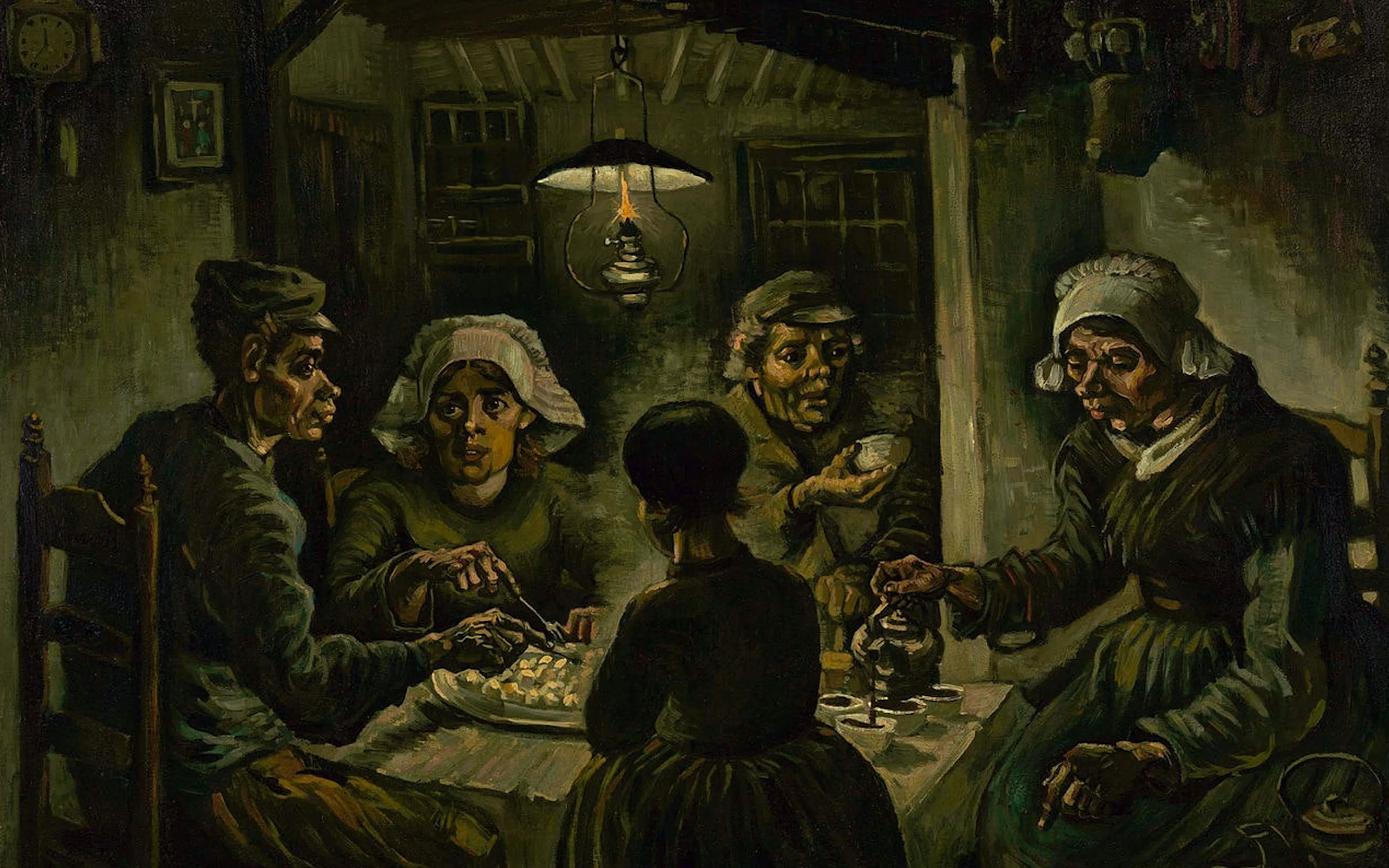
Start with The Potato Eaters and other early works, where dark earth tones and peasant subjects show Van Gogh testing how to paint ordinary life with weight and honesty.
Paris experiments
Look for looser brushwork and a brighter palette here. These galleries make the later Arles paintings easier to read because you can see the transformation happen in real time.
Self-portraits
Several self-portraits let you track Van Gogh’s face, technique, and confidence across a few intense years. These rooms often draw clusters, so circle back later if you want a longer look.
Arles and 'Sunflowers'
This is where many visitors slow down. Sunflowers, bold yellow interiors, and southern light show the burst of colour that made Van Gogh instantly recognisable. Expect the heaviest crowds in this section.
The Bedroom
The tilted walls, simplified forms, and unusual colour contrasts make this small domestic scene feel oddly charged. Stand back first, then move closer to catch the personal details around the bed and chairs.
Saint-Rémy and 'Irises'
Painted during recovery, these works turn gardens and flowers into charged patterns of movement. Irises is often calmer than Sunflowers, making it one of the better places to study brushwork up close.
Auvers and the final landscapes
End with the unsettled skies and tense fields of Van Gogh’s last months, including Wheatfield with Crows. Give this gallery time; the emotional shift lands hardest when you don’t rush through it.
Letters and contemporaries
Don’t skip the letters and works by Gauguin, Monet, and others. They explain Van Gogh as part of a network, not a lone myth, and add depth between the headline paintings.
How to explore the Van Gogh Museum
How much time to spend?
Budget 1.5–2 hours for a comfortable full visit, or 60–75 minutes if you only want the permanent highlights. Add 30–45 minutes if you plan to read the letters closely, browse a temporary exhibition, or stop at the café or shop.
Best visit order
Start where the museum starts: the early Dutch works, then follow the chronology through Paris, Arles, Saint-Rémy, and Auvers. This order matters because Van Gogh’s colour doesn’t arrive all at once. Seeing the darker beginnings first makes Sunflowers, The Bedroom, and the late landscapes land harder.
Must-see highlights
Must-see: The Potato Eaters, the self-portraits, Sunflowers, The Bedroom, Irises, Almond Blossom, and Wheatfield with Crows. Optional: the letters, works by Gauguin and Monet, and the temporary exhibition galleries, which add about 30–45 minutes and richer context.
Worth adding nearby
Rijksmuseum and Stedelijk Museum are both on Museumplein and easy to pair on the same day. Combos with these museums work especially well if you want a second major museum without crossing the city.
Guided or self-paced?
Self-paced is ideal if you like to linger and already know the basics of Van Gogh’s life; the chronology does a lot of the teaching for you. A guide is worth it if you want the letters, relationships, and stylistic shifts explained clearly as you go. The Van Gogh Museum guided tour is the best fit for first-time visitors who want a structured 2-hour route.
Brief history of the Van Gogh Museum
- 1890: Vincent van Gogh dies, and his works pass to his brother Theo, then soon to Theo’s widow, Johanna van Gogh-Bonger, who begins preserving and promoting the collection.
- 1962: The Vincent van Gogh Foundation is established to protect the family holdings and create a permanent public home for them.
- 1973: The Van Gogh Museum opens on Museumplein in a purpose-built home for the collection.
- 1999: A new exhibition wing by Kisho Kurokawa expands the museum and gives temporary shows their own distinct space.
- 21st century: The museum becomes one of Amsterdam’s defining cultural institutions, while timed entry helps manage its global popularity.
- Today: It holds the largest collection of Van Gogh’s paintings, drawings, and letters anywhere in the world.
Architecture & design of the Van Gogh Museum
The Van Gogh Museum doesn’t try to compete with the paintings. The main building, designed in a restrained Modernist language, uses clean lines, pale surfaces, and generous daylight so your eye keeps returning to the canvases rather than the walls. That calm matters once you reach the intense colour of the Arles rooms. The later exhibition wing adds a different rhythm: Kisho Kurokawa’s curved, light-filled forms soften the route and make temporary galleries feel more fluid than processional. Together, the buildings do something subtle but effective — they turn a blockbuster museum into a sequence of clear, quiet spaces where you can follow Van Gogh’s life without losing the thread.
Who built it?
Commissioned by the Vincent van Gogh Foundation to give the family collection a permanent public home, the museum’s main building was designed by Gerrit Rietveld and opened in 1973, shortly after his death. Kisho Kurokawa later designed the 1999 exhibition wing, expanding the museum without turning it into architectural theatre.
Why the temporary exhibitions are worth your time
One reason repeat visitors come back is that the museum is not just a fixed shrine to Sunflowers. The temporary exhibition wing regularly reframes Van Gogh through contemporaries, collectors, print culture, or the afterlife of his reputation. That matters because it stops the visit from hardening into a greatest-hits parade. If you’ve already seen the permanent collection once, the changing shows are usually the strongest reason to return. Even for first-time visitors, they add a useful reminder that Van Gogh’s fame was built over time, not born instantly.
Frequently asked questions about the Van Gogh Museum
Yes, book ahead. The museum works on timed entry and does not usually sell walk-up tickets on-site. In summer and on weekends, popular slots can disappear days ahead, so advance booking is the safer move. Book your tickets here
You should aim to arrive on time. Timed entry is strict because the museum caps visitor numbers, and missed slots usually can’t be rescheduled. Staff may help if capacity allows, but you shouldn’t count on it.
No, not if it’s large. Handbags bigger than A4 size, wheeled suitcases, and trolleys aren’t permitted in the museum, so travel light if you’re coming straight from Amsterdam Centraal or Schiphol.
Yes. The Van Gogh Museum is wheelchair- and stroller-accessible, and its elevators make the full chronological route manageable. That makes it one of the easier major Amsterdam museums to navigate at an unhurried pace. Plan your visit.
Usually, yes. It’s especially useful if you know the paintings but not the story behind them, because it connects works to letters, moves, and mood shifts in a way wall labels can’t fully do. All audio-guided tour options.
Yes. The Van Gogh Museum guided tour is available with English, Spanish, or French-speaking guides and includes headsets plus a structured 2-hour route through the major works.
Yes, if you treat it as a full art day. The two museums are a short walk apart on Museumplein, and Van Gogh Museum + Rijksmuseum combo tickets make the pairing easier to organise in advance.
Yes. Children and teens under 18 enter free, but they still need a reserved ticket because the museum controls capacity by time slot, not just by payment.