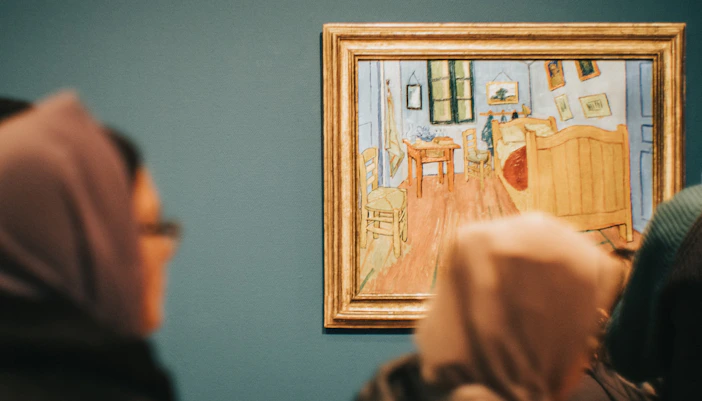
The 1st-floor galleries crowd quickly by late morning. Book an early-morning time slot at 9am or visit after 4pm for a quieter experience.
Paul Gauguin | Post-Impressionist master at Van Gogh Museum
Paul Gauguin remains one of art history’s most captivating figures. Famous for his bold colours, flat planes, and expressive Post-Impressionist style, his work helped shape modern art. At the Van Gogh Museum in Amsterdam, you can explore key masterpieces created during his tumultuous friendship with Vincent van Gogh. All Gauguin paintings are displayed within the main collection, and entry is included with a standard museum ticket.
Paul Gauguin’s paintings at the Van Gogh Museum
1/6
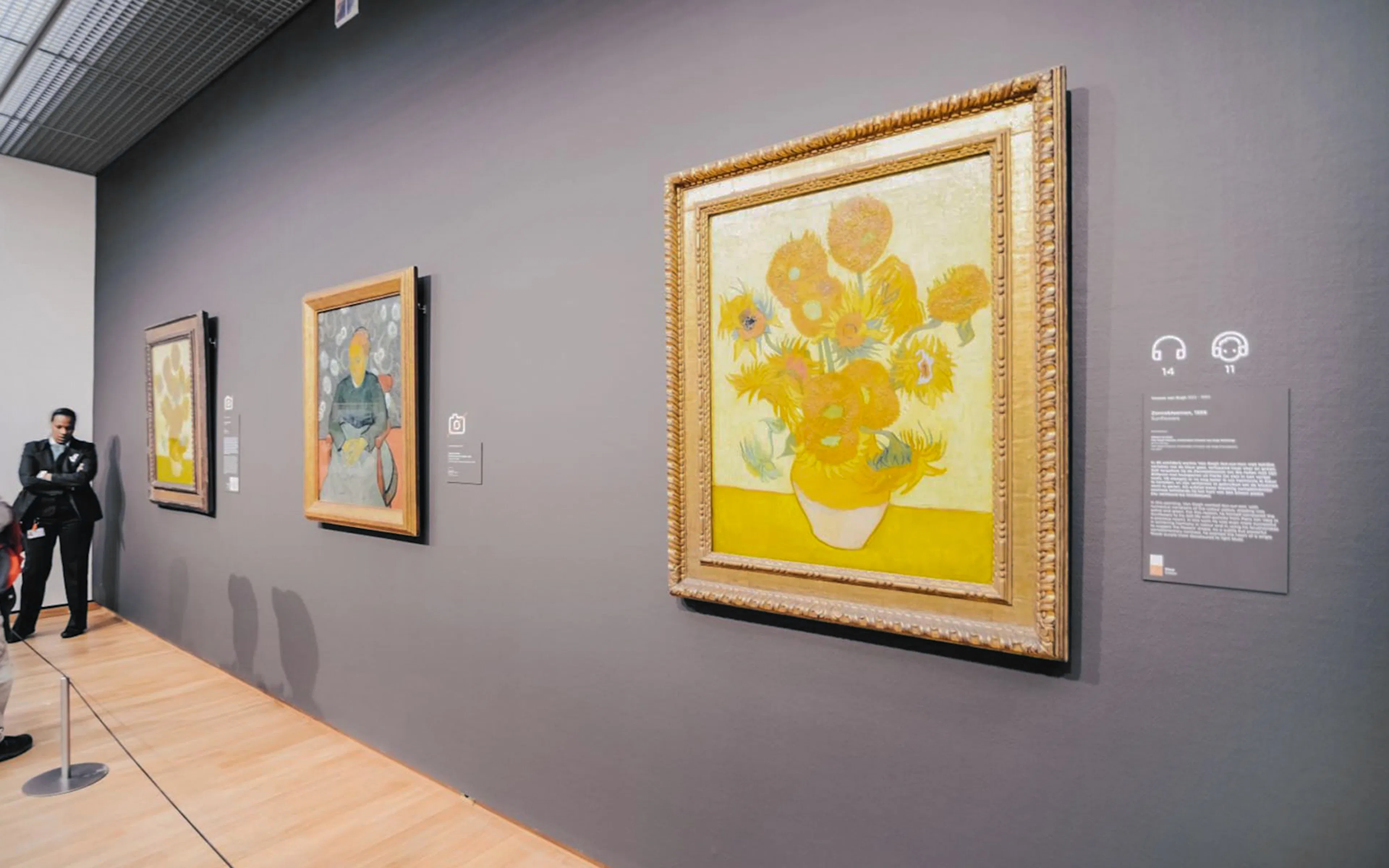
Vincent van Gogh Painting Sunflowers
Location: Floor 1, Yellow House Gallery
Painted during Gauguin’s brief stay in Arles in 1888, this poignant portrait captures Van Gogh at work. Gauguin uses stylised contours and bold colour blocks, offering a rare contemporary look at Vincent’s creative process and their intense artistic dynamic.
Self-Portrait with Portrait of Émile Bernard (Les Misérables)
Location: Floor 1, Yellow House Gallery
Dedicated to Van Gogh in 1888, this striking self-portrait casts Gauguin as an outcast like Victor Hugo’s Jean Valjean. The background features a sketch of Émile Bernard, illustrating the powerful bond and shared vision of the Post-Impressionist avant-garde.
On the Banks of the River, Martinique
Location: Floor 1, Early Works Gallery
Created in 1887 during his pivotal voyage to Martinique, this vibrant landscape marks Gauguin’s transition away from traditional Impressionism. Rich tropical greenery and exotic palettes foreshadow the groundbreaking, primitive style he would later perfect in Tahiti.
The Mango Trees, Martinique
Location: Floor 1, Early Works Gallery
Painted in 1887, this vivid work illustrates women gathering fruit in a sun-drenched landscape. Gauguin moved away from traditional European naturalism here, using rhythmic compositions and saturated tropical tones that marked a crucial turning point in his evolving, exotic style.
Breton Girl Spinning
Location: Floor 1, Pont-Aven Gallery
Created in 1889 during his time in Brittany, this vertical composition depicts a local girl spinning wool against a coastal background. Gauguin's bold outlines, flat colour patches, and simplified peasant subject showcase his mastery of Synthetism and his search for primitive purity.
Clovis Sleeping
Location: Floor 1, Early Works Gallery
Dating to 1884, this intimate portrait captures Gauguin's young son sleeping beside an ornate tankard. Blending Impressionist brushwork with symbolic storytelling, the dreamlike atmosphere and subtle detail reflect Gauguin’s early experimentation with psychological depth and mood.
Tips for viewing Paul Gauguin at the Van Gogh Museum
⏳ Time it right
🎨 Observe the brushwork in 'Sunflowers'
Look closely at how Gauguin renders Van Gogh's canvas within the painting—he uses flatter, smoother strokes compared to Vincent's heavy impasto, highlighting their contrasting techniques.

🌿 Hidden detail: Martinique sketches
Pay attention to the background figures in his Caribbean landscapes; Gauguin reused these sculpted poses in his later Polynesian masterpieces.
Brief history of Paul Gauguin
- 1848 – Born in Paris, spending early childhood in Lima, Peru.
- 1870s – Works as a stockbroker before taking up painting and joining the Impressionist exhibitions.
- 1886 – Abandons finance and moves to Pont-Aven, Brittany, developing Synthetism.
- 1887 – Travels to Martinique, embracing tropical palettes and non-Western subjects.
- 1888 – Joins Vincent van Gogh in Arles for nine volatile weeks at the Yellow House.
- 1891 – Sails to Tahiti, seeking artistic freedom and creating his iconic Polynesian works.
- 1903 – Passes away in the Marquesas Islands, leaving a lasting legacy.
- Today – Celebrated globally as a pioneer of Symbolism and modern art.
Did you know?

Van Gogh reportedly felt Gauguin depicted him as a madman in Vincent van Gogh Painting Sunflowers.
Before becoming a full-time painter at age 35, Gauguin was a successful Paris stockbroker.
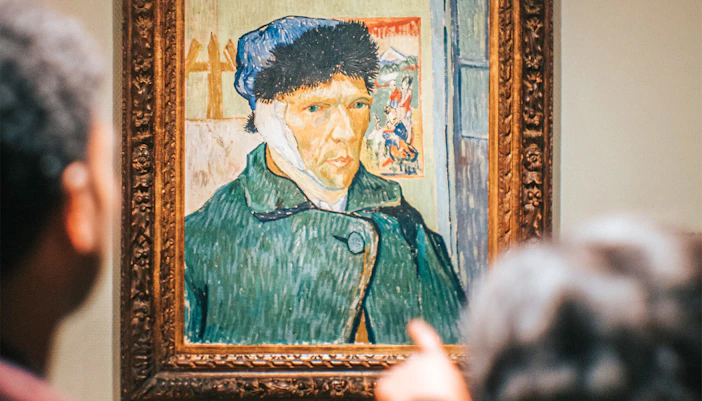
Gauguin and Van Gogh's studio exchange in Arles ended abruptly after the famous ear-severing incident.
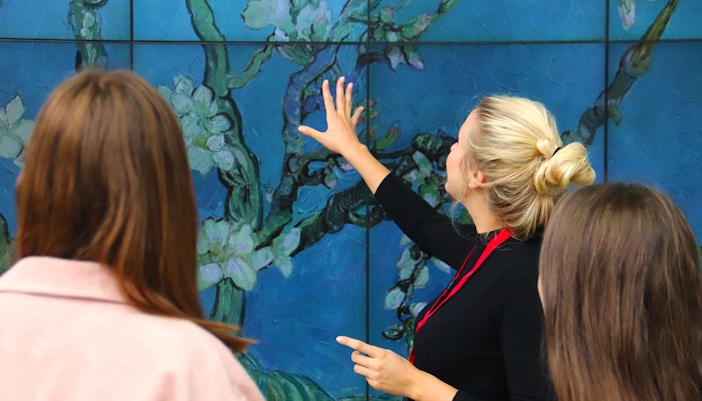
He used coarse jute sacks as canvases when short on traditional painting supplies in Arles.
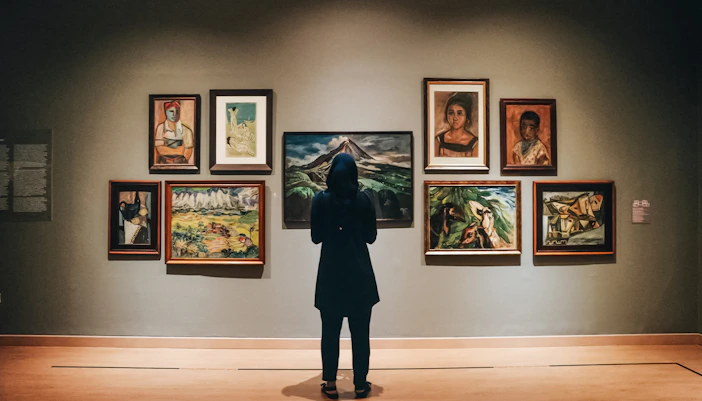
His early childhood years in Peru sparked a lifelong obsession with exotic, non-Western motifs.
Paul Gauguin’s artistic style
Gauguin was a pivotal figure in Post-Impressionism, a movement that moved beyond capturing realistic light to expressing emotional and symbolic meaning. He co-founded Synthetism, using flat areas of bold colour, heavy dark outlines, and simplified forms rather than naturalistic perspective. Working primarily with oil on canvas and burlap, Gauguin drew inspiration from folk art, Japanese prints, and tropical landscapes, creating decorative yet deeply psychological imagery.
Gauguin vs contemporaries
Paul Gauguin vs Vincent van Gogh
While Van Gogh used thick, expressive paint (impasto) and swirling lines to convey emotion, Gauguin favored flat, deliberate planes of colour and smooth contours. Van Gogh painted directly from nature; Gauguin painted from memory and imagination.
Where else to see Paul Gauguin
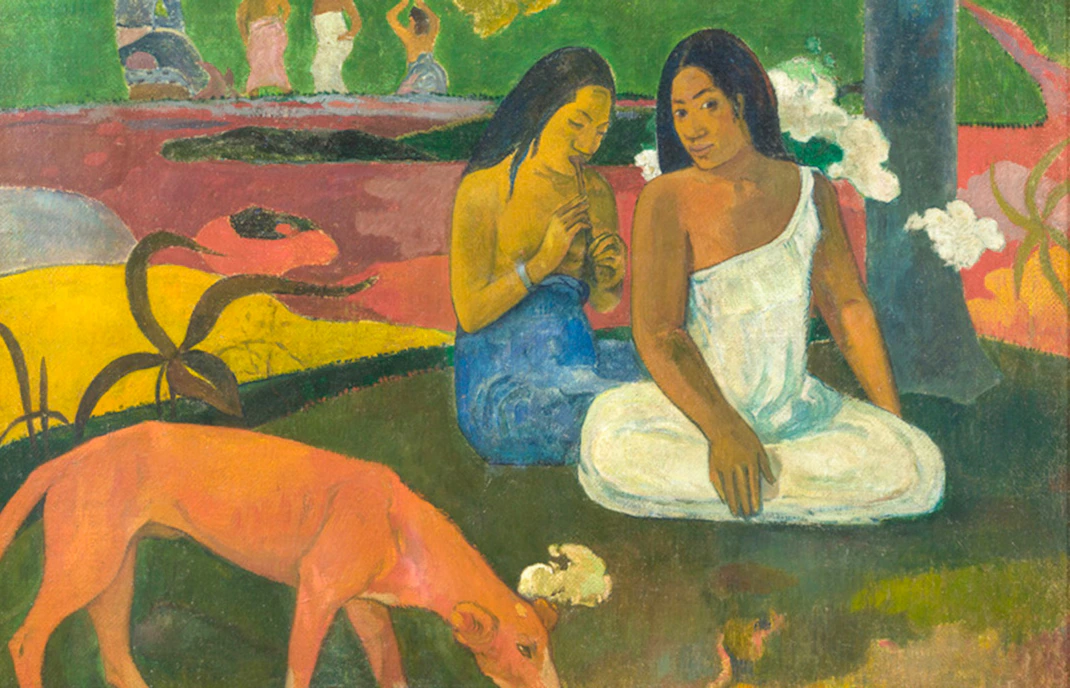
Musée d'Orsay, Paris
Arearea (Joyfulness)
This Polynesian masterpiece highlights Gauguin's signature use of arbitrary colours and Tahitian mythology.
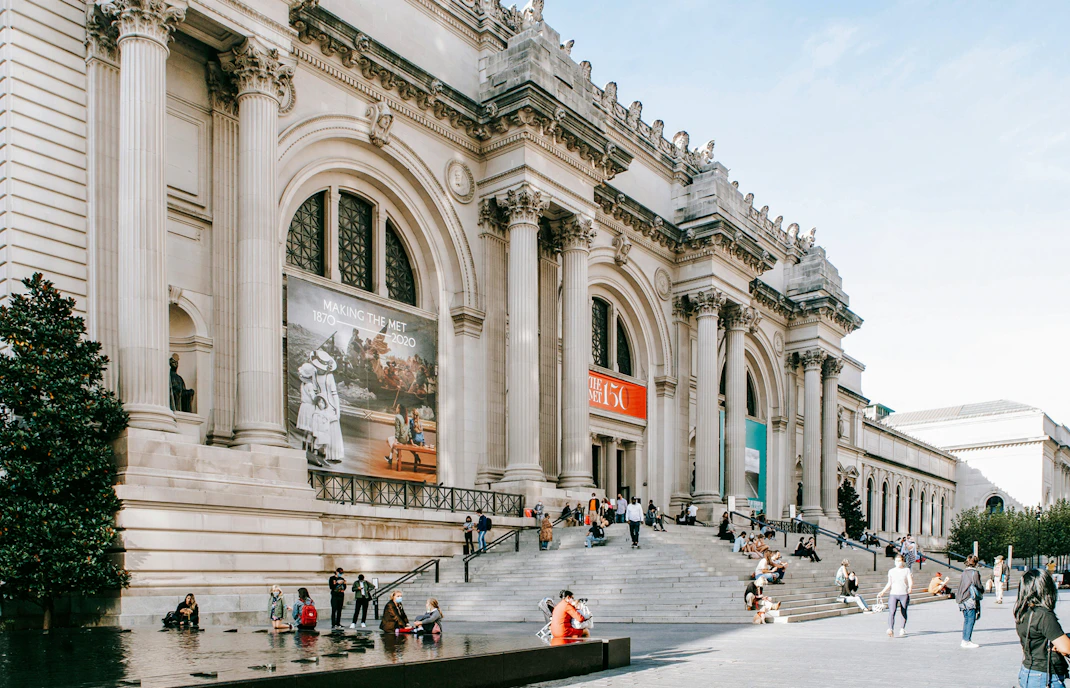
The Metropolitan Museum of Art, New York
Two Tahitian Women
An iconic depiction of Tahitian life, showcasing monumentality, sculptural form, and vibrant tropical hues.
Frequently asked questions about Paul Gauguin
No, access to all Gauguin paintings is included with your standard Van Gogh Museum general admission ticket.
His key works are displayed on Floor 1 alongside Van Gogh's paintings from the Arles period. See the collection
Plan to spend 20 to 30 minutes in the 1st-floor galleries to fully appreciate his works and co-exhibits.
Reserve the first slot at 9am or a late afternoon slot after 4pm on weekdays.


