Van Gogh painted The Bedroom to represent peace and absolute repose, using simple furniture and flat colours to evoke a feeling of restful safety.
Witness Van Gogh’s 'The Bedroom' in Amsterdam – An Arles period masterpiece
The Bedroom, painted by Vincent van Gogh in October 1888, turns a modest room in Arles into one of modern art’s most intimate interiors. Roughly 72 × 90 cm (28.3 × 35.4 in), the Amsterdam canvas is the first and most experimental of the three versions, using tilted perspective, flat colour, and simplified forms to suggest rest rather than realism. Van Gogh described it in letters with unusual precision, which makes seeing it in person feel especially direct. Timed-entry and guided tour options make planning easy.
Where is it located?
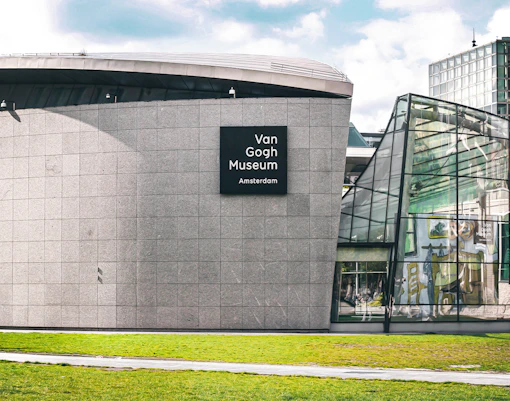
You’ll usually find it in the permanent collection galleries devoted to Van Gogh’s Arles period at the Van Gogh Museum in Amsterdam.
Tickets
Entry is included with a standard Van Gogh Museum ticket; no separate pass is required.
How to best visit The Bedroom
Start with Van Gogh’s own words
If you book the Van Gogh Museum guided tour, you’ll get a structured explanation of how The Bedroom fits into Van Gogh’s Arles period, his hopes for the Yellow House, and the letters where he described the painting’s colours. That context matters because this is one of the rare works where his written intentions and the final image align so clearly.
View it from 6–8 feet away first
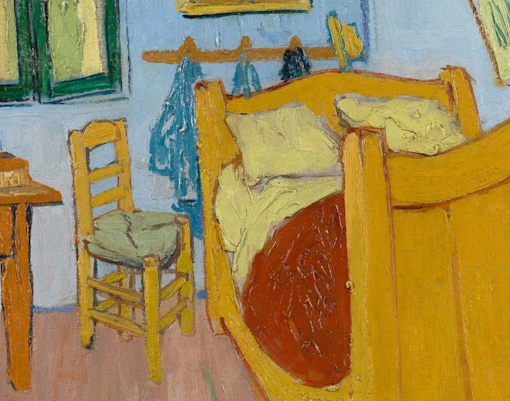
From a middle distance, the tilted floor, slanting bed, and flattened walls read as a complete emotional construction rather than a mistake in perspective. Only after that should you move closer to study the brushwork and outlines that make the room feel both stable and slightly off-balance.
Look closely at the surface and faded pigments
The Amsterdam version has changed over time: pigments have faded, especially in areas Van Gogh originally described differently in his letters. Seeing the canvas in person helps you grasp the tension between the painting’s present blue-toned walls and the warmer harmony Van Gogh intended.
Choose the first entry slot or a late Friday visit
The Van Gogh Museum is busiest from late morning through mid-afternoon. If The Bedroom is one of your priorities, book the first timed entry of the day, or use the museum’s later Friday opening window for a less compressed viewing experience.
Build a short Arles micro-route
Give yourself 30–45 minutes for a focused route through the surrounding Arles material, not just 5 minutes at the painting. Pair The Bedroom with Sunflowers, The Yellow House, and Van Gogh’s letters on display to see how he linked domestic space, friendship, and artistic ambition.
Photograph the room, not just the frame
Photography without flash is permitted in the permanent collection, but The Bedroom rewards a respectful pause more than a quick phone shot. Step slightly off-centre if reflections or nearby visitors block the surface, and keep enough distance so others can still read the painting’s perspective.
Did you know?

Personal sanctuary
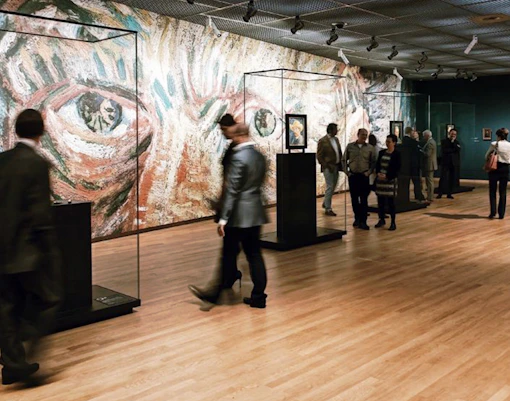
Three unique versions
Vincent actually created three distinct versions of the canvas; the original 1888 painting hangs in the Van Gogh Museum in Amsterdam.
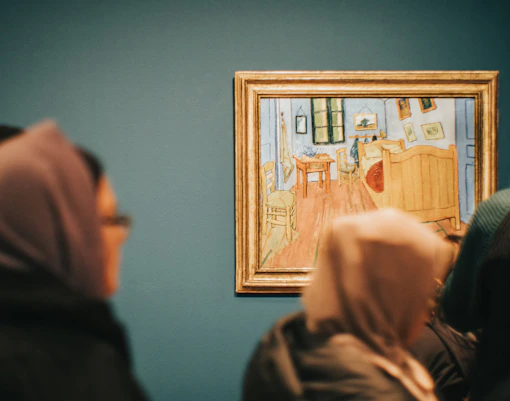
Faded pigments
The bedroom walls appear blue today, but Van Gogh intended them to be violet—the red pigment in the purple paint faded dramatically over time.
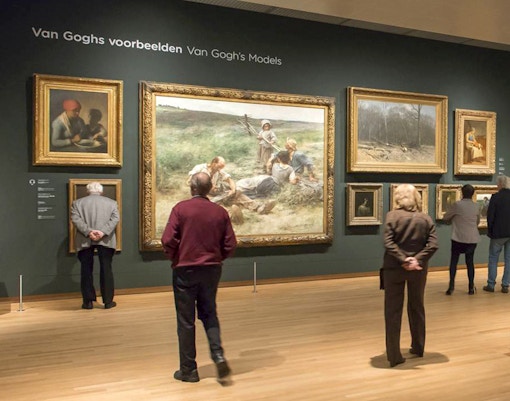
Intentional perspective
The odd angles and tilted floor aren't artistic mistakes; Van Gogh deliberately skewed the perspective to make the room feel intimate and immediate.
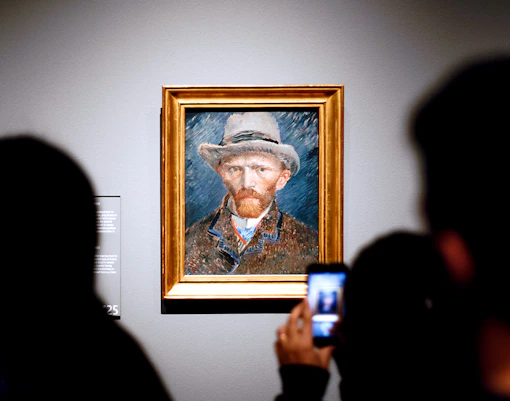
Written blueprints
Before completing the painting, Vincent detailed the entire colour scheme and layout in long letters to his brother Theo and fellow artist Paul Gauguin.
Repaired after flooding
The original canvas was damaged by river water during a flood at the Yellow House in Arles, prompting Van Gogh to restore and paint secondary versions.
Drawn from memory
While recovering at the asylum in Saint-Rémy, Van Gogh re-created The Bedroom purely from memory because he missed his home in Arles so deeply.
Small room, big bed
Despite the cramped space shown, Van Gogh proudly described the solid wooden frame as a "wide double bed" meant for welcoming visiting artist friends.
Story behind 'The Bedroom'
The dream of a creative sanctuary (1888)
Van Gogh moved to the Yellow House in Arles, France, longing to establish an artists' commune. After spending weeks furnishing his room with simple pine furniture, he painted The Bedroom to capture a sense of absolute peace and welcoming warmth before the arrival of his friend Paul Gauguin.

Colour, distortion, and the artist's vision
Intending to convey tranquil rest using colour theory, Vincent paired complementary shades of blue walls, yellow furniture, and a bold red blanket. To heighten the intimacy of the space, he intentionally skewed the room’s perspective and flattened the shadows, mirroring his own psychological state rather than traditional realism.
Damage, exile, and re-creation
Shortly after completion, river water flooded the Yellow House and damaged the original canvas. Undeterred, while recovering at the Saint-Paul-de-Mausole asylum in Saint-Rémy, Van Gogh recreated two more versions of his beloved room—one to preserve the damaged original and a smaller scale copy as a gift for his mother and sister.
From private solitude to global icon
Though created as a personal reflection of quiet sanctuary during a turbulent time in Van Gogh's life, The Bedroom has become one of the most recognizable interiors in Western art history. Today, the original 1888 masterpiece serves as a centerpiece at the Van Gogh Museum in Amsterdam, drawing millions to experience his vision of home.
Who created 'The Bedroom'?
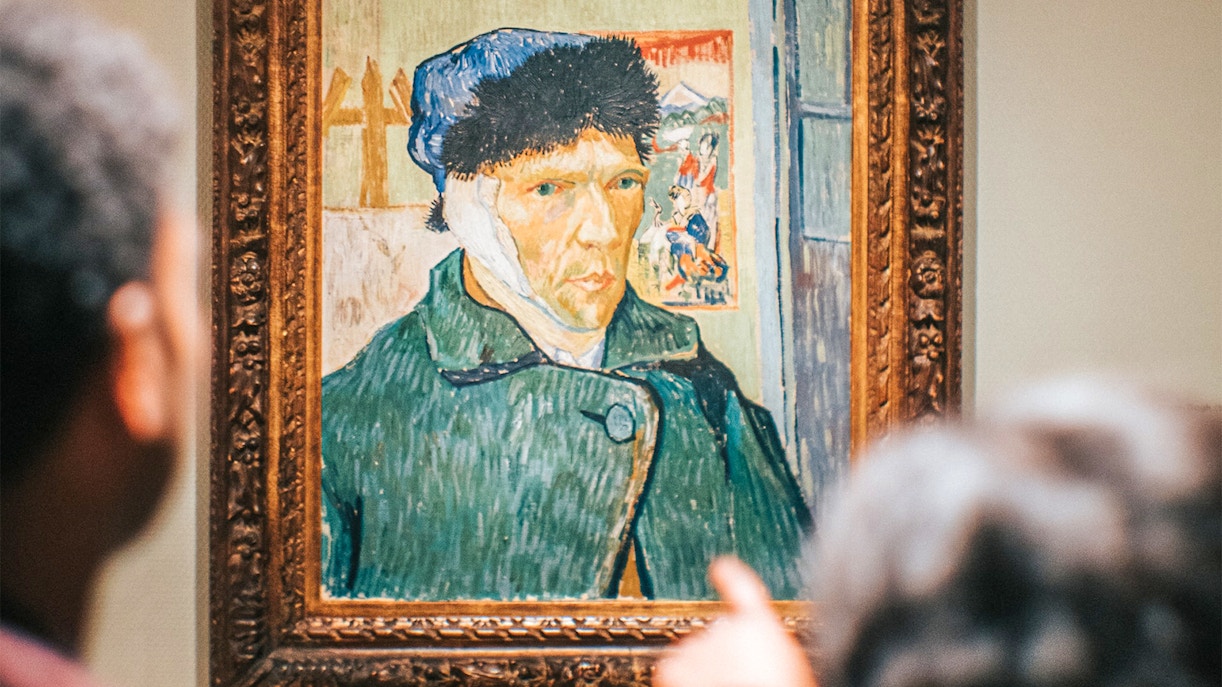
Vincent van Gogh, the iconic Post-Impressionist painter, created The Bedroom in October 1888. Renowned for his vivid colours, dramatic brushwork, and emotional honesty, the Dutch master played a monumental role in shaping modern art.
Van Gogh personally conceptualised, arranged, and painted The Bedroom after moving into his famous "Yellow House" in Arles, France. Seeking to create a sense of absolute rest and tranquillity, he used bold, non-traditional colour choices, pairing rich yellow furniture against soft blue walls, and flattened the room’s perspective. This innovative technique mirrored his subjective feelings rather than strict realistic accuracy.
Created during an extraordinary period of artistic output, this piece directly aligns with Van Gogh’s famous Arles masterpieces, including Sunflowers and The Yellow House. Through this distinct stylistic approach, Van Gogh transformed a simple personal space into a landmark expression of tranquillity and psychological depth.
What makes 'The Bedroom' a masterpiece? See for yourself
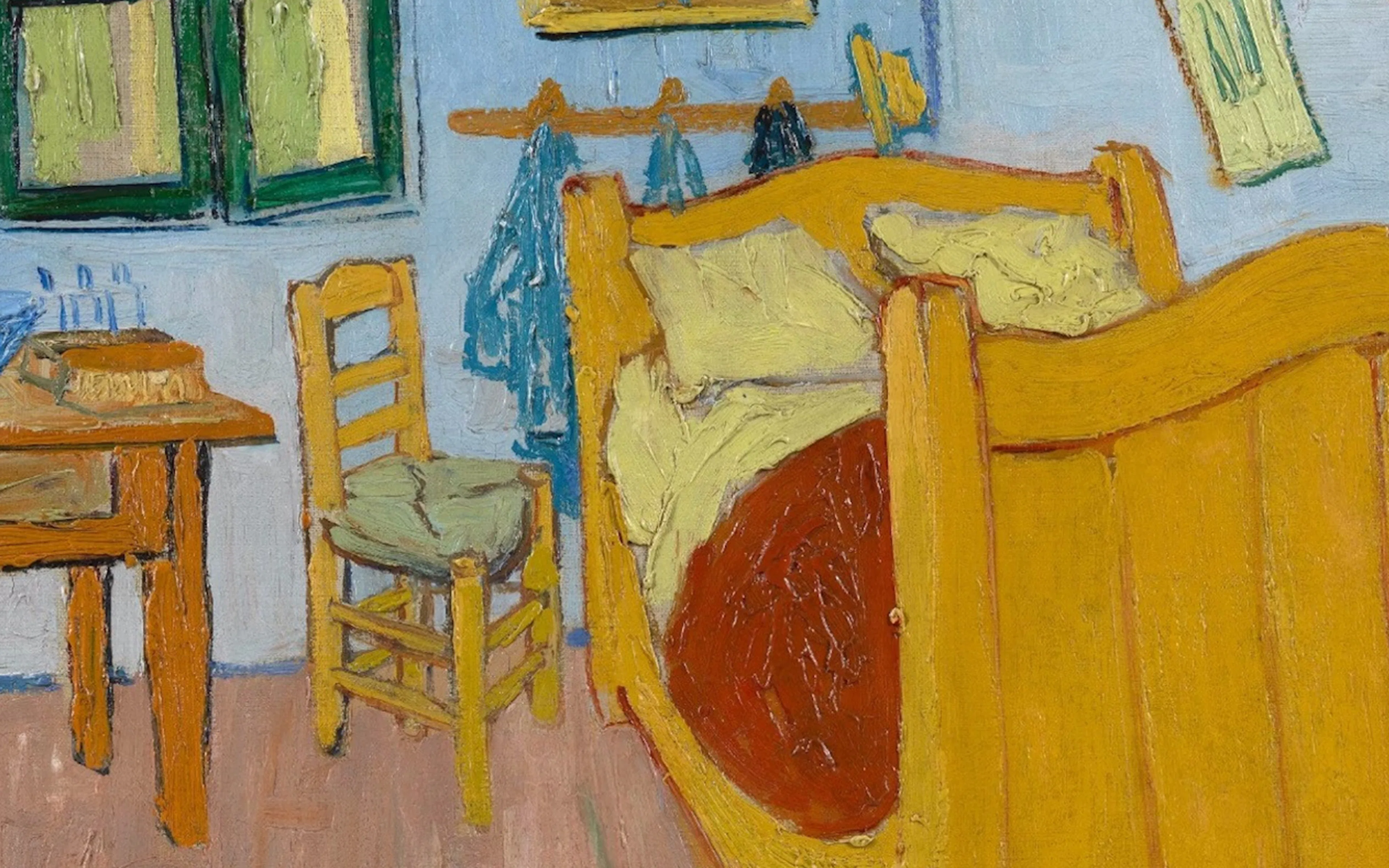
1/4
Bold, non-traditional colour harmony
Van Gogh deliberately abandoned realistic colour in favor of expressive hues, pairing complementary yellows, reds, and blues. The flat, unshaded blocks of colour were engineered to evoke a feeling of absolute rest, making the painting a landmark study in how pure colour can convey human emotion.
Deliberate distortion of perspective
Rather than adhering to conventional Renaissance rules of linear perspective, Van Gogh intentionally tilted the floor, angled the walls, and flattened shadows. This subtle instability invites viewers directly into his personal sanctuary, creating an intimate, almost immersive psychological connection.
Expressive, sculptural brushwork
Look closely at the textured surface of the canvas: the thick, deliberate impasto strokes give tangible weight to the simple wooden furniture and bedsheets. Every tactile brushstroke reflects Van Gogh’s urgent, passionate energy and mastery over his medium.
Intimate symbolic narrative
Beyond a depiction of a simple bedroom, the painting serves as a deeply personal self-portrait without the artist present. From the paired paintings on the walls to the solid double bed, every element symbolises Van Gogh's intense longing for stability, home, and artistic companionship during his time in Arles.
Where are the other versions of 'The Bedroom' displayed?
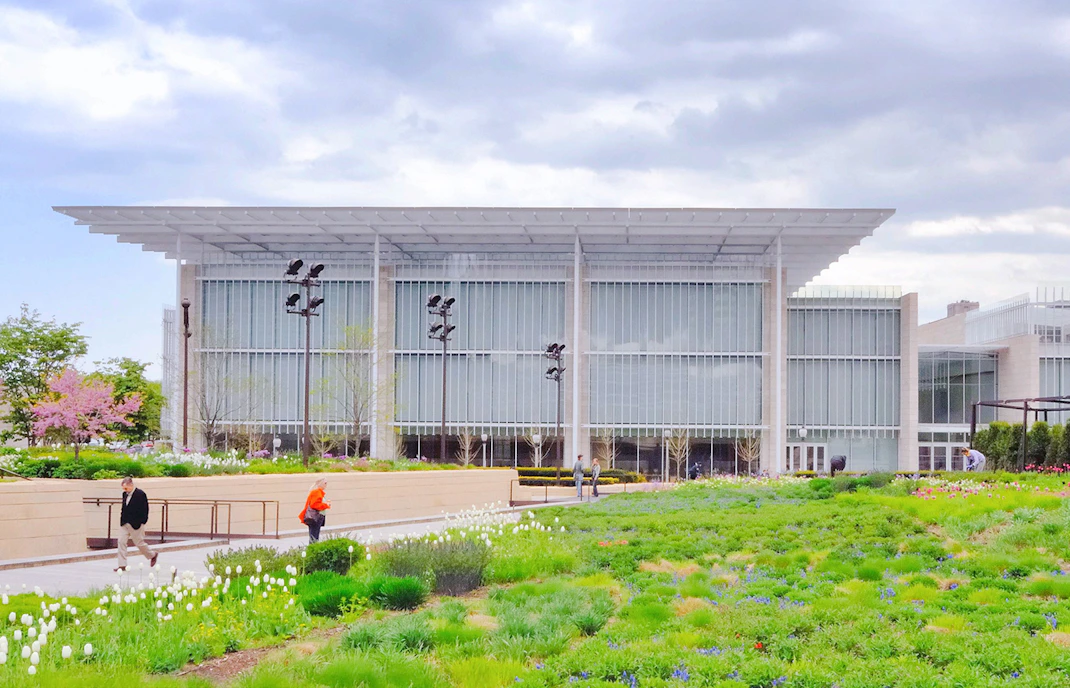
The Second Version (1889) – Art Institute of Chicago
Created in September 1889 while Van Gogh was recovering at the asylum in Saint-Rémy, this full-scale replica was painted to preserve the original composition after the first canvas suffered water damage. Today, it is part of the permanent collection at the Art Institute of Chicago.

The Third Version (1889) – Musée d'Orsay, Paris
Painted later in September 1889 as a smaller-scale reproduction, Vincent created this version as a personal gift for his mother and sister Willemien. It currently resides and is on display at the Musée d'Orsay in Paris.
Frequently asked questions about 'The Bedroom'
It is included in your standard entry ticket to the Van Gogh Museum, but you must reserve a timed-entry slot online in advance.
Yes, fast-track entry and guided tours are available online, allowing you to bypass main queues and learn directly from an art expert.
Yes, the museum offers interactive multimedia audio guides in multiple languages that detail the history, techniques, and personal backstory behind the masterpiece.
Photography without flash or tripods is permitted in designated areas of the museum, but always check local signs as restrictions near major masterpieces can change.
After water damaged his 1888 original, he painted a second version in 1889 to preserve it, and a smaller third version as a gift for his mother and sister.
Yes, the Van Gogh Museum is fully wheelchair accessible, featuring ramps, elevators, accessible restrooms, and free entry for companions assisting visitors with disabilities.


