How to visit the Van Gogh Museum
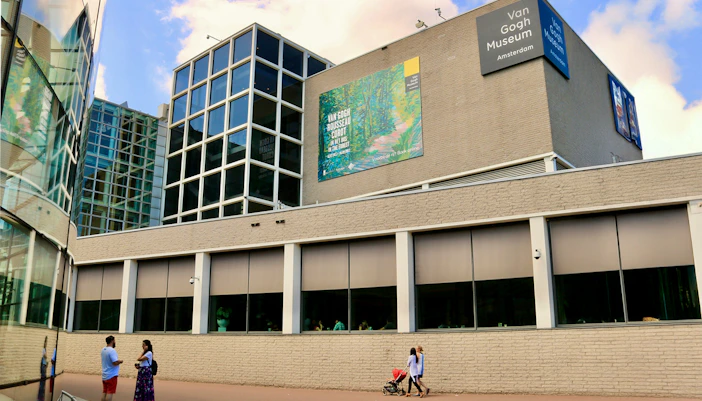
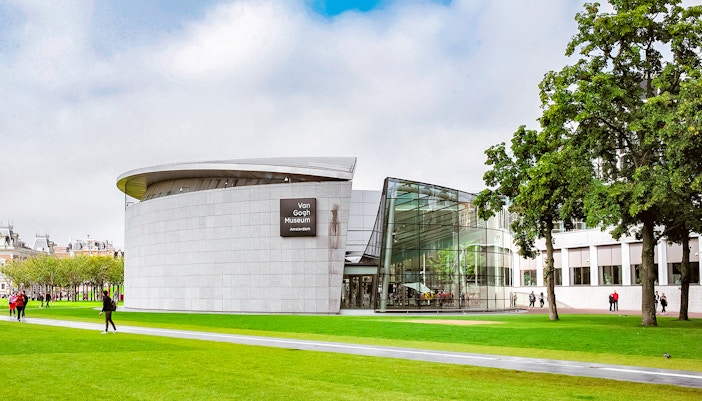
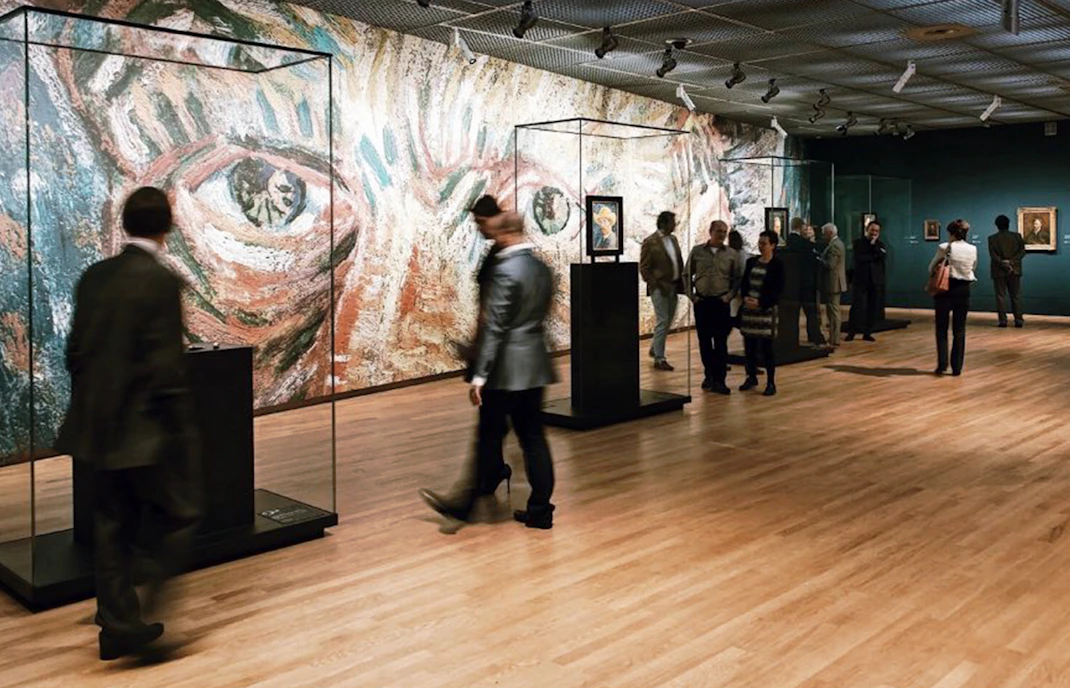
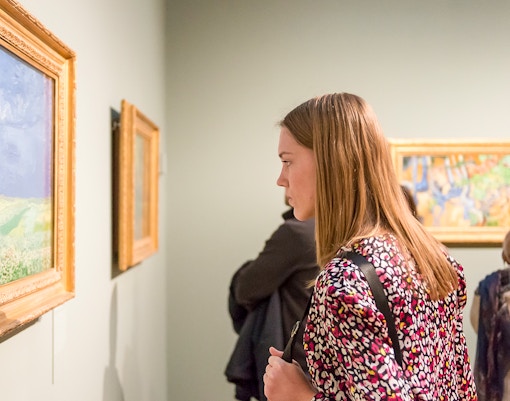
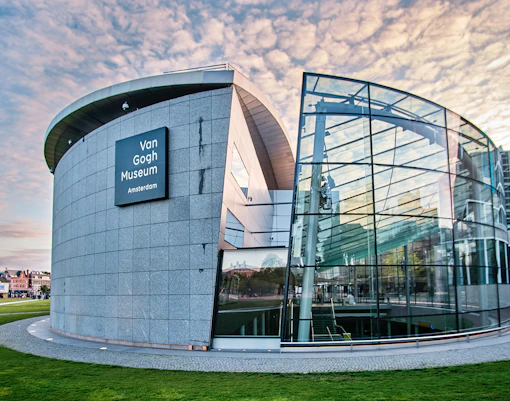
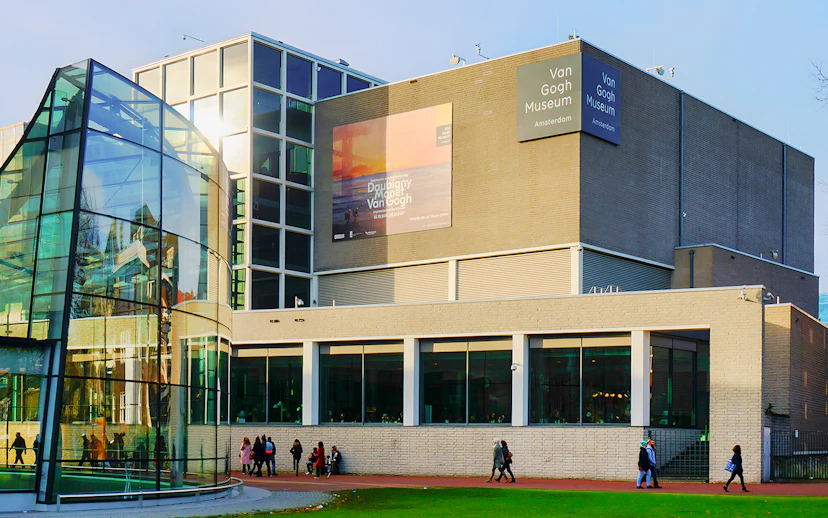
The Van Gogh Museum is Amsterdam's essential art museum, best known for holding the world's largest collection of Vincent van Gogh's paintings, drawings, and letters. The visit is manageable in size, but it rarely feels casual because timed entry, popular galleries, and crowd flow all shape how relaxed your experience feels. The biggest difference between a rushed visit and a rewarding one is when you go, not how long you stay. This guide covers timing, entry, route, and what to prioritise once you're inside.
Quick overview: Van Gogh Museum at a glance
If you want the smoothest visit, make your key decisions before you choose a time slot.
- When to visit: Monday-Sunday: 9am-6pm, with Friday evenings typically running later; weekday mornings and Friday after 6pm are noticeably calmer than late-morning summer slots, when everyone funnels toward the same masterpiece rooms.
- Getting in: From €27 for standard entry. Guided tours with timed entry are also available, and advance booking shifts from smart to essential in April-August and during holiday weeks.
- How long to allow: 1.5-2 hours works for most visitors, but you'll need closer to 2.5 hours if you add the audio guide, read the letters, and linger in the later galleries.
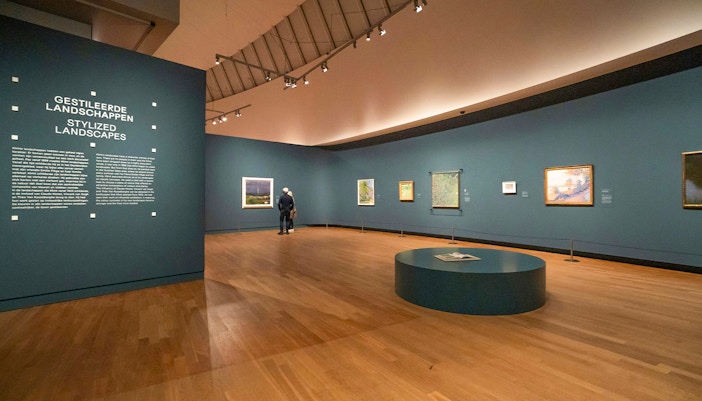
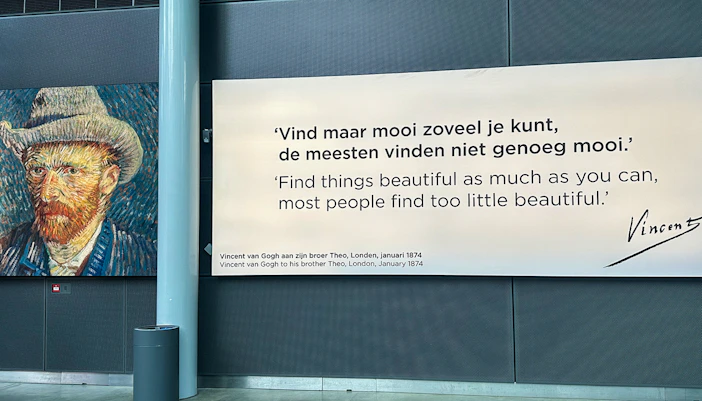
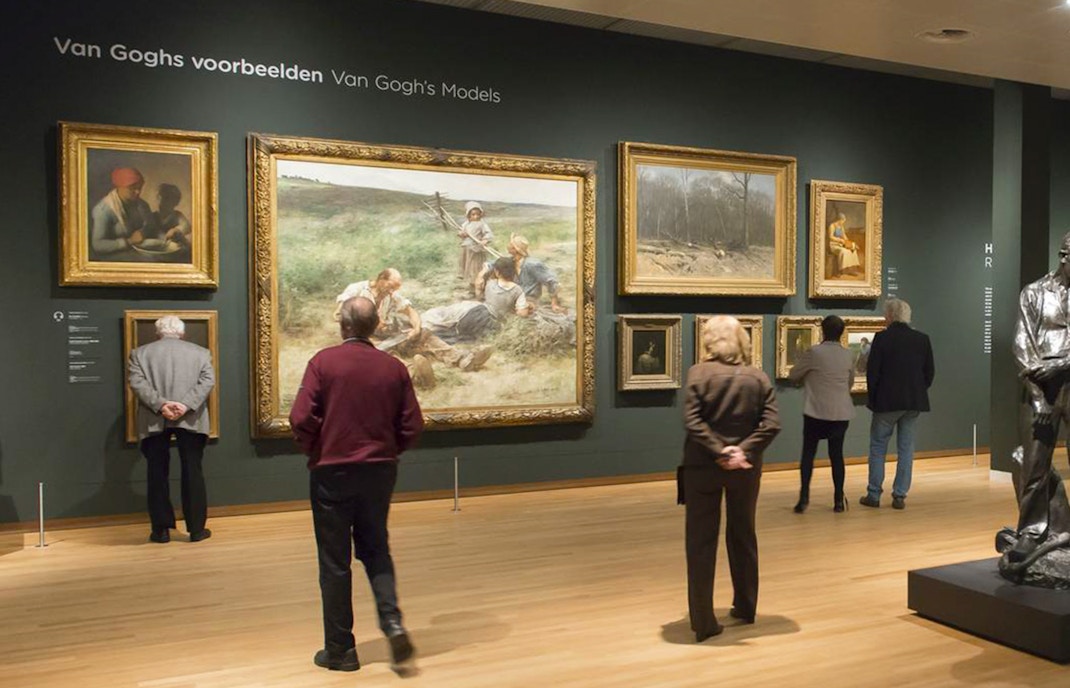
- What most people miss: Van Gogh's letters and the works by Gauguin, Monet, and other contemporaries add the context that makes the famous paintings hit harder.
- Is a guide worth it? Yes, if you want a structured 2-hour route through the key works; otherwise, a self-guided visit still works well because the museum is linear and easy to follow. Book a guided tour
🎟️ Tickets for the Van Gogh Museum sell out days, and sometimes weeks, in advance during spring, summer, and holiday periods. Lock in your visit before the time you want is gone. See ticket options
Jump to what you need
Where and when to go
How much time do you need?
| Visit type | Route | Duration | Walking distance | What you get |
|---|---|---|---|---|
Highlights only | Entrance → Floor 1 iconic masterpieces → 'Sunflowers' & 'Yellow House' → Exit | 1.5–2 hrs | ~1 km | Focuses strictly on famous masterpieces; skips early sketches, personal letters, and contemporary influence displays. |
Balanced visit | Floor-by-floor chronological gallery walkthrough with multimedia guide | 2.5–3 hrs | ~1.8 km | Complete narrative of Van Gogh's artistic evolution and mental struggles; the audio context adds immense value. |
Full exploration | Complete 4-floor main collection + temporary exhibition wing + audio tour | 3.5–4+ hrs | ~2.5 km | Exhaustive study of every canvas, sketch, letter, and special exhibit; requires high stamina due to crowded galleries. |
Which ticket is right for you?
| Ticket type | What's included | Best for | Price |
|---|---|---|---|
Standard entry | Timed-entry ticket to main collection & temporary exhibits | Visitors who want flexible, self-paced access without a fixed group schedule or listening devices. | From €27 |
Entry + audio guide | Timed entry + interactive multimedia headset in 11+ languages | First-timers seeking rich narrative context and backstory on key masterpieces while exploring independently. | From €28.75 |
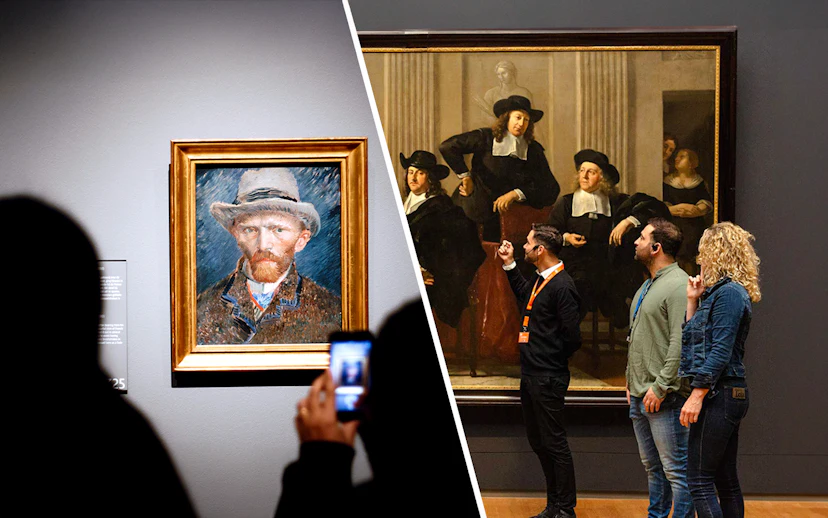
Guided tour | Timed entry + live expert guide + headset for commentary | Small groups wanting a structured route, expert commentary, and guaranteed focus on top highlights within 2 hours. | From €65.55 |
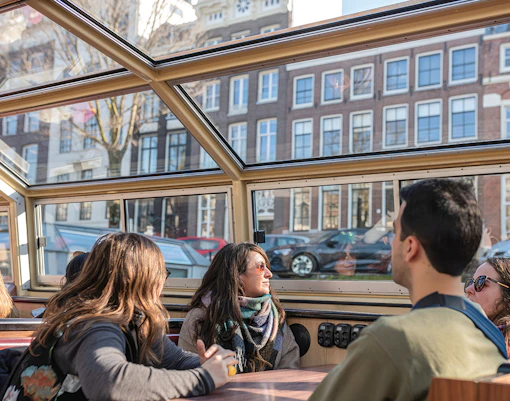
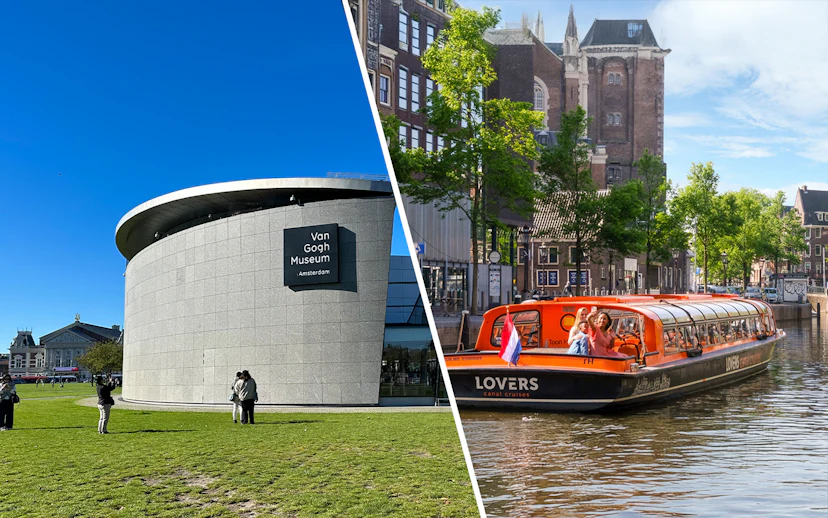
Combo ticket | Van Gogh entry + canal cruise or nearby venue pass | Travelers aiming to cover two major Amsterdam highlights in one day while securing better combined pricing. | From €35.15 |
How do you get around Van Gogh Museum?
Where are the masterpieces inside Van Gogh Museum?
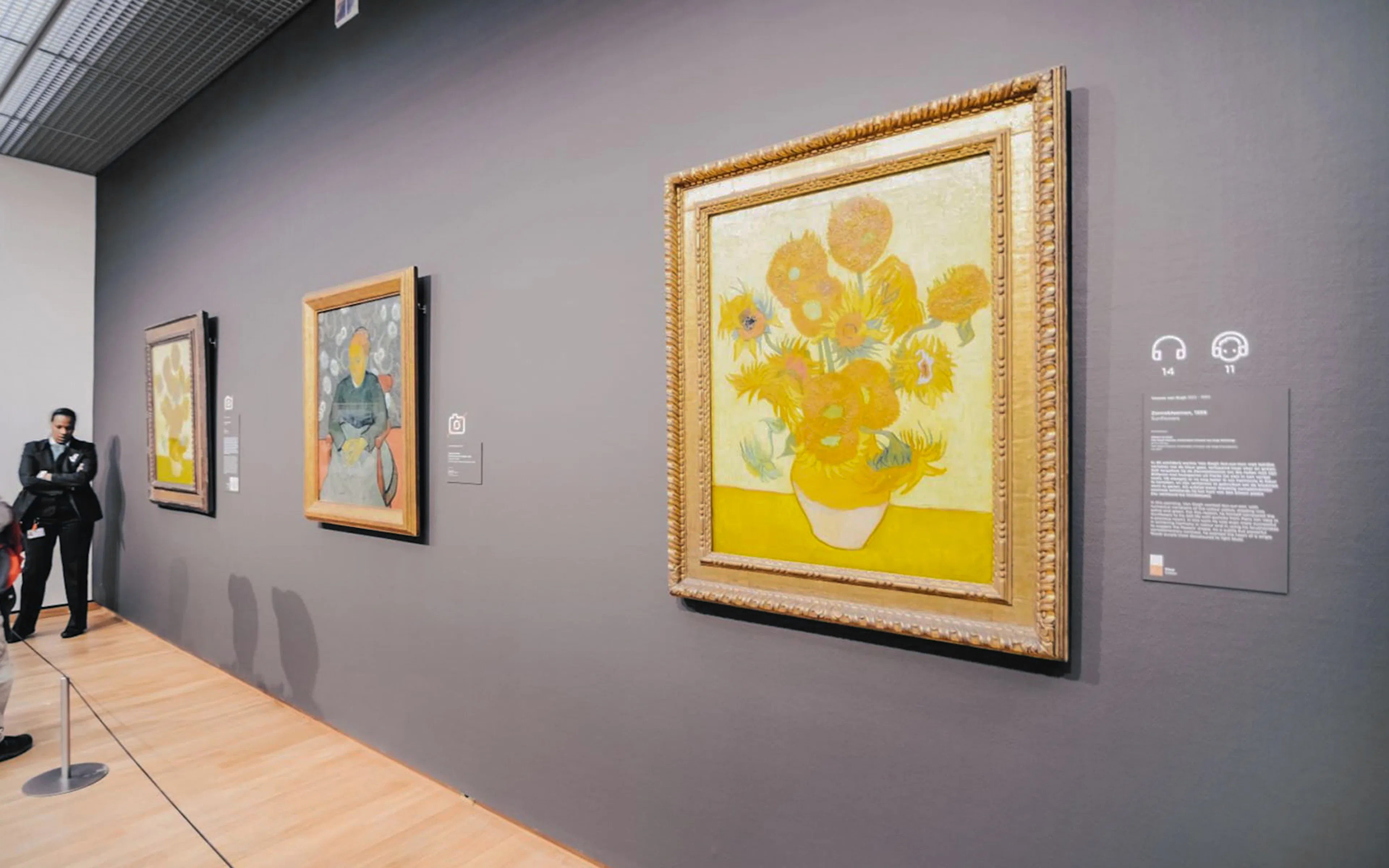
Sunflowers
Artist: Vincent van Gogh
One of the museum's most sought-after paintings, Sunflowers shows Van Gogh at his boldest and most confident in Arles. In person, the yellows are far more varied than they look in reproductions, and the thick paint surface gives the bouquet real physical weight. Most visitors clock the colour immediately but miss how experimental the background and vase tones are when you stay with it for a minute longer.
Where to find it: In the Arles-period galleries, along the main chronological route through Van Gogh's southern France works.
The Potato Eaters
Artist: Vincent van Gogh
This is the painting that makes the rest of the museum make sense. Its dark palette, rough faces, and cramped table scene show the Van Gogh who was still searching for his voice before the bright Paris and Arles years. Many people hurry past because it isn't the postcard image they came for, but it is the clearest starting point for understanding how far he evolved.
Where to find it: Early in the route, in the Dutch-period galleries near the beginning of the permanent collection.
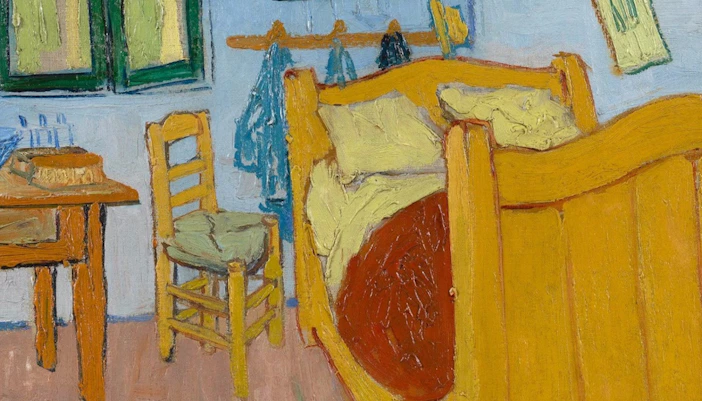
The Bedroom
Artist: Vincent van Gogh
The Bedroom feels simpler than it is. The skewed perspective, flat colour, and stripped-back objects make it look calm at first glance, but the room has a tension that keeps pulling you back in. Most visitors photograph it quickly and move on, missing the tiny personal details, like the pictures on the wall and the deliberate lack of shadows, that make it feel deeply intimate.
Where to find it: In the Arles rooms, after the Paris galleries and near the museum's best-known southern France works.
Almond Blossom
Artist: Vincent van Gogh
Painted as a gift for his newborn nephew, Almond Blossom is one of the gentlest works in the museum. Its pale blue sky and branching blossom lines feel almost weightless after the heavier emotional charge of the late landscapes. Visitors often treat it like a pretty pause, but the Japanese influence in the framing and outlines is what makes it such a quiet standout.
Where to find it: In the later galleries, close to the Saint-Rémy and Auvers works on the upper part of the route.
Wheatfield with Crows
Artist: Vincent van Gogh
This is one of the paintings people tend to stand in front of the longest, and for good reason. The dark sky, broken path, and heavy movement in the wheat create a tension that feels immediate even if you know nothing about Van Gogh's final months. What many visitors miss is the way the brushwork pushes your eye into the centre path and then refuses to give it a clear ending.
Where to find it: Toward the end of the chronological route, in the late-period galleries.
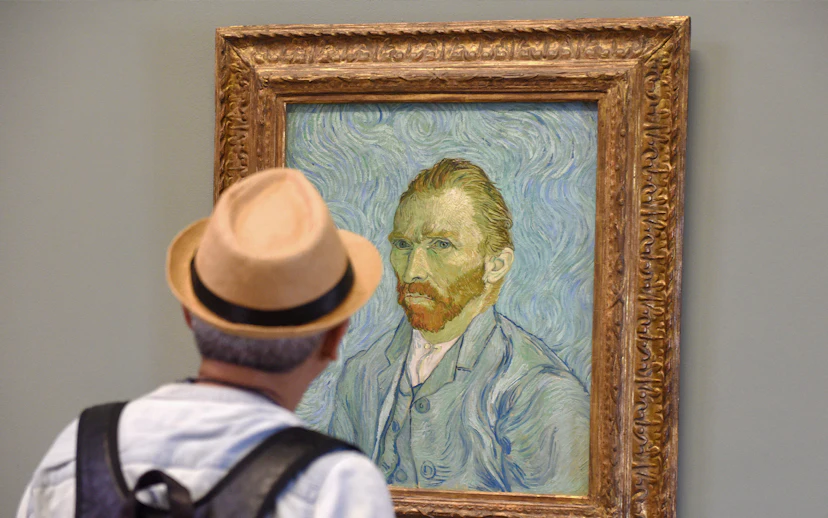
Van Gogh's self-portraits
Artist: Vincent van Gogh
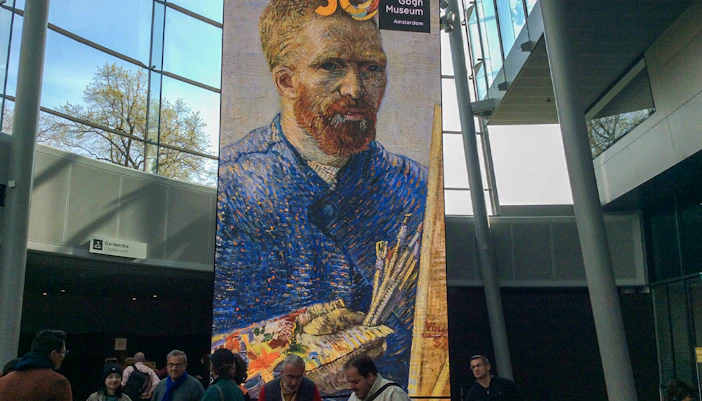
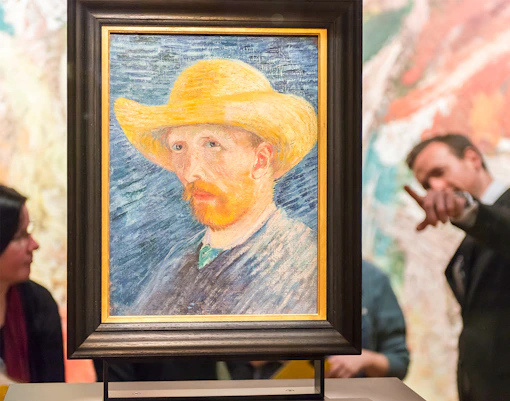
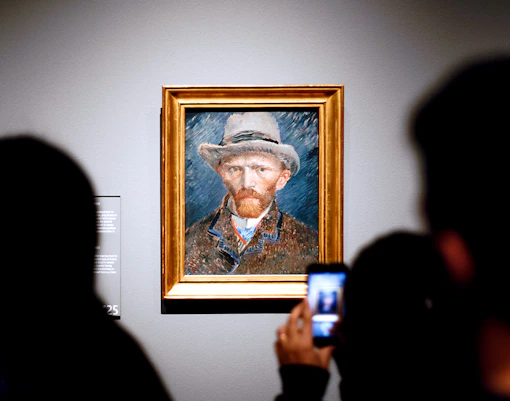
The self-portraits are less about likeness than about experimentation. Seen together, they show how quickly his colour, gaze, and confidence shifted as his style sharpened in Paris and beyond. Most visitors treat them as supporting works between the headline paintings, but comparing two or three in sequence is one of the smartest things you can do in the whole museum.
Where to find it: Primarily in the Paris-era rooms and adjoining galleries before the Arles masterpieces.
Facilities and accessibility
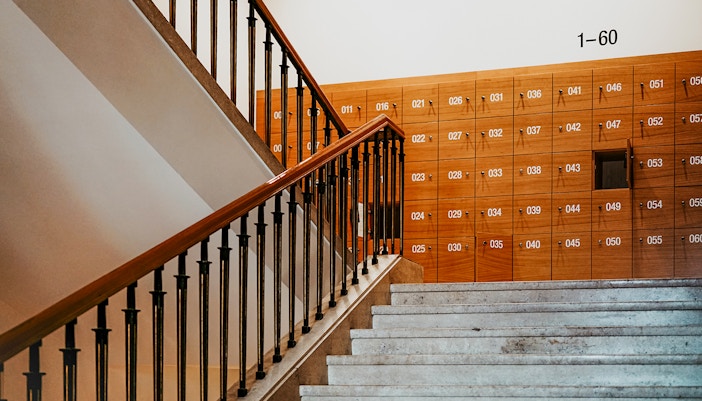
- 🎒 Cloakroom/lockers: Free lockers and a cloakroom near the entrance handle coats, umbrellas, and day bags, but bags larger than A4 and items above 45 x 25 x 25 cm are not allowed into the museum.
- 🍽️ Cafe: The on-site café is the easiest place for a mid-visit coffee or light break because you can't leave and come back to the galleries later.
- 🛍️ Gift shop/merchandise: The museum shop is on-site and is one of the better museum stores in Amsterdam for prints, books, and Van Gogh-themed gifts that don't feel generic.
- 🪑 Seating/rest areas: Foldable stools are available on request if you want a slower, less tiring gallery visit.
- 🧾 Timed entry support: Staff at the entrance and information points can help you find your route quickly if you're arriving close to your slot.
- ♿ Mobility: The museum is wheelchair accessible, pram/stroller accessible, and served by elevators, which makes the full main route manageable without stairs.
- 👁️ Visual impairments: The multimedia guide adds narration and artwork context that is especially useful if you want more than the wall labels provide.
- 🧠 Cognitive and sensory needs: Weekday mornings and Friday evenings after 6pm are the least overwhelming windows, while summer late mornings are the noisiest and most crowded.
- 👨👩👧 Families and strollers: Strollers are allowed, and the main public route is straightforward enough for a family visit without constant backtracking.
The museum works best for school-age children, creative teens, and families who keep the visit short and selective rather than trying to cover everything.
- 🕐 Time: 60-90 mins is realistic with younger children, and the early works, Sunflowers, and The Bedroom are usually the easiest anchor stops.
- 🏠 Facilities: Stroller access helps, and the on-site café makes it easier to build in a reset before energy drops.
- 💡 Engagement: Use the children's activity materials and turn the self-portraits into a compare-and-spot game rather than trying to read every label.
- 🎒 Logistics: Bring only a small bag, aim for the first entry window you can manage, and skip the busiest late-morning slots if you want fewer bottlenecks.
- 📍 After your visit: Vondelpark is close enough for an easy decompression stop if your children need open space after the galleries.
Rules and restrictions
Practical tips
- Booking and arrival: Book as soon as your travel dates are fixed if you're visiting in April-August or over holidays, because popular slots can disappear well before the day and missed entry times are generally not rescheduled. Book now, pay later!
- Pacing: Don't spend half your visit in the first famous room you reach; save attention for the later galleries and the letters, which are where the museum stops feeling like a greatest-hits wall.
- Crowd management: The first hour of the day and Friday after 6pm are the two smartest windows here, because the mid-morning rush tends to stack up around Sunflowers, The Bedroom, and the self-portraits.
- What to bring or leave behind: Bring the smallest bag you can manage - anything larger than A4, plus wheeled luggage and trolleys, can slow you down or stop you at the door entirely.
- Food and drink: If you want a break, take it inside at the café rather than planning to eat after a quick exit, because once you scan out, you can't return to finish the galleries.
- How to use the route: Start with the Dutch-period works even if they feel quieter; the emotional payoff of the later rooms is much stronger when you see how radically his style changed.
- Audio guide value: If you're visiting without a guide, the multimedia guide is the easiest upgrade that changes the visit, especially for the self-portraits and the letters.
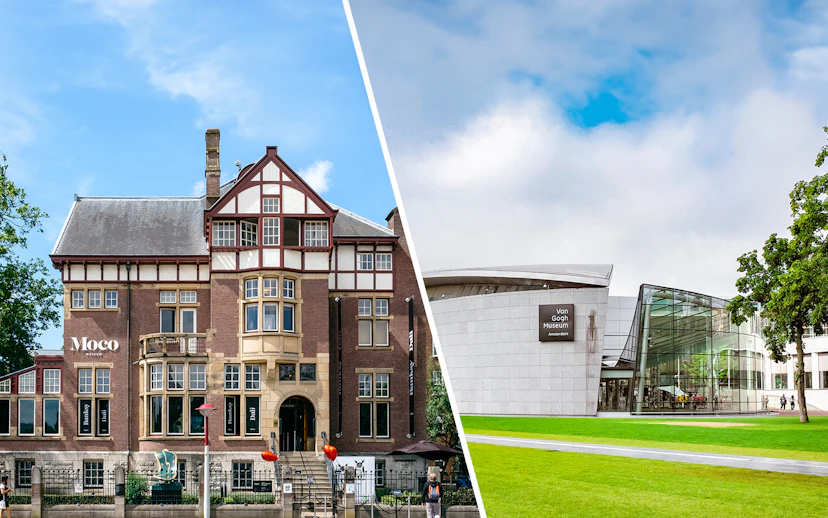
What else is worth visiting nearby?
Eat, shop and stay near Van Gogh Museum
- On-site: Van Gogh Museum Café, a convenient light-lunch and coffee stop inside the museum, is worth using for ease more than for destination dining.
- Cobra Café (3-min walk, Hobbemastraat 18, Amsterdam): Brasserie-style food and drinks right by Museumplein, useful if you want a quick sit-down before or after your slot.
- RIJKS (5-min walk, Museumstraat 2, Amsterdam): A more polished Dutch meal at the Rijksmuseum if you want to turn your museum day into a proper lunch or dinner.
- Museumplein cafés (5-10 min walk, around Museumplein): Best if you want flexibility rather than a reservation-heavy meal and don't need a long break.
💡 Pro tip: Eat either before your slot or inside the museum - leaving "just for lunch" doesn't work well here because re-entry is not allowed.
- Van Gogh Museum Shop: The strongest souvenir stop nearby for prints, books, stationery, and gifts tied directly to the collection.
- Rijksmuseum Shop: Worth a quick browse if you're pairing both museums and want art books or design-heavy gifts beyond Van Gogh merchandise.
Staying around Museumplein and Oud-Zuid makes sense if this museum is a priority and you want a calmer, more polished base than the canal core. The area is walkable, attractive, and convenient for major museums, but it is usually pricier than staying farther out and using the tram. If your trip is more nightlife- or canal-focused, this is not the most atmospheric place to base your whole Amsterdam stay.
- Price point: Mostly upper-mid-range to high, with the best value usually coming from small hotels or apartments just outside the museum quarter.
- Best for: Short stays, museum-heavy itineraries, and travellers who want minimal transit on the day they visit.
- Consider instead: De Pijp or the canal belt if you want more food options, a stronger evening atmosphere, and an easier balance between museums and the rest of Amsterdam.
Frequently asked questions about visiting Van Gogh Museum
Most visits take 1.5 to 2 hours. If you add the multimedia guide, spend time with the letters, or linger in the temporary exhibitions, 2.5 hours is a safer plan. Art lovers can easily stay longer, but most travellers don't need half a day here.
Yes, you should book in advance because the museum uses timed entry and does not rely on walk-up ticket sales. In quieter months, you may still find short-notice slots, but spring, summer, weekends, and holiday periods often sell out well before the day you want. Book now before tickets sell out
Yes, but mainly when it comes bundled with a guided tour or a sold-out date. Standard timed tickets already remove the need to queue for on-site ticket buying, so what remains is security and entry control rather than a classic long ticket line.
Arrive around 15 minutes early. That gives you time for security, ticket scanning, and locker use without eating into your slot. If you cut it too close and the entrance area is busy, you risk starting your visit stressed or, in the worst case, missing your entry window.
Yes, but it needs to be small. Handbags larger than A4 size are not allowed, and anything above 45 x 25 x 25 cm, plus wheeled suitcases and trolleys of any size, can get you turned away from the galleries. Travel light if you want the smoothest entry.
Yes, photography is generally allowed in the permanent collection as long as you do not use flash. Temporary exhibitions can set stricter rules, so always check the signage in each room. The safest assumption is that staff instructions override whatever was allowed in the previous gallery.
Yes, you can, but timed entry matters even more with a group. If you want everyone to enter together and move at the same pace, a guided group booking is the easiest route. For informal groups, pick a time slot early and agree on meeting points before you enter.
Yes, as long as you keep expectations realistic and don't overdo the visit length. About 60-90 minutes is a good target with younger children, and the best strategy is to focus on a few headline works instead of trying to read every label from start to finish.
Yes, the museum is wheelchair accessible and stroller accessible. Elevators make the main route manageable, and the overall layout is easier than many older European museums because you are not dealing with endless staircases or split-level historic rooms.
Yes, there is an on-site café, and Museumplein has easy nearby options if you want something more substantial. The practical thing to remember is that re-entry is not allowed, so eating inside the museum makes more sense than stepping out halfway through and expecting to return.
Buy through the official museum site or a verified partner with a clear timed-entry product. The easiest legitimacy check is simple: your booking should show a date, a time slot, and clear entry terms. If a seller is vague about timing or oversells "skip-the-line" without explaining what that means here, be cautious.
You may lose your entry for the day if you miss it. The museum operates on fixed, timed admission, and rescheduling is generally not an option once your slot has passed. If you're running late, still go as quickly as you can, but don't count on staff being able to move you to a later time.