Van Gogh often used his own face because hiring models regularly cost more than he could afford. What began as a necessity became one of the most sustained self-portrait projects in Western art.
Painted mostly between 1886 and 1889, Van Gogh’s Self-Portraits form Vincent van Gogh’s clearest visual diary of artistic reinvention. In these intimate canvases, you can track sharper colour contrasts, quicker brushwork, and shifting emotional intensity from Paris to Saint-Rémy. Because models cost money, Van Gogh repeatedly used his own face to test ideas, turning necessity into one of art history’s most revealing portrait cycles. Timed entry or a guided tour helps you focus on the standouts.
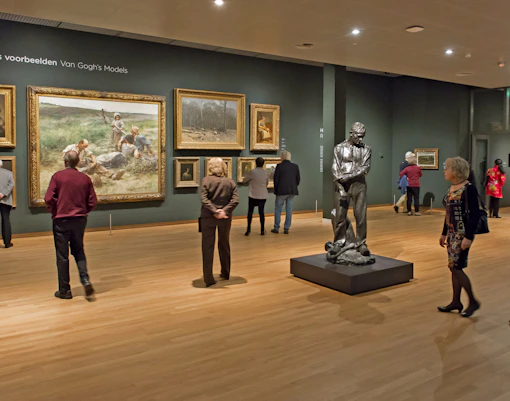
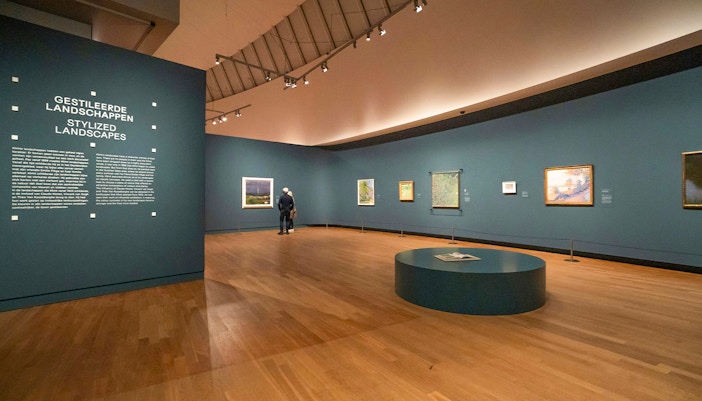
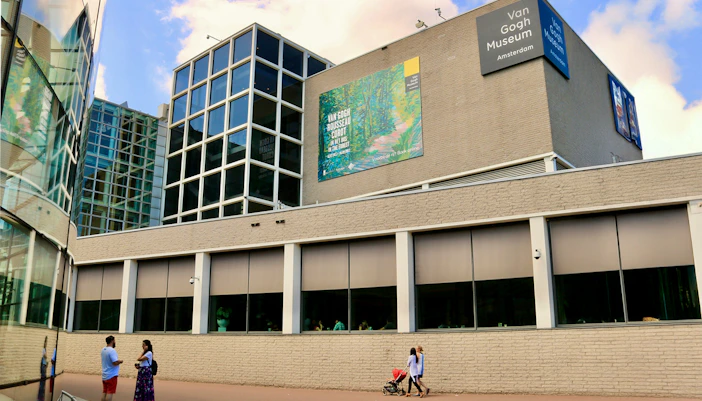
You’ll find the main self-portraits spread across the permanent collection galleries at the Van Gogh Museum in Amsterdam, especially in the Paris and Saint-Rémy sections on the upper permanent-collection floors.
Entry is included with a standard Van Gogh Museum ticket; no separate pass is required to see Van Gogh’s Self-Portraits.
Rather than treating the self-portraits as isolated highlights, see them in sequence within the permanent collection. Start with the earlier, darker works, then move into the Paris rooms for the most radical colour experiments, and finish with the later, more psychologically intense portraits linked to Saint-Rémy.
The biggest payoff comes from comparing works across periods. In the Paris self-portraits, look for broken, dotted strokes and brighter complementary colour; in the later portraits, notice the steadier stare, stronger outlines, and more concentrated emotional tension.
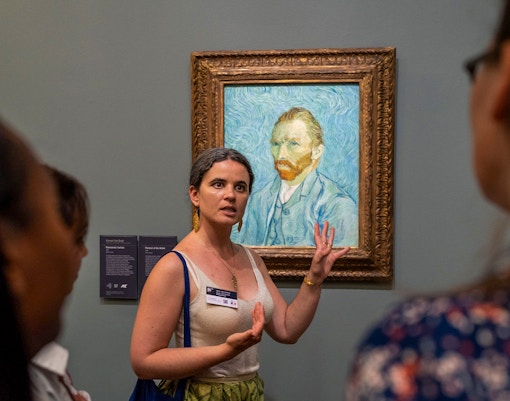
If you want structure, the Van Gogh Museum guided tour includes skip-the-line entry, a 2-hour route, and live commentary in English, Spanish, or French. It’s especially useful for the self-portraits, because a guide can connect subtle shifts in palette and pose to changes in Van Gogh’s life and artistic ambitions.
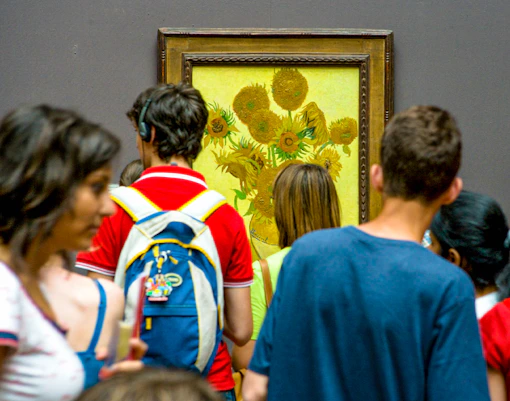
Weekday opening slots are usually the calmest time to study these paintings without a crowd pressing forward. Friday evening hours can also feel more manageable than the midday rush, when the most famous galleries tend to bottleneck.
Photography without flash is generally permitted in the permanent galleries, but the self-portrait rooms can narrow quickly when visitors stop for long shots. Step slightly to the side, keep your phone low, and avoid blocking the direct front view other visitors need for close comparison.
If Van Gogh’s Self-Portraits are a priority, give them at least 45–60 minutes within your museum visit. That’s enough time to compare facial expression, beard colour, backgrounds, hats, jackets, and brushwork, instead of only checking off one or two famous canvases.
Van Gogh often used his own face because hiring models regularly cost more than he could afford. What began as a necessity became one of the most sustained self-portrait projects in Western art.
He created the great majority of his painted self-portraits between 1886 and 1889. That concentration makes them an unusually precise record of artistic change over just a few years.
The Paris portraits show Van Gogh absorbing Impressionist and Neo-Impressionist ideas almost in real time. Backgrounds often dissolve into short strokes, and colour contrasts that would have been absent from his earlier Dutch work.
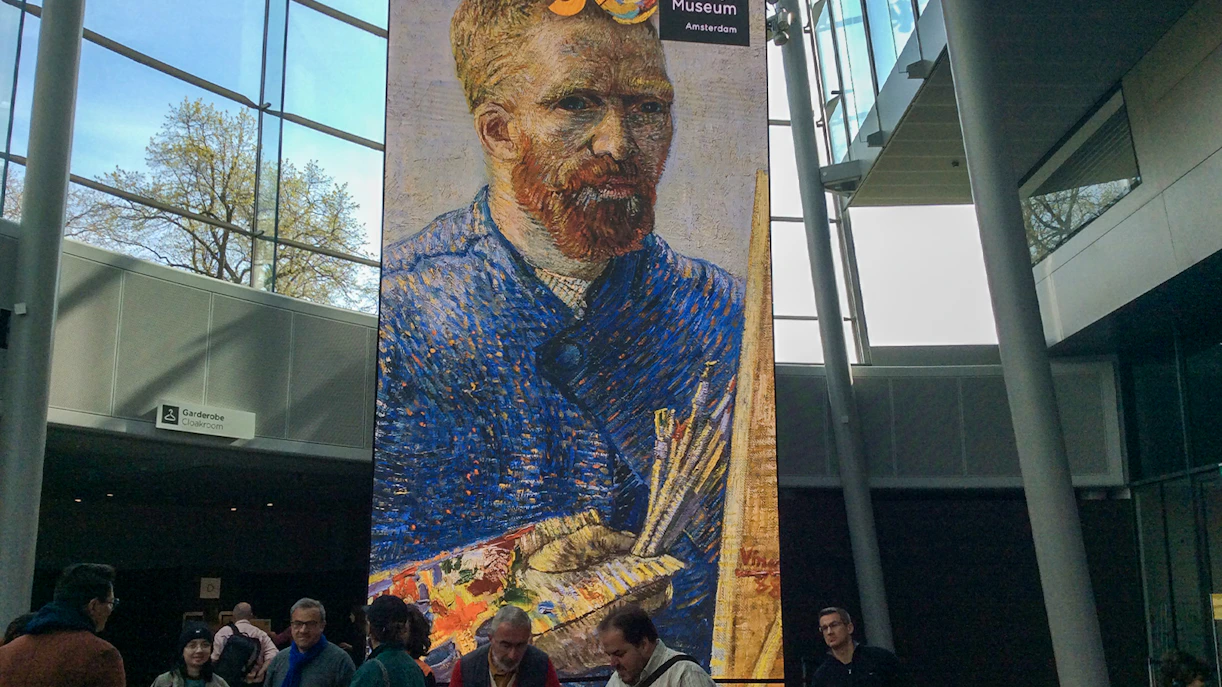
Works like Self-Portrait as a Painter do more than record his appearance. They present Van Gogh as a serious modern artist, complete with palette, brushes, and a deliberately direct gaze.
Many key self-portraits survived together because Van Gogh’s brother Theo and Theo’s widow, Jo van Gogh-Bonger, kept and promoted the works after Vincent’s death. Their stewardship was crucial to the museum collection that visitors see today.
Not every self-portrait connected to the museum is guaranteed to be displayed at the same time. Conservation needs, loans, and temporary exhibition rotations can change the exact lineup.
Van Gogh’s felt hats, jackets, and working smocks are never just wardrobe details. They help him experiment with complementary colours and define the kind of artist he wanted viewers to see.
Unlike aristocratic or society self-portraits filled with status symbols, Van Gogh’s are unusually stripped back. The emphasis falls on paint, mood, and self-scrutiny rather than prestige.
For many visitors, the Van Gogh Museum self-portraits are the clearest way to watch Vincent reinvent himself.
When Van Gogh moved to Paris in 1886, money was tight, and models were expensive. Painting himself solved a practical problem, but it also gave him a subject he could revisit endlessly. The mirror became a working tool, letting him practice faster than waiting for someone else to sit. That simple studio economy helped launch an extraordinary sequence of portraits.
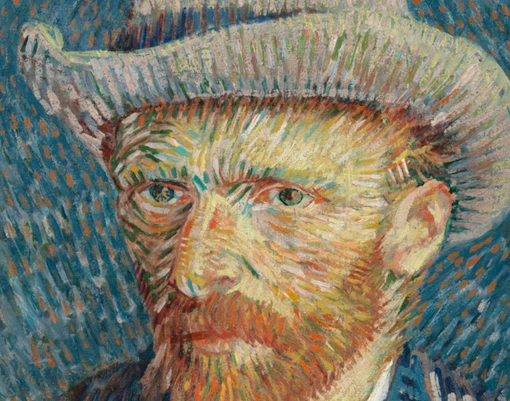
Paris exposed Van Gogh to Impressionism, Neo-Impressionism, and Japanese prints, and the self-portraits became his testing ground. He brightened his palette, broke up surfaces into smaller strokes, and pushed blue-orange and red-green contrasts harder than before. Because he controlled the pose, he could focus on paint handling instead of social performance. The result is a series that feels like a workshop in public.
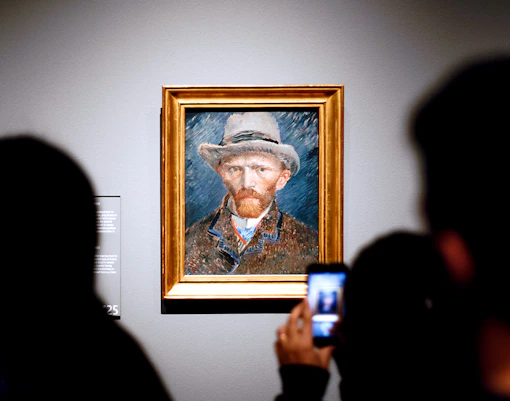
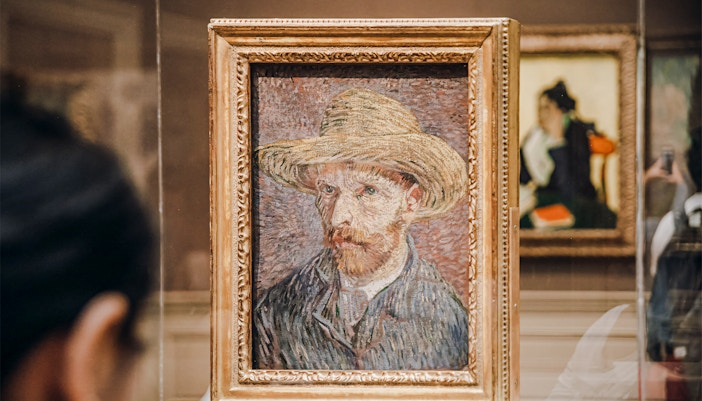
These works also helped Van Gogh decide how he wanted to appear. In some, he wears a neat felt hat; in others, he presents himself with a palette and brushes, deliberately claiming the role of a professional painter. The portraits are not casual likenesses. They are carefully constructed arguments about seriousness, discipline, and artistic ambition.
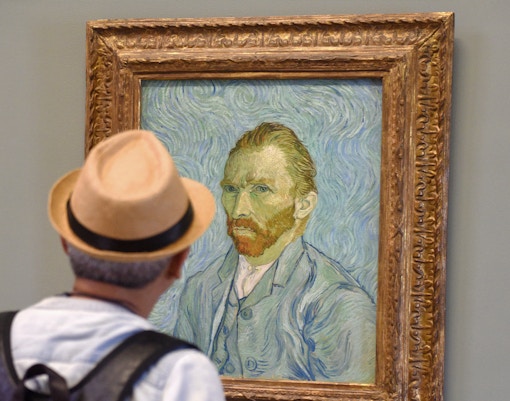
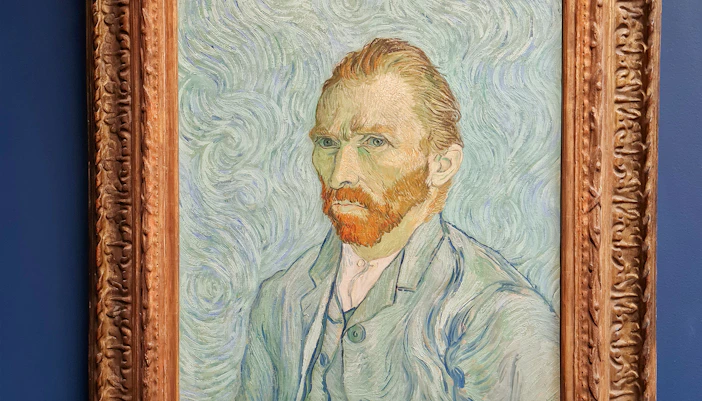
By the time Van Gogh reached Saint-Rémy, the self-portraits had become more concentrated and psychologically charged. The backgrounds tighten, contours grow more emphatic, and the gaze feels harder to evade. Even without dramatic props, the later works carry the pressure of illness and isolation. They remain some of the clearest visual evidence of how closely Van Gogh linked emotion and technique.
After Vincent’s death in 1890, Theo and later Jo van Gogh-Bonger preserved and promoted the works that would shape his legacy. That continuity is one reason the Van Gogh Museum can present the self-portraits not as isolated masterpieces, but as a developing sequence. Seen together, they show invention unfolding step by step. Few museums can tell that story with comparable depth.
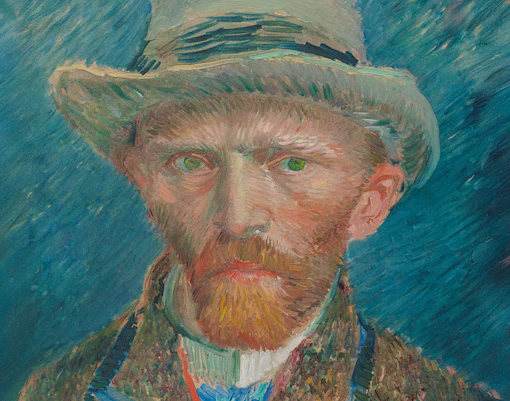
| Work | 'Self-Portrait' | 'Self-Portrait with Grey Felt Hat' | 'Self-Portrait' | 'Self-Portrait as a Painter' |
|---|---|---|---|---|
Year | 1886 | 1887 | 1887 | 1887–88 |
Style | Dark, Dutch-influenced realism | Paris experiment with broken colour | Brighter, flatter Paris palette | Mature artistic statement |
Mood | Reserved | Alert | Direct | Determined |
What to notice | Earth tones, heavier modelling, and more traditional shadowing | Blue-orange vibration, short strokes, and an active background | Greens and oranges in the face, less earth-bound colour, and a livelier surface | Palette and brushes, frontal pose, and controlled blue harmony |
Vincent van Gogh (1853–1890) was a Dutch Post-Impressionist painter whose brief, intense career reshaped modern art. In Van Gogh’s Self-Portraits, he used his own face as both subject and laboratory, testing broken brushwork, complementary colour, cropped composition, and shifting ideas of artistic identity. These works belong to the crucial years in Paris and Saint-Rémy, when he absorbed lessons from Impressionism and Neo-Impressionism yet transformed them into something more psychologically charged. Seen alongside Sunflowers, The Bedroom, Irises, and Wheatfield with Crows, the self-portraits reveal how closely Van Gogh connected technique to feeling: a hat brim, beard, or jacket becomes a vehicle for colour and tension. Their importance lies not only in biography, but in invention. Van Gogh helped move portraiture away from polished likeness toward emotional truth, making these paintings essential to understanding both his development and the wider break from academic tradition.

The self-portraits let you watch Van Gogh teach himself modern colour. Flesh is no longer built from smooth naturalism alone; it flickers with blues, greens, oranges, and reds that make the face feel alive and unstable at once.
These paintings are not polished mirrors of appearance. Up close, the face often dissolves into separate marks, and only at a short distance do the features lock together into a convincing presence.
Van Gogh changes how he presents himself from portrait to portrait. Hats, jackets, and the painter’s smock are not decorative extras; they help him move between bohemian observer, disciplined worker, and modern professional.
The Paris portraits are among the clearest signs of how quickly Van Gogh absorbed new influences. You can see Impressionist lightness, Neo-Impressionist colour separation, and Japanese-inspired flattening filtering through a single recurring subject: his own head and shoulders.
Many self-portraits by earlier artists advertise rank, wealth, or studio status. Van Gogh strips that away, so the encounter feels more immediate: face, eyes, paint, and pressure occupy the whole exchange.
What makes the Van Gogh Museum exceptional is not one portrait alone, but the chance to compare several within the same visit. The sequence turns artistic development into something visible, not abstract, letting you track change in real time from room to room.
While Amsterdam’s Van Gogh Museum houses the world’s largest collection of the artist's self-portraits, several of Vincent van Gogh’s most famous and psychologically revealing canvases are preserved in major museums across Europe and North America.
Painted during his stay at the asylum in Saint-Rémy-de-Provence, this masterpiece features Van Gogh's iconic, swirling blue-green background that reflects his turbulent psychological state and intense inner focus.
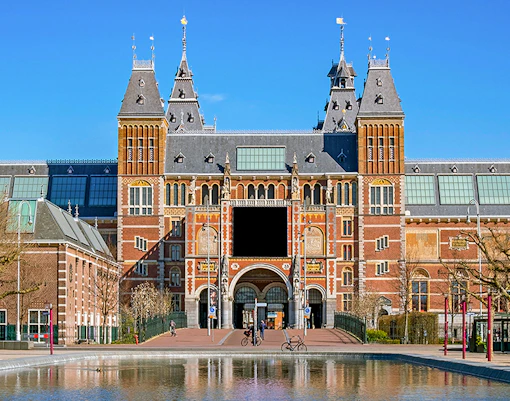
Located just steps away from the Van Gogh Museum, this vibrant Paris-period portrait showcases bright, energetic brushstrokes and complementary color pairings that Van Gogh developed under Impressionist influence.
Created in Arles shortly after the famous mental health crisis in December 1888, this poignant work depicts the artist wearing a heavy coat and fur cap, capturing a moment of quiet recovery and determination.
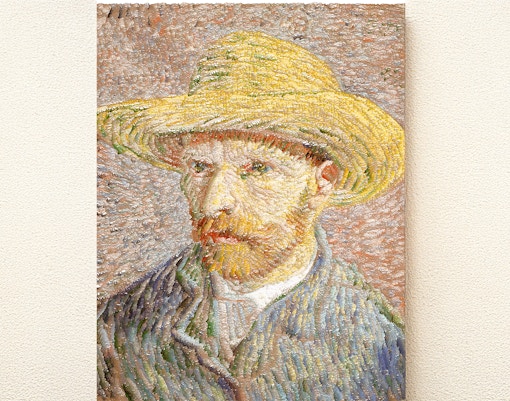
One of several straw-hat portraits from his time in Paris, this canvas demonstrates Van Gogh’s rapid adoption of Pointillist-inspired brushwork and lighter palettes.
Featuring Van Gogh in a felt hat, this striking portrait highlights his experimentation with rhythmic, directional paint application radiating outward from his face.
Housed in the second-largest Van Gogh collection in the world, this work serves as an essential bridge between his early dark Dutch period and his vibrant light-filled experiments in Paris.
No. They’re included with standard Van Gogh Museum admission.
Yes. The Van Gogh Museum guided tour includes skip-the-line entry, a 2-hour route, headsets, and commentary in English, Spanish, or French.
They’re spread through the permanent collection, especially the Paris and Saint-Rémy galleries on the upper permanent-collection floors.
No. Rotations, loans, conservation work, and temporary exhibitions can change exactly which portraits are on view.
Photography without flash is generally allowed in the permanent galleries. Temporary exhibitions may have stricter rules.
Weekday opening slots and many Friday evening hours are quieter than midday, when the busiest galleries fill fastest.
Plan 45–60 minutes for a focused route, or about 2 hours if you’re taking a guided tour through the wider museum.
Yes. Van Gogh Museum is wheelchair and pram/stroller accessible.
Van Gogh Museum Entry Tickets
Van Gogh Museum Guided Tour
Combo (Save 3%): Van Gogh Museum + Rijksmuseum Tickets
Combo (Save 21%): Moco Museum Amsterdam & Van Gogh Museum Tickets