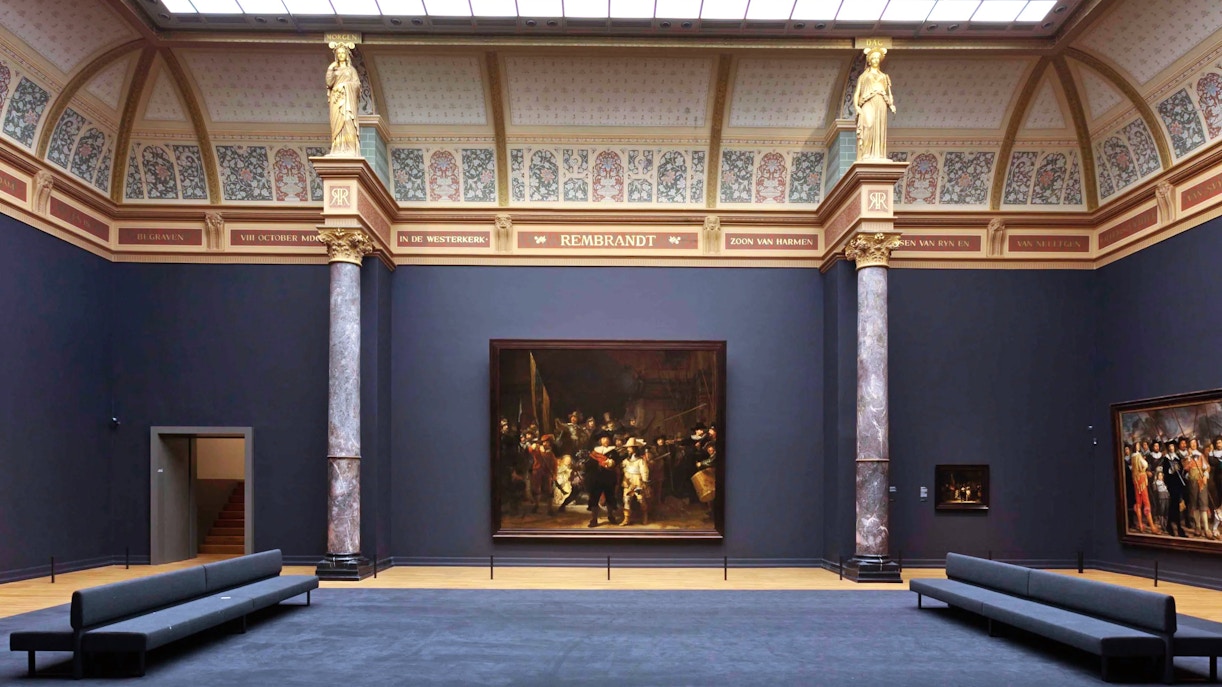
Explore the entire Rembrandt collection at the Rijksmuseum

Few artists capture the human experience like Rembrandt Harmenszoon van Rijn, and the Rijksmuseum showcases that mastery beautifully. Here, you can trace the evolution of his career from intimate portraits to monumental historical scenes, with the collection highlighting his genius for storytelling and offering a firsthand encounter with the depth that has defined his work for centuries.

Why explore the Rijksmuseum’s Rembrandt collection?

  • Largest collection of Rembrandt’s works in the world: The Rijksmuseum houses 22 paintings, 60 drawings, and over 300 prints by Rembrandt, making it the largest collection of his works anywhere. This range allows you to experience his works from his early self-portraits to his later masterpieces.
  • Encounter iconic masterpieces: Some of Rembrandt's highlights include The Night Watch, The Jewish Bride, and the famous group portraits, all showcasing his genius in composition, character, and emotional impact.
  • Witness storytelling through light and shadow: Renowned for his dramatic use of light and shadow, Rembrandt brings depth and emotion to every work. Even quiet scenes feel dynamic and alive through his compositions.
  • Experience the Dutch Golden Age at its richest: Rembrandt’s paintings reflect 17th-century Dutch life in all its complexity. From civic leaders to religious narratives and everyday figures, his works reveal the social and cultural world of his time.

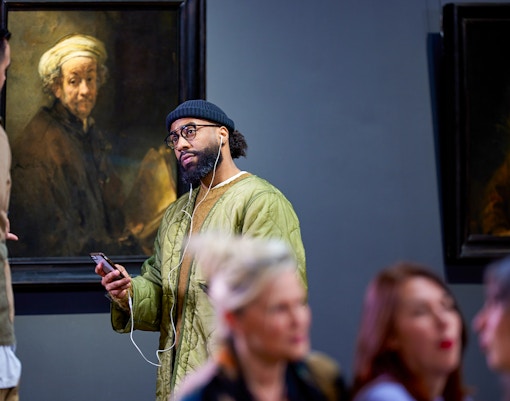
Portraiture and self portraits

Rembrandt transformed portraiture by prioritising psychological depth over idealised beauty. His self-portraits form a visual record of aging, ambition, hardship, and self-reflection, making them some of the most personal works in art history.

Seen in: Self-Portrait (1658), Self-Portrait as the Apostle Paul (1661)

Human emotion and inner life

Across all subjects, Rembrandt focused on emotional truth. Grief, tenderness, doubt, pride, and compassion are conveyed through facial expressions, gestures, and posture, giving his figures a profound sense of presence and individuality.

Seen in: The Jewish Bride, Portrait of an Old Man

Light as narrative

Light in Rembrandt’s work is not decorative but expressive. It guides the viewer’s eye, shapes the story, and heightens emotional impact, often isolating figures in moments of tension, revelation, or reflection.

Seen in: The Night Watch, The Jewish Bride

Biblical and spiritual themes

Rembrandt repeatedly returned to stories from the Bible, interpreting them with empathy and moral complexity. Rather than idealising sacred figures, he portrayed them as deeply human, emphasising vulnerability, faith, and inner struggle.

Seen in: The Jewish Bride, The Denial of Saint Peter

Group portraits

Militia pieces and regent portraits reflect the growing civic pride of the Dutch Republic. Rembrandt revolutionised these works by introducing movement, hierarchy, and interaction, turning formal commissions into dynamic narratives.

Seen in: The Night Watch, The Syndics of the Drapers’ Guild

Aging, mortality, and time

Late works in particular explore aging and impermanence. Wrinkles, worn hands, and subdued palettes reflect a lifelong meditation on time, loss, and resilience, adding emotional gravity to his mature paintings.

Seen in: Self-Portrait (1658), Portrait of an Old Woman

Everyday life and common people

Rembrandt gave dignity to ordinary people such as workers, elders, and families. His paintings reflect his belief that everyday life carried the same emotional and artistic weight as grand historical subjects.

Seen in: Titus at His Desk, Portrait of an Old Man Seated

Rembrandt’s artworks at the Rijksmuseum

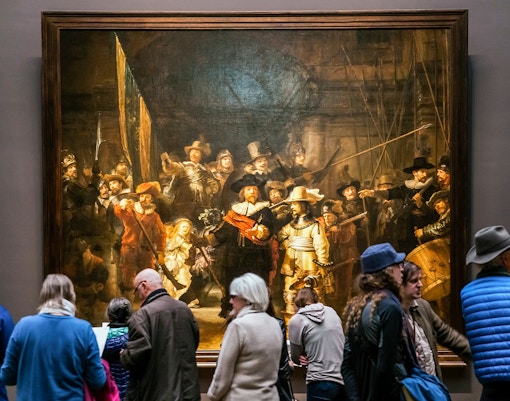
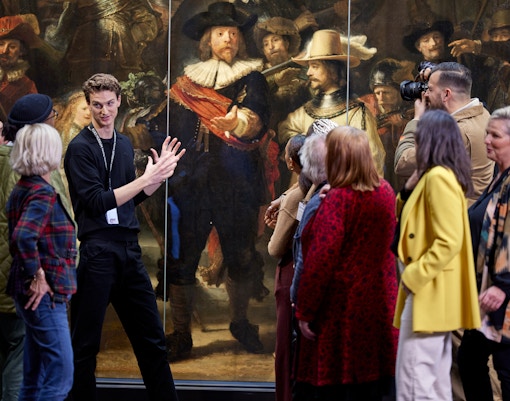
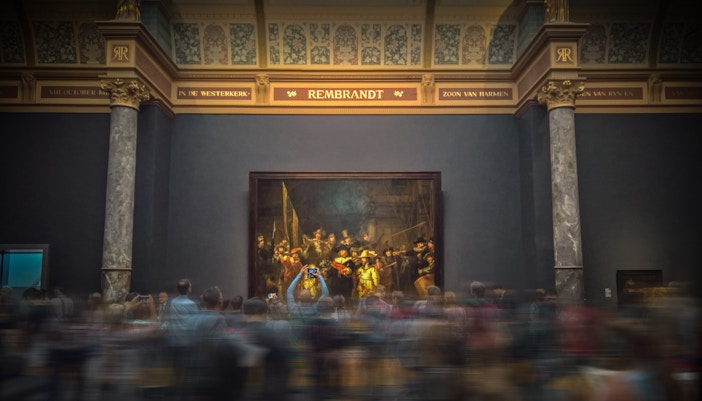
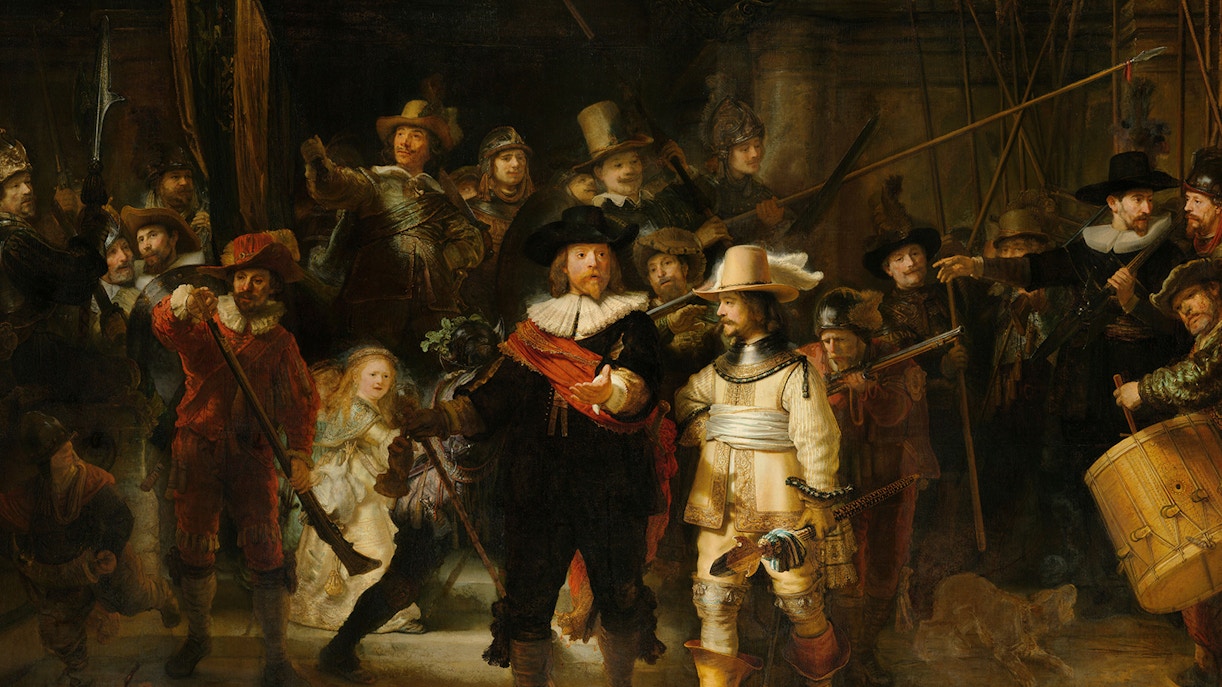
The Night Watch

1642, Gallery of Honour

Rembrandt’s most famous painting presents a civic guard company in motion rather than in static formation. In this, contrasts of light and shadow guide the eye through the scene, creating hierarchy that redefined group portraiture.

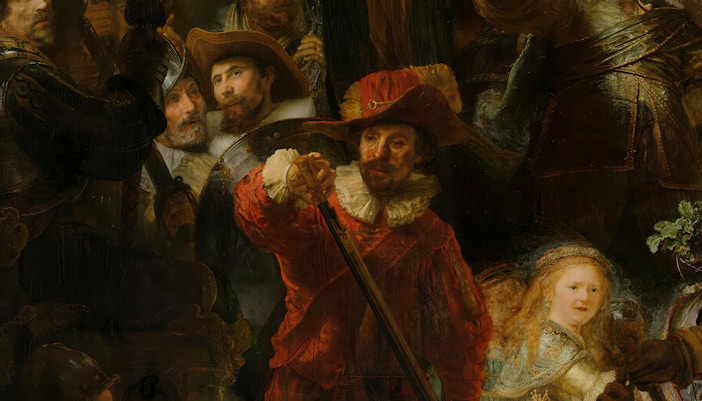
The Standard Bearer

1636, Gallery of Honour

This striking figure, widely considered a self-portrait, depicts a banner bearer caught mid-turn. Bold color, confident posture, and direct expression reflect Rembrandt’s ambition and growing reputation at a decisive moment in his career.

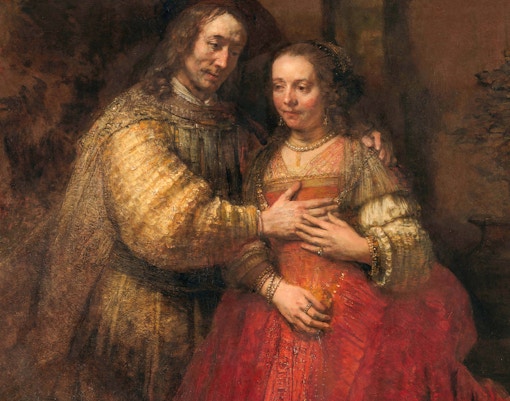
The Jewish Bride

c. 1665–1669, Gallery of Honour

An intimate portrayal of a couple bound by affection, this painting is celebrated for its textured brushwork. Subtle gestures and warm tones convey emotional depth rather than formal symbolism, making it one of Rembrandt’s most moving works.

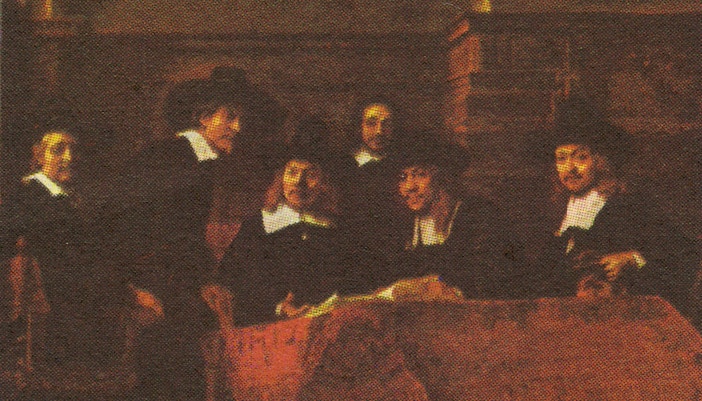
The Sampling Officials (The Syndics of the Amsterdam Drapers’ Guild)

1662, Gallery of Honour

This group portrait captures civic leaders interrupted during their work. Through carefully arranged gazes, gestures, and lighting, Rembrandt creates a sense of immediacy and authority while giving each figure a distinct personality.

Portrait of Marten Soolmans

1634, Gallery of Honour

A rare full-length wedding portrait, this painting showcases Rembrandt’s early mastery of detail and scale. Rich fabrics, confident stance, and controlled lighting emphasize status while maintaining a strong sense of individual character.

Portrait of a Woman, Possibly Maria Trip

1639, Dutch Golden Age galleries

Known for its exquisite depiction of jewelry, this portrait demonstrates Rembrandt’s ability to combine material richness with psychological depth. The calm pose and focused lighting draw attention to both status and individuality.

Portrait of Johannes Wtenbogaert

1633, Dutch Golden Age galleries

This thoughtful portrait of a theologian emphasizes intellect and moral authority. Restrained color, soft light, and composed posture reflect Rembrandt’s sensitivity to character and inner life rather than outward grandeur.

Self Portrait as the Apostle Paul

1661, Dutch Golden Age galleries

In this late self-portrait, Rembrandt presents himself as a biblical figure. Deep shadows, subdued color, and a contemplative expression convey introspection, spiritual reflection, and the weight of lived experience.

Self Portrait as a Young Man

c. 1628, Dutch Golden Age galleries

One of Rembrandt’s earliest self-portraits, this work reveals his experimentation with expression, lighting, and identity. The close framing and direct gaze offer an early glimpse of the psychological depth that would define his career.

The Night Watch: Behind the masterpiece

Completed in 1642, The Night Watch stands as the most ambitious and influential work by Rembrandt. Commissioned as a civic militia portrait, the painting uses dramatic contrasts of light and shadow to create depth, movement, and focus, guiding the eye through a bustling, carefully orchestrated scene.

What makes this artwork remarkable is how it departed from 17th-century tradition. Instead of arranging the figures in a static lineup, Rembrandt portrayed them in motion, transforming a conventional group portrait into a dynamic narrative.

More about The Night Watch

Frequently asked questions about Rembrandt’s collection at the Rijksmuseum

The Rijksmuseum’s Rembrandt collection includes oil paintings, self-portraits, group portraits, and historical and biblical scenes, as well as drawings and etchings.