All about Rembrandt’s iconic ‘Night Watch’

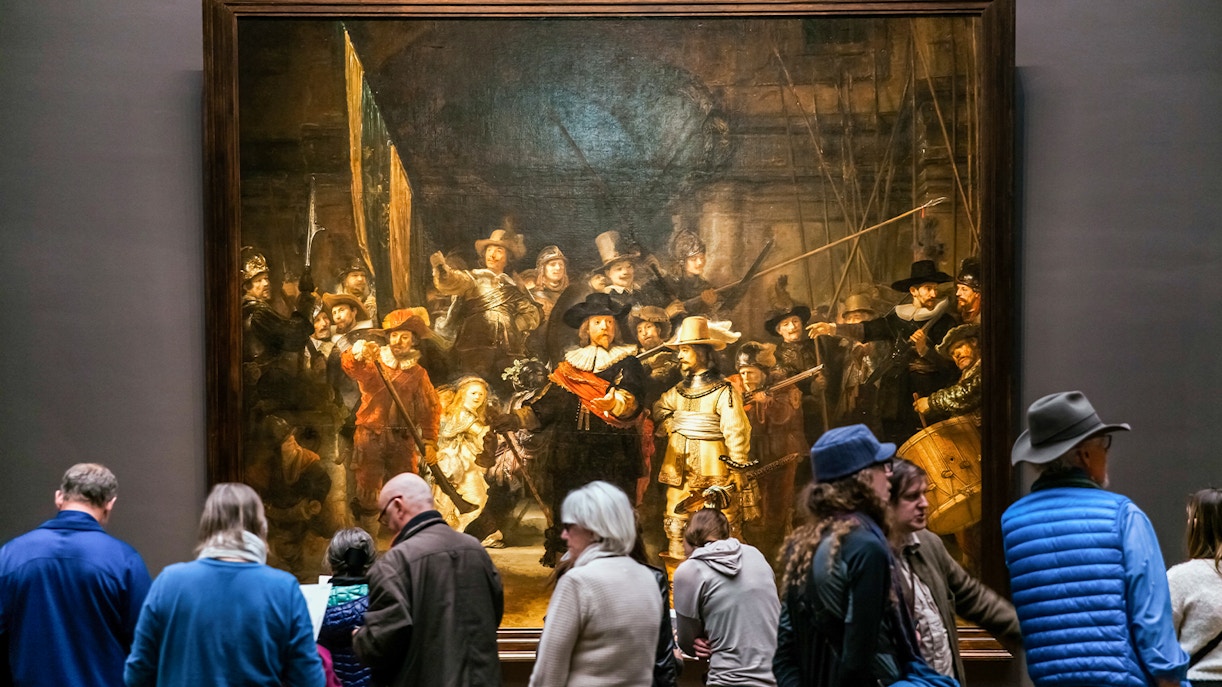
Step into the world of 17th-century Dutch art and explore the work of one of history’s greatest artists. Famous for its dramatic lighting and dynamic composition, Rembrandt’s The Night Watch broke away from convention to become a masterpiece that truly stood apart. Here’s everything you need to know to uncover the hidden details behind this painting.

Rembrandt’s Night Watch: An overview
Rijksmuseum Rembrandt's Night Watch
  • Official name: Militia Company of District II under the Command of Captain Frans Banninck Cocq, commonly known as The Night Watch.
  • Location of the painting: On permanent display at the Rijksmuseum, Amsterdam, the Netherlands.
  • Year completed: 1642, during the Dutch Golden Age.
  • Technique used: Oil on canvas, featuring Rembrandt’s masterful use of chiaroscuro, with dramatic contrasts between light and shadow.
  • Paint used: Oil paint, applied with expressive, layered brushwork characteristic of Rembrandt’s mature style.
  • Painting size: Approximately 363 cm × 437 cm (142.9 in × 172.0 in).
  • Visitors per year: The Night Watch is the Rijksmuseum’s most famous artwork and is viewed by over 2 million visitors annually.

Backstory of Rembrandt’s Night Watch

Rijksmuseum Rembrandt's Night Watch

Rembrandt’s Night Watch is a civic guard portrait commissioned by the Amsterdam militia company of District II, led by Captain Frans Banninck Cocq. Completed in 1642, the painting was created for the headquarters of the city’s civic guards as a display of civic unity.

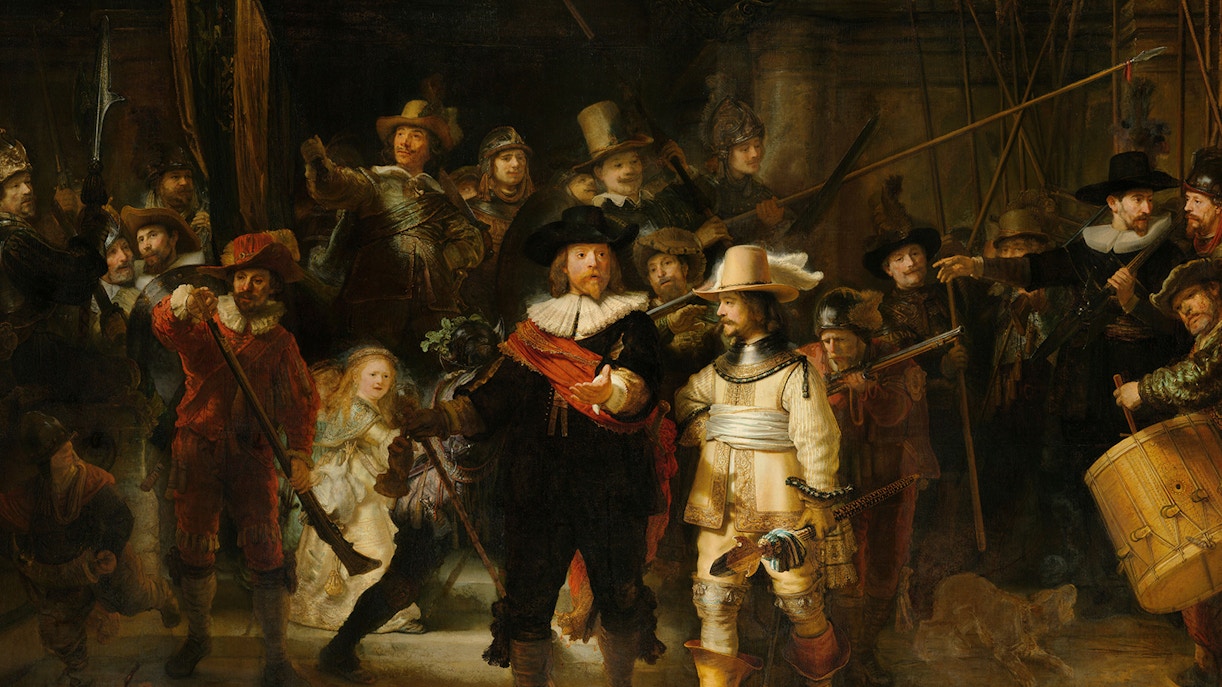
What makes the painting remarkable is how it departs from the traditional static arrangements common in 17th-century group portraits. Instead of lining the figures up formally, Rembrandt portrayed the militia as if caught in motion, preparing to march. By using chiaroscuro, the contrast between light and shadow, Rembrandt highlighted the captain and his lieutenant while letting other figures fade into darkness, turning a conventional commission into a dynamic narrative scene.

Elements in The Night Watch

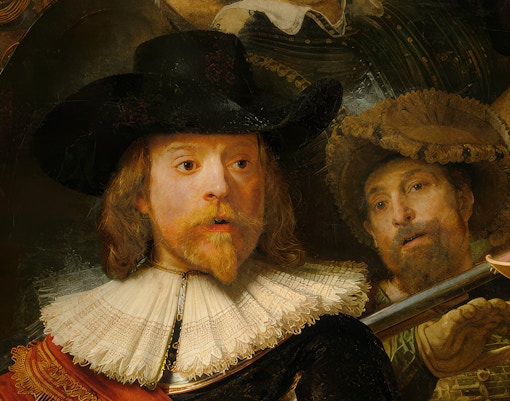
Captain Frans Banninck Cocq

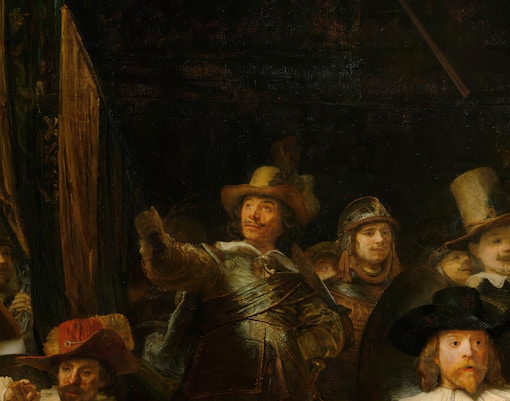
Front and center, Captain Frans Banninck Cocq leads the company forward. Dressed in black with a red sash, his confident stance makes it clear who’s in charge of the scene in motion.

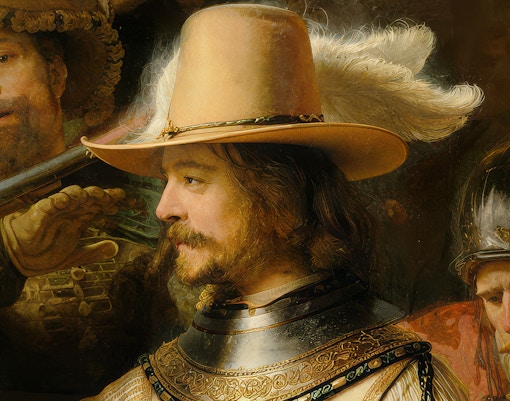
Lieutenant Willem van Ruytenburch

Standing beside the captain, the lieutenant is hard to miss. His yellow outfit catches the light and balances the composition visually, while also highlighting his role as second in command.

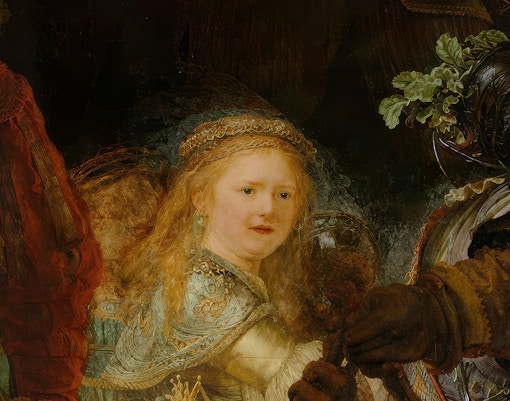
The Young Girl in the Foreground

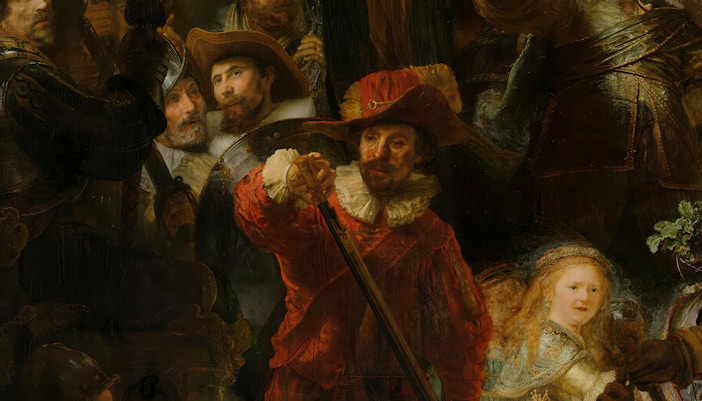
The glowing young girl isn’t a militia member, which is exactly why she draws so much attention. Often interpreted as a symbolic figure, she carries a dead chicken with visible claws.

The Standard Bearer

With the company flag raised high, the standard bearer embodies unity and civic pride. His elevated position and flowing banner add energy and ceremony, reinforcing the feeling that something important is about to happen.

The Drummer

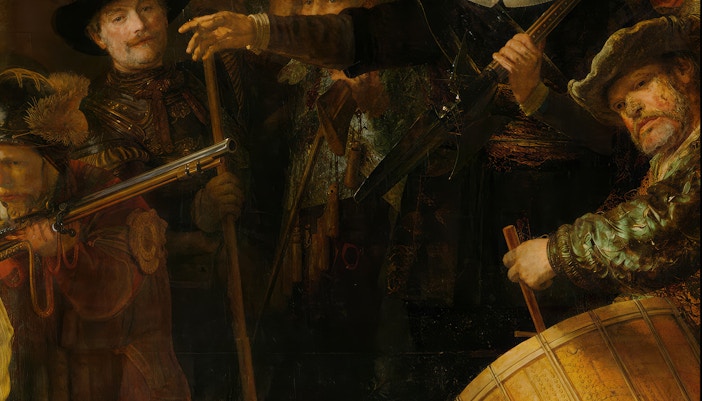
Off to the side, the drummer plays a key role in setting the mood. His presence suggests the militia is assembling or preparing to march, helping turn the scene into a moment full of anticipation.

The Musketeers and Pikemen

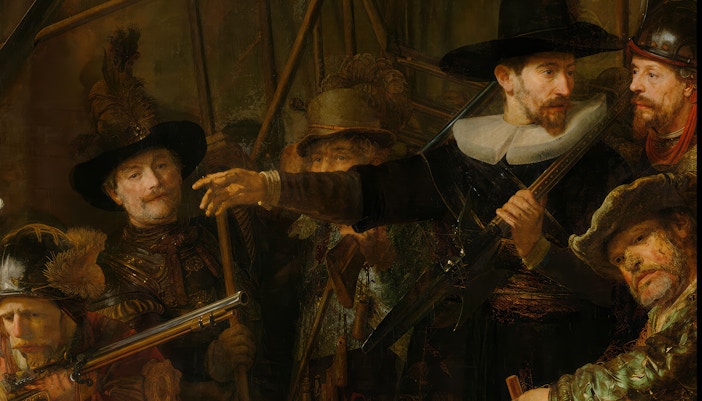
Look closely, and you’ll notice figures loading muskets, gripping pikes, and adjusting their weapons. These actions create a sense of readiness, making the company feel active rather than poised.

The Militia Members as Individuals

What truly sets the painting apart is its sense of individuality. Each guardsman is shown with distinct features and gestures, reflecting Rembrandt’s interest in realism and human character. This focus on personality lifts the work beyond a conventional group portrait, turning it into a compelling study of identity.

Fascinating facts about the Night Watch Room

Amsterdam in Motion exhibit with city map and visitors at Rijksmuseum gallery.
Placeholder Image Headout Blimp
1/4

A dedicated emergency exit

In 1934, The Night Watch became one of the few paintings to have its own special exit. A narrow slot was cut into the floor of the gallery so the painting and its frame could be moved out quickly in case of emergency.

Altar-like placement

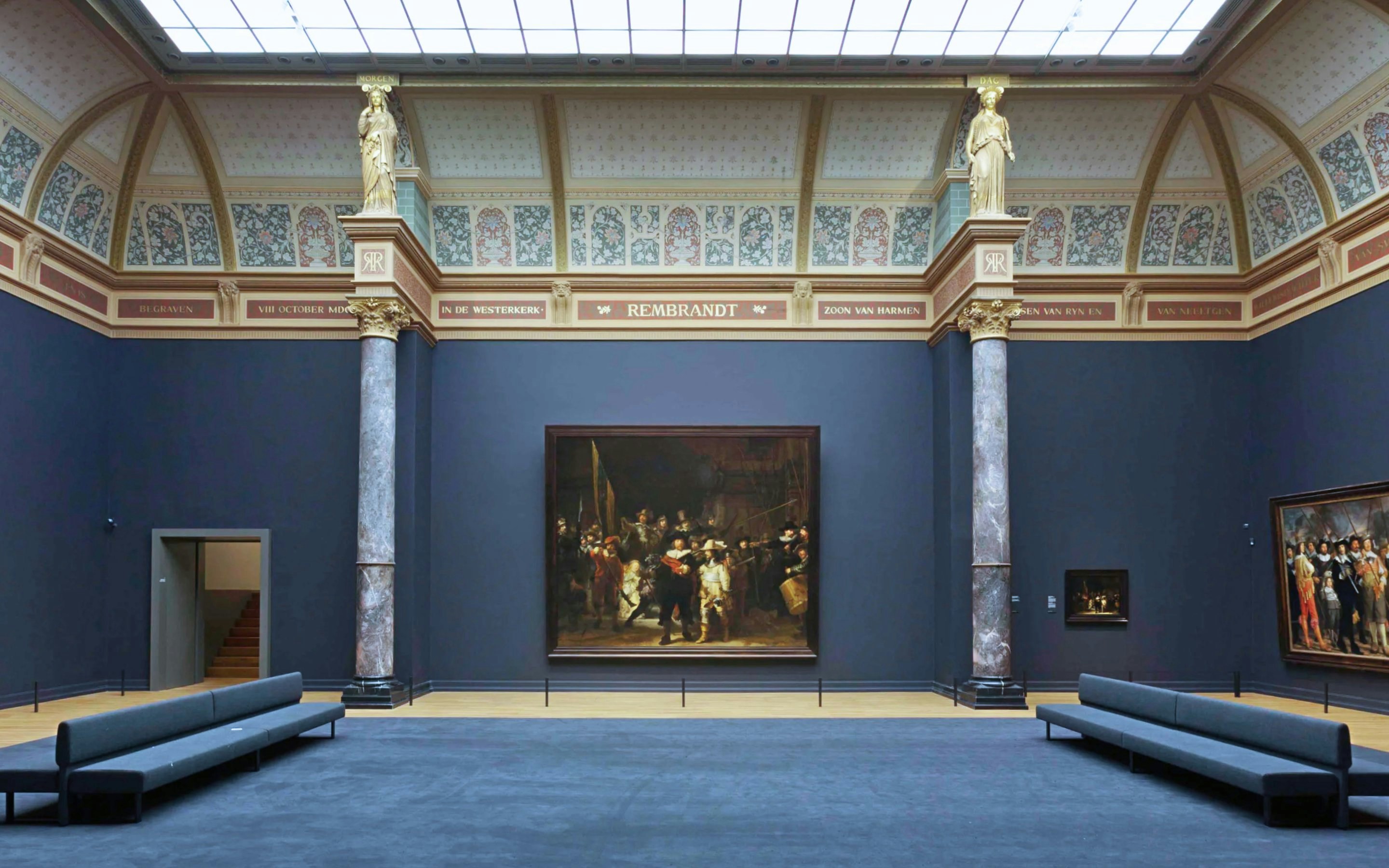
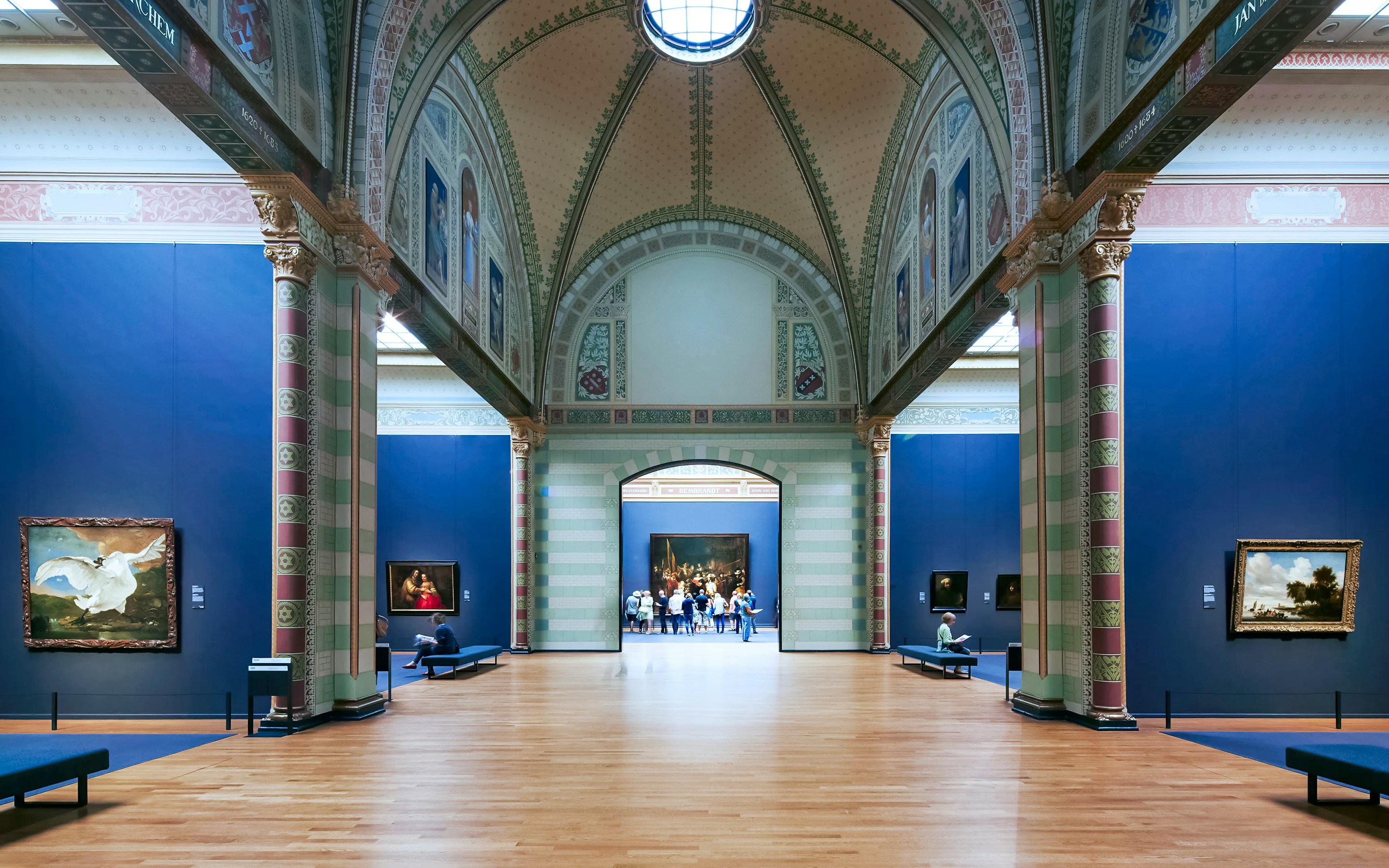
The Gallery of Honour, where The Night Watch is displayed, was intentionally designed so the painting occupies the far end of the hall in a position reminiscent of a high altar in a church. This placement underscores its importance within the museum’s layout and elevates it to a near-sacred status in the viewing experience.

The four times of day

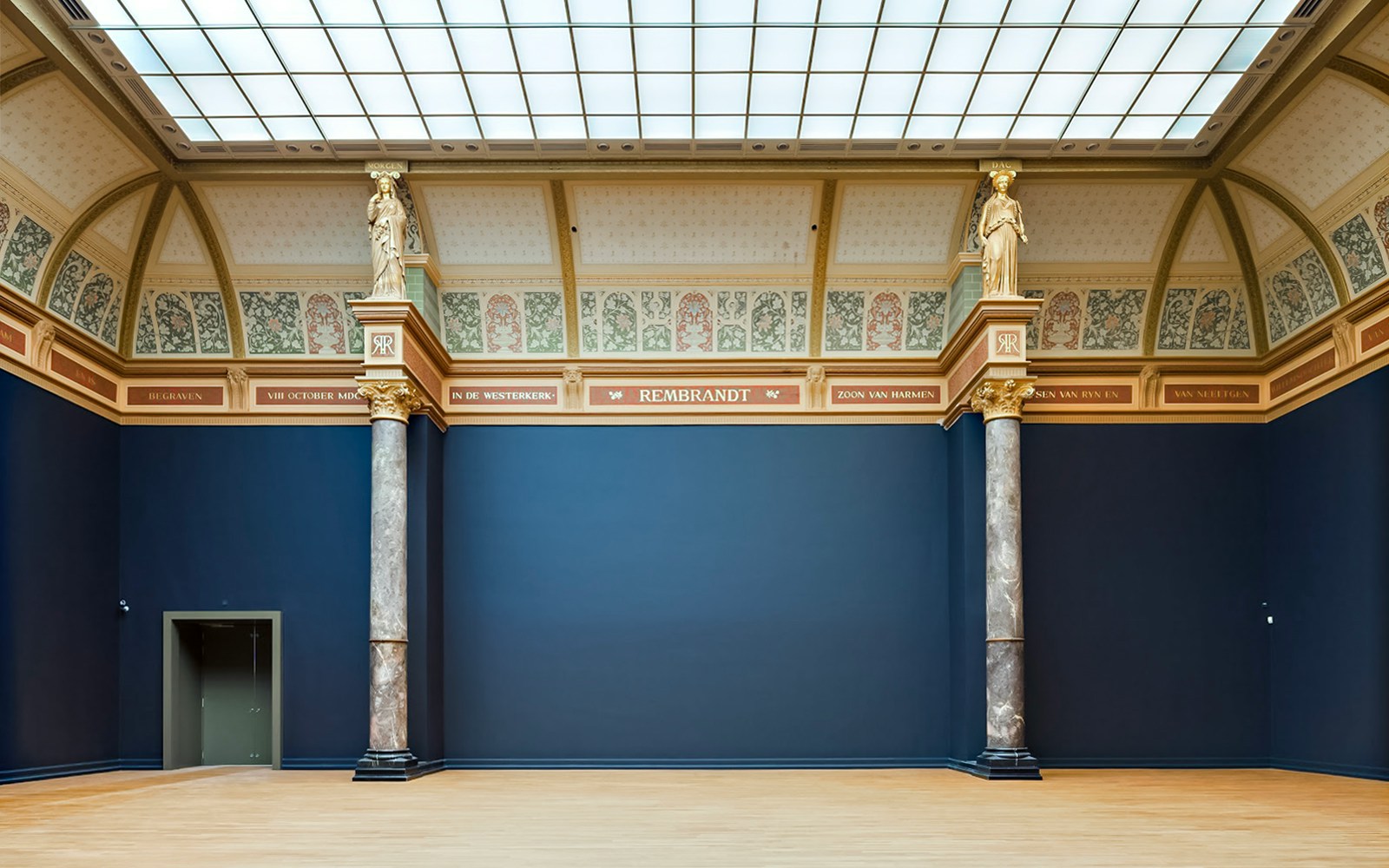
In the Night Watch Gallery, four female figures stand on high pedestals. They are traditionally interpreted as personifications of morning, afternoon, evening, and night, reflecting the shift in art from static portraiture to dynamic, time-sensitive scenes, much like The Night Watch itself.

Curtains in the gallery

Originally, curtains screened off the side galleries in the Gallery of Honour. This encouraged visitors to focus their attention straight ahead toward The Night Watch at the end of the hall, although the renovated gallery is designed differently.

Operation Night Watch

Rijksmuseum main hall with visitors and shops in Amsterdam.

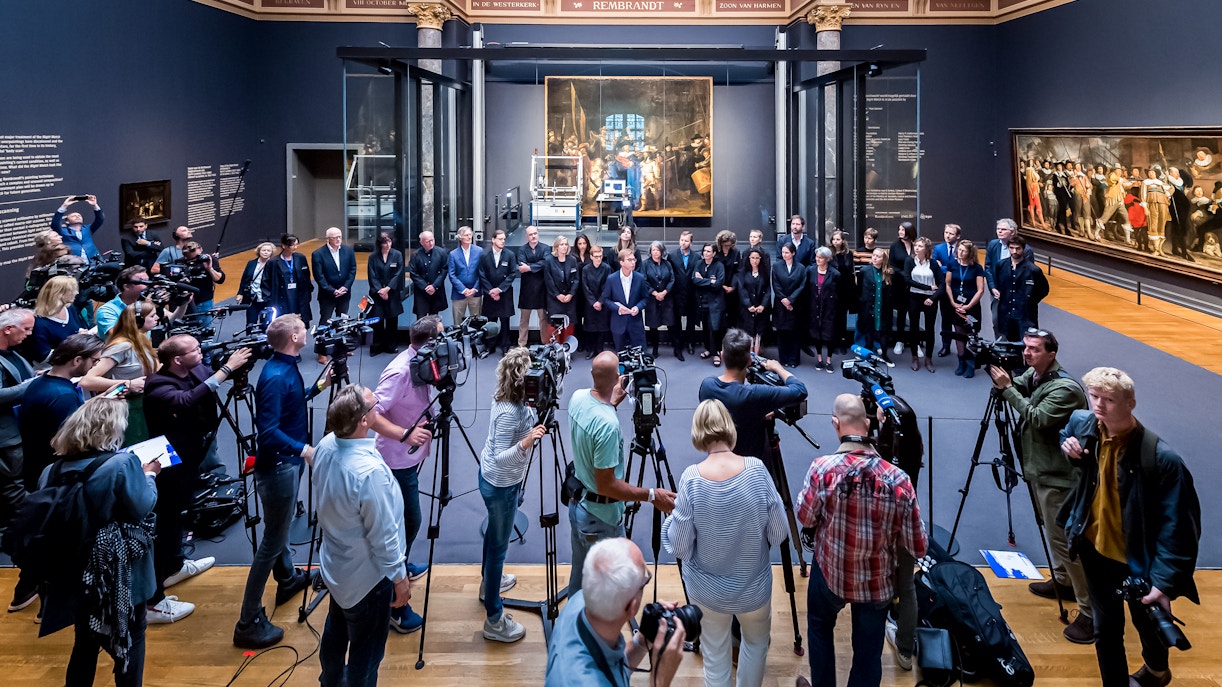
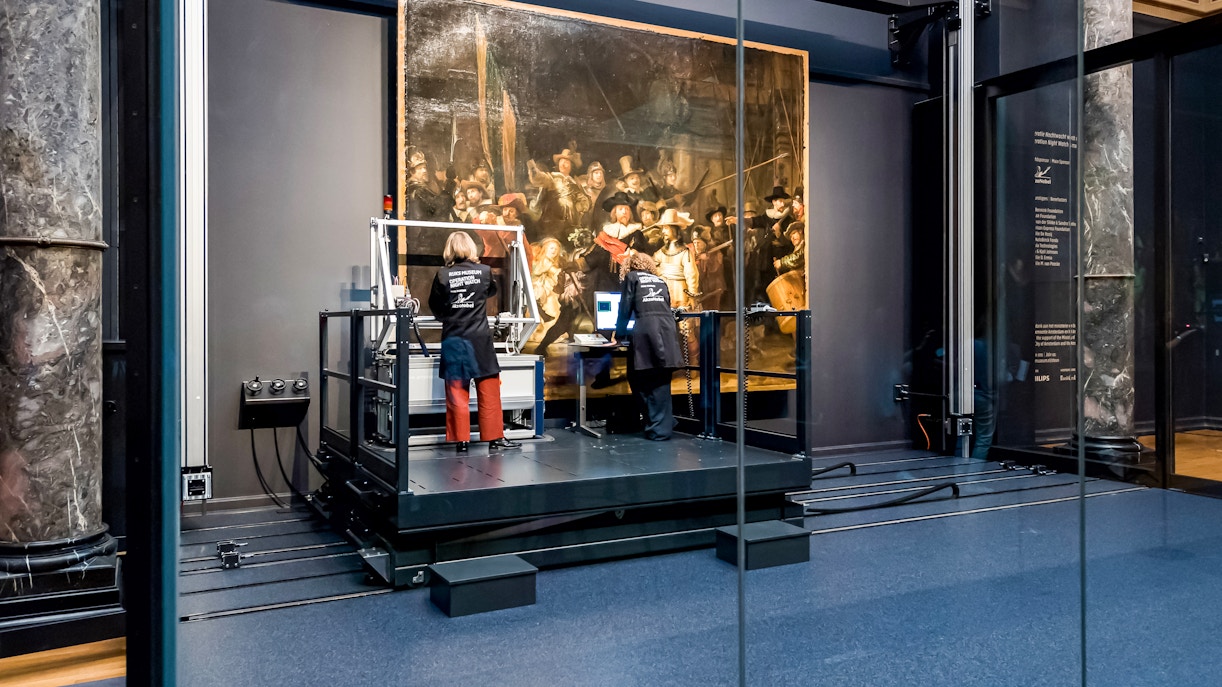
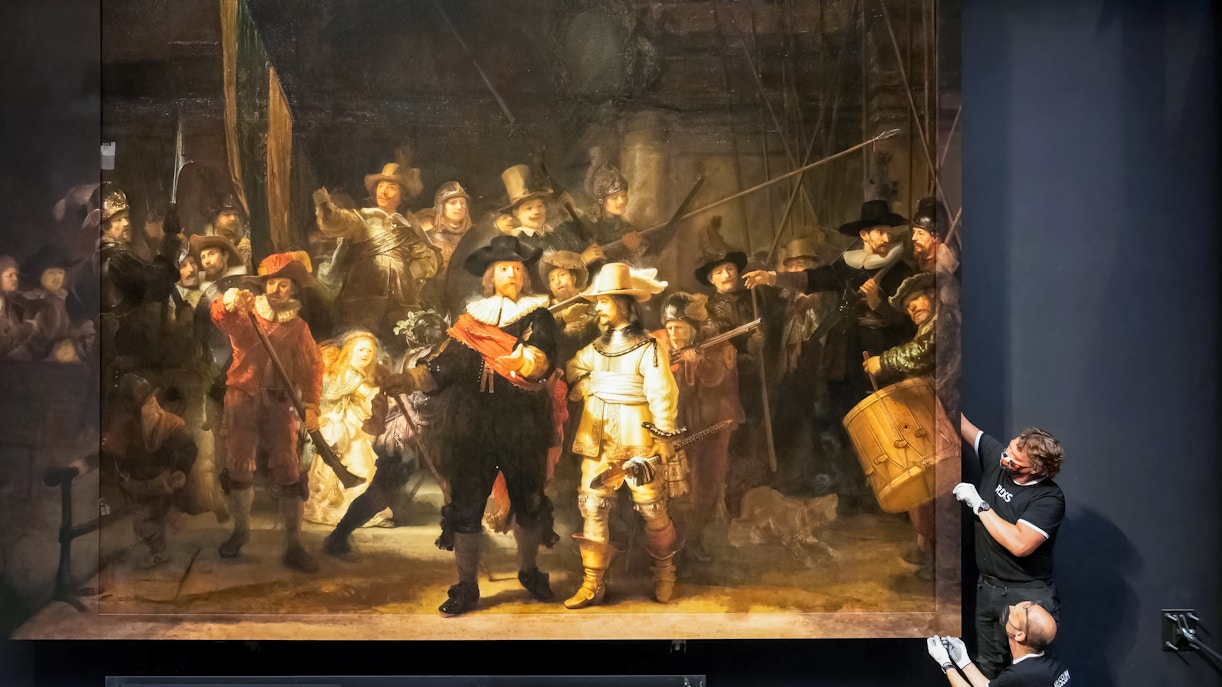
Operation Night Watch is the largest and most ambitious research and conservation project ever undertaken on Rembrandt’s Night Watch. Launched by the Rijksmuseum in 2019, the goal of the project is to study the painting in detail and ensure its long-term preservation.

What makes Operation Night Watch unique is its openness. The painting is examined inside a specially constructed glass chamber within the museum, allowing visitors to watch conservators and scientists at work in real time. For the first time, the public can see how advanced imaging, scanning, and analysis are used to study a masterpiece at the microscopic level.

The project was prompted by visible changes in the artwork, including distortions in the canvas and areas of aging paint. To investigate these issues, researchers use advanced techniques such as high-resolution photography, X-ray fluorescence scanning, and 3D analysis.

These methods allow the team to examine paint layers, pigments, and previous restorations, revealing insights into both Rembrandt’s working process and the painting’s current condition.

As of today, Operation Night Watch is still ongoing. Researchers continue to study the painting and monitor its condition, using the data collected to inform careful conservation work.

The project has already uncovered fascinating details about Rembrandt’s technique, including subtle adjustments he made while painting and the way he layered pigments to create dramatic effects, although the active restoration is still ongoing with no fixed date in mind.

Frequently asked questions about The Night Watch

The official name of the painting is Militia Company of District II under the Command of Captain Frans Banninck Cocq, though it is widely known as The Night Watch.