Gerard Adriaan Heineken was only 22 when he bought the Haystack brewery. His ambition was to create a ‘gentleman’s beer’ in a city dominated by gin. By 1867, he moved operations to the Stadhouderskade, building the red-brick structure that stands today. This move transitioned the brand from a local craft to a professional industrial powerhouse.
History of the Heineken Experience | From brewery to global icon
Built in 1867, this former brewery served as Heineken’s primary production facility for over a century. Located in Amsterdam’s De Pijp district, it produced every drop of the world’s most famous pilsner before outgrowing its industrial walls. Today, it offers a high-tech journey through beer history—and the best part? You get to taste the heritage right at the source.
Heineken Experience timeline
- 1864: The beginning
Gerard Adriaan Heineken purchases the 'De Hooiberg' brewery in Amsterdam. - 1867: Construction of the Stadhouderskade brewery
A new, larger brewery is built at the current site to meet rising demand. - 1873: HBM is founded
The company name changes to Heineken’s Bierbrouwerij Maatschappij. - 1886: The Discovery of A-yeast
Dr Elion developed the unique A-yeast, still the secret to Heineken’s crisp flavour. - 1923: Henry Pierre Heineken takes over
The second generation focuses on expansion and modernising the brewing process. - 1954: Freddy Heineken’s influence
The visionary leader begins turning beer into a global lifestyle brand. - 1988: The brewery closes
After 121 years, production moves to a larger facility in Zoeterwoude. - 1991: Opening of the Heineken Treat and Information Centre
The doors reopen for the public to learn about the brand’s heritage. - 2001: The Heineken Experience is born
The centre undergoes a massive renovation to become an interactive museum. - 2026: A century-plus of heritage
The site remains Amsterdam’s most popular industrial landmark.
Heineken Experience’s history explained
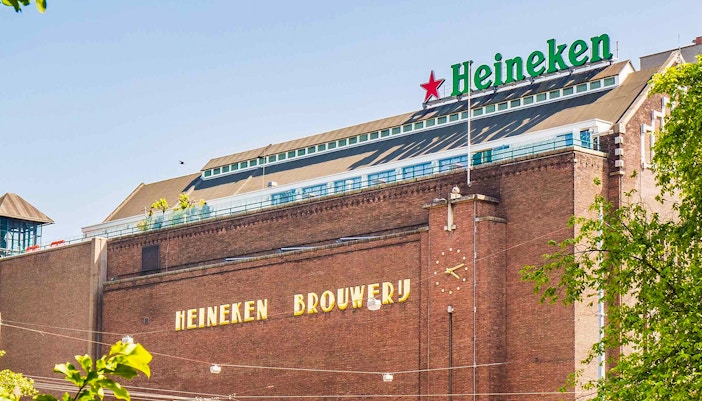
The foundation of an empire (1864–1873)
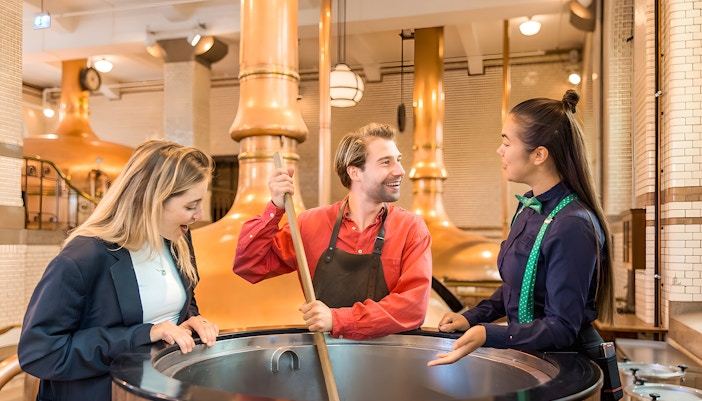
The secret science of flavour (1886)
History was made in the lab when Dr H. Elion, a student of Louis Pasteur, isolated the Heineken A-yeast. While other breweries struggled with inconsistent batches, this discovery ensured every bottle tasted the same. This era saw the brewery win the Grand Prix at the 1889 Paris Expo, solidifying its international reputation.
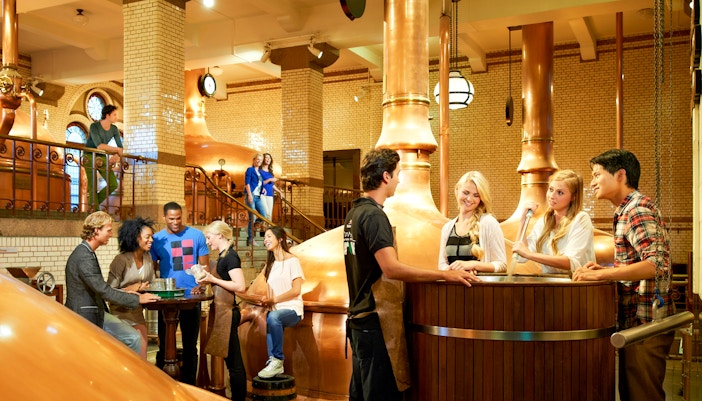
The Freddy Heineken era (1954–1988)
Under the leadership of Freddy Heineken, the brewery became more than a factory; it became a brand. He famously said, "I don't sell beer, I sell warmth." During this time, the brewery reached its maximum capacity. By 1988, the copper tanks could no longer keep up with global demand, leading to the end of brewing at this site.
Construction and architecture
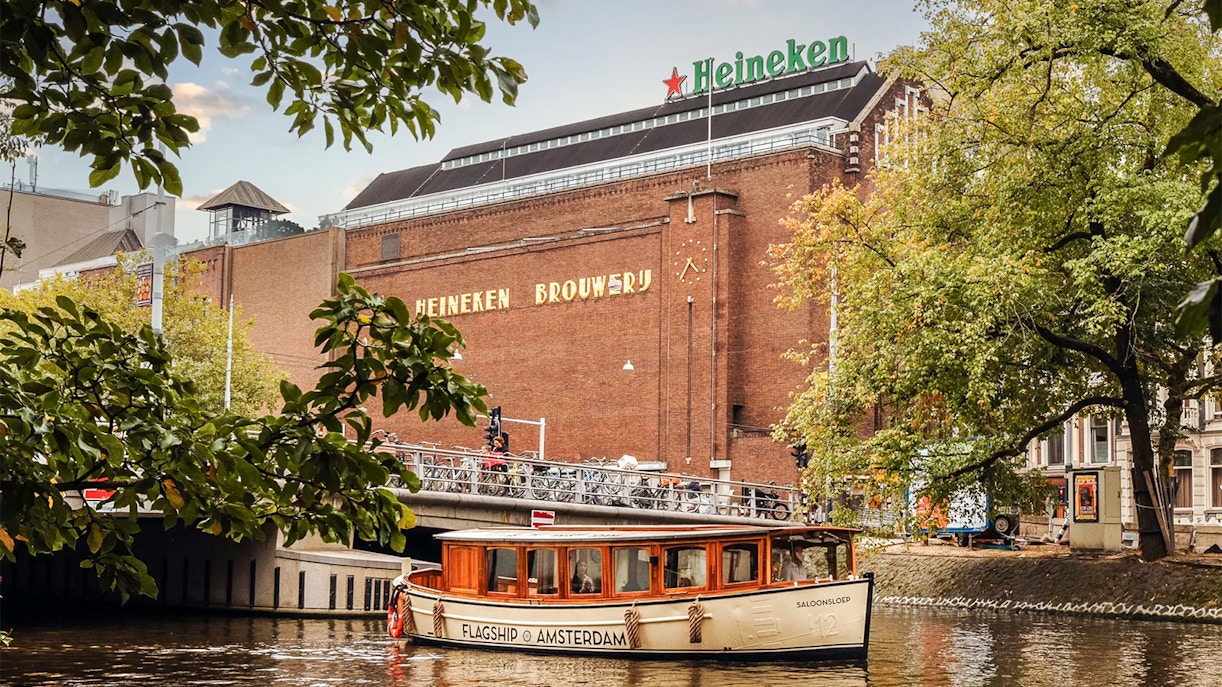
The building is a prime example of 19th-century industrial architecture, featuring a striking brick facade and ornate ironwork. Designed by Isaac Gosschalk, it blends functionalism with Neo-Renaissance details. The interior still houses the original 19th-century silos and the Brew Hall with its copper boiling kettles and stained-glass windows.
Heineken Experience today - Why it matters
Today, the building is a protected National Monument and a cornerstone of Amsterdam's ‘Big Five’ attractions. It serves as a bridge between the city’s industrial past and its modern identity as a hub of innovation. Visitors can explore the historic stables, home to the famous Shire horses, and engage with 4D exhibits that explain the brewing process. It remains the definitive site for understanding how a local Dutch pilsner conquered the world.
Frequently asked questions about Heineken Experience’s history
The brewery was built in 1867 by Gerard Adriaan Heineken to replace his smaller, older facility.
It was a fully functional industrial brewery where all Heineken beer was produced and bottled for over a century.
By 1988, the brewery was surrounded by a growing residential neighbourhood, making it impossible to expand the facilities to meet global demand.
The 19th-century Brew Hall, with its original copper kettles and the heritage stables, where horses still reside, are the highlights.
Freddy Heineken, the man who turned the company into a global marketing giant, is the most influential figure in the site's modern history.
During the German occupation of Amsterdam, the brewery faced severe raw material shortages. Production slowed significantly, and the company focused on survival. Interestingly, the brewery's iconic red star was briefly changed to white (and later removed) after the war because of its perceived association with Communism, before eventually being restored to its original design.
Yes. Legend has it that Freddy Heineken’s father, Henry Pierre, had a ship full of beer waiting just outside U.S. waters. As soon as Prohibition was repealed in 1933, the Heineken shipment was the first to dock in New York, giving the brand a massive head start in the American market.
This was a marketing masterstroke by Freddy Heineken in the 1960s. He wanted the logo to look more friendly and less industrial, so he tilted the ‘e’ letters slightly backward to make them look like they were smiling. You can see the evolution of this branding throughout the museum's vintage poster collection.
Absolutely. The brewery still keeps Shire horses on-site. Historically, these powerful animals were essential for pulling beer wagons through the narrow, cobbled streets of Amsterdam where motorized trucks couldn't easily maneuver. Today, they represent a living link to the brewery's 19th-century logistics.
Historically, beer was sold in brown bottles to protect it from light. However, Gerard Heineken wanted his pilsner to stand out as a premium, ‘pure’ product. He chose green glass to signify freshness and high quality, a tradition that helped make the bottle one of the most recognizable objects in the world.
The brewery faced a spatial crisis in the 1980s. As Amsterdam modernized, the industrial smell and heavy traffic from the brewery became a point of contention with the city. This friction eventually led to the 1988 decision to cease production and transform the factory into a cultural site, preserving the building's facade while moving the ‘noise’ of industry out of the city center.


