Visit Level 3 early in the morning at 9am or after 4pm when visitor traffic thins out, giving you quiet access to Monet's landscapes.
Claude Monet | Impressionist works at Van Gogh Museum
Claude Monet redefined 19th-century landscape painting with his revolutionary focus on light, colour, and natural atmosphere. While dedicated primarily to Vincent van Gogh, the Van Gogh Museum in Amsterdam also displays key masterpieces by Monet to highlight the profound artistic connection between the two masters. Monet’s luminous palette and energetic brushwork directly inspired Van Gogh’s transition toward Impressionism. All of Monet’s works are displayed on the top floor of the main collection area, and viewing them is included with standard museum tickets without additional fees.
Claude Monet’s paintings at the Van Gogh Museum
1/4
Tulip Fields near The Hague
Located on Level 3 (Impressionist & Contemporaries section)
Painted in 1886, this radiant canvas highlights vast rows of Dutch tulips beneath a traditional windmill. Monet used vibrant reds and blues to capture shifting sunlight across the fields, creating a masterpiece that influenced Vincent during his Paris years.
Coastal Landscape
Located on Level 3 (Impressionist & Contemporaries section)
Created around 1864 when Monet was just 24 years old, this early Normandy seaside view features rolling dunes, dramatic skies, and turquoise waters. It demonstrates his youthful genius for outdoor lighting and unscripted natural atmosphere.
Windmills near Zaandam
Located on Level 3 (Impressionist & Contemporaries section)
Painted in 1871 during Monet's four-month stay in the Netherlands, this picturesque composition depicts regional Dutch windmills over rippling waters. Its tranquil reflection effects showcase his mastery of fluid water surface rendering.
View of Amsterdam
Located on Level 3 (Impressionist & Contemporaries section)
Painted in 1874 during Monet's second visit to the Netherlands, this atmospheric cityscape shows the Sea Lock and Kamperhoofd seen from the Oosterdok. With delicate reflections across the harbour, it highlights his mastery at capturing light on Dutch waters.
Tips for viewing Claude Monet at the Van Gogh Museum
⌛ Time it right
🌷 Tulip Fields – step back for colour blending
Stand a few paces back from the canvas to see how Monet’s short, unmixed dabs of red and green paint optically merge into a glowing sea of flowers.
⛵ Hidden gem: Windmills near Zaandam
Look closely at the lower section of the painting. Notice how Monet painted rapid, fluid strokes to make the water's reflection feel genuinely alive and moving.
Brief history of Claude Monet
- 1840 – Born in Paris, spending his youth along Normandy's coast developing a passion for outdoor painting.
- 1860s – Moves to Paris, studying alongside Renoir and Manet while rejecting rigid academic art conventions.
- 1871 – Travels to the Netherlands, painting famous views of Dutch windmills and waterways in Zaandam.
- 1874 – Exhibits Impression, Sunrise, inspiring the name of the revolutionary Impressionist movement.
- 1886 – Paints Tulip Fields near The Hague; his work is sold in Paris by Theo van Gogh, inspiring Vincent.
- 1890s – Settles in Giverny, creating world-famous series of Water Lilies, Haystacks, and Japanese Bridges.
- 1926 – Passes away at age 86, leaving a timeless legacy as the foundational master of Impressionism.
- Today – His works form key features of major collections globally, including Amsterdam's Van Gogh Museum.
Did you know?

Monet was so enchanted by Dutch flower fields in 1886 that he wrote home lamenting that the colours were "impossible to convey with our poor pigments."
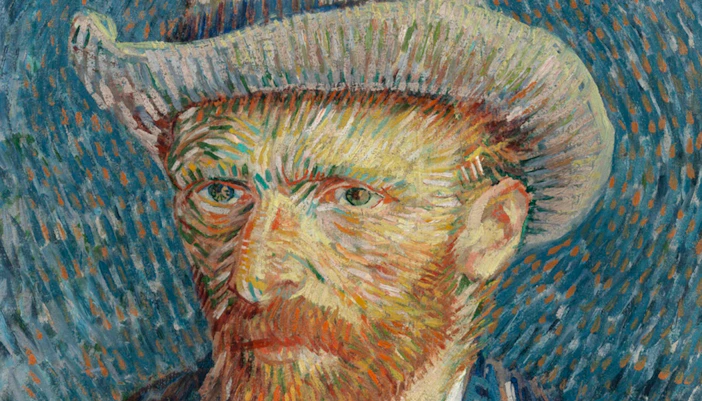
Vincent van Gogh never met Monet in person, but heavily studied his paintings in Paris through his brother Theo.
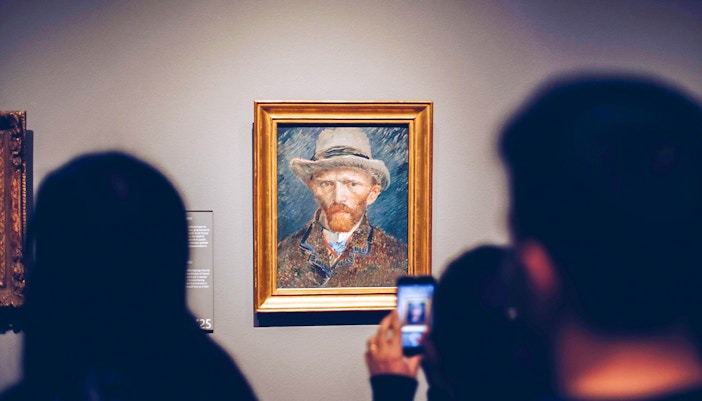
Theo van Gogh worked as a prominent Paris art dealer and actively promoted and sold Monet’s paintings.
Monet praised Van Gogh’s artwork as "the best in the exhibition" at the 1890 Salon des Indépendants in Paris.
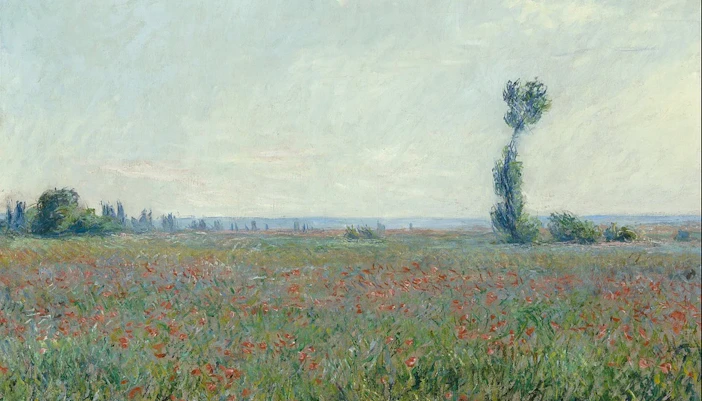
Late in life, Monet suffered from cataracts, which altered his colour perception and led to intense red and amber tones in his late works.
Claude Monet’s artistic style
Claude Monet was the driving force behind Impressionism, an art movement centred on capturing fleeting light, atmospheric mood, and changing seasons rather than sharp, realistic lines. He worked outdoors (en plein air) using oil on canvas, applying paint in short, visible strokes. This approach allowed light to bounce dynamically off the canvas, giving landscapes an immediate and lively quality. His techniques bridge classical European landscape traditions with modern expressionism, establishing him as an innovator of modern art.
Claude Monet vs contemporaries
Claude Monet vs Vincent van Gogh
Monet focused on external harmony, recording changing sunlight and natural reflection with soft color transitions. Van Gogh adapted Monet's bright palette but added heavy, rhythmic impasto brushwork to express intense internal emotion instead of direct nature.
Where else to see Claude Monet
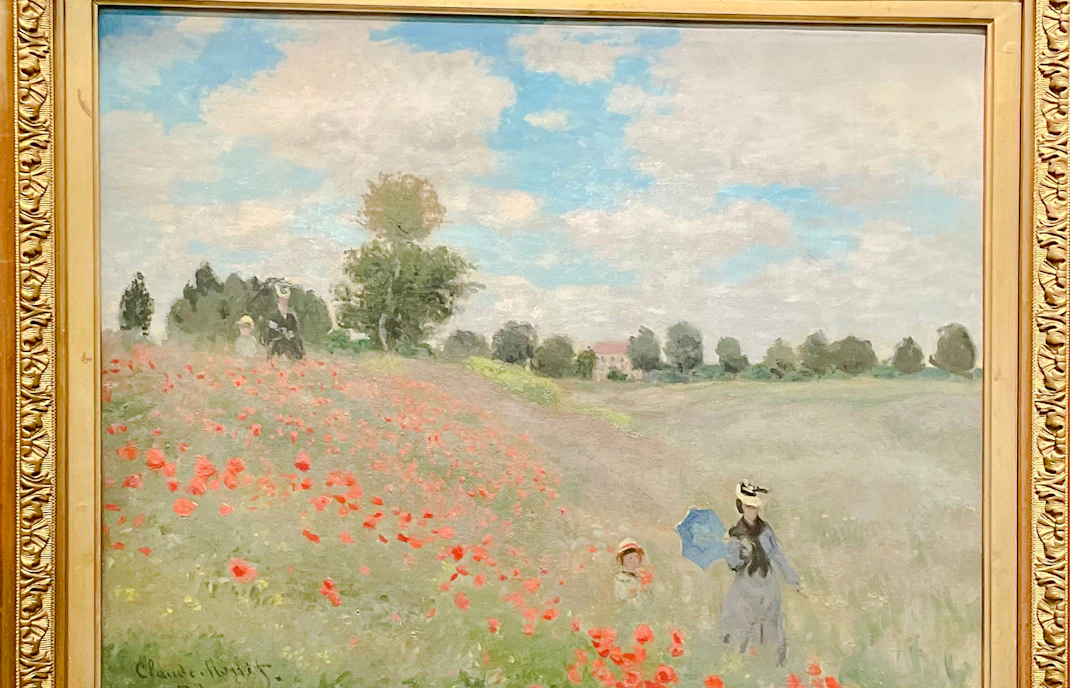
Musée d'Orsay, Paris
Poppies & Blue Water Lilies
Houses the world's most extensive Impressionist collection, featuring Monet's iconic Parisian views and natural landscapes.
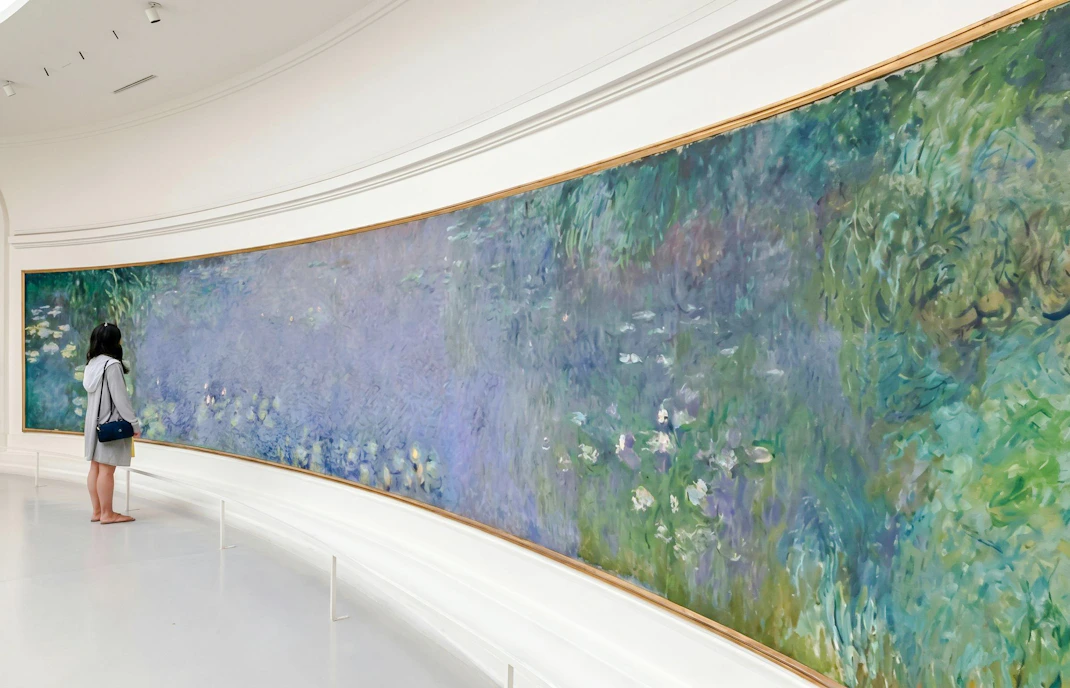
Musée de l'Orangerie, Paris
Water Lilies (Nymphéas)
Displays Monet's massive, panoramic Water Lily murals inside custom-built oval galleries designed specifically for his immersive art.
Frequently asked questions about Claude Monet
No, access to Monet’s paintings is completely included with standard Van Gogh Museum general admission tickets.
His works are displayed on Level 3 in the upper galleries dedicated to Impressionists and Van Gogh’s 19th-century contemporaries.
The museum owns several permanent pieces by Monet, including Tulip Fields near The Hague, Coastal Landscape, and Windmills near Zaandam, alongside rotating loans.
No, they never met personally, but Vincent admired Monet immensely after studying his paintings in Paris through his brother Theo.
Book an early morning slot at 9am or a late afternoon ticket past 4pm for quieter access to the Level 3 galleries.


